Conquer the Majestic North Face of Mt Elbrus
My Journey To The Top #2
Elbrus in Southern Russia was my second of the Seven Summits. At 18,510 ft, it was the first true mountaineering experience. There were no porters like we had at Kilimanjaro. Summit day was on top of a glacier the entire time. Like all adventures it began with a flight to the nearest city, in this case Moscow and tour of the city . Our guide company was Ukrainian. It was 2010 and the Russians and Ukrainians tolerated each other.
I had never been to Russia and found the experience and journey as interesting as the climb
The Road to Basecamp
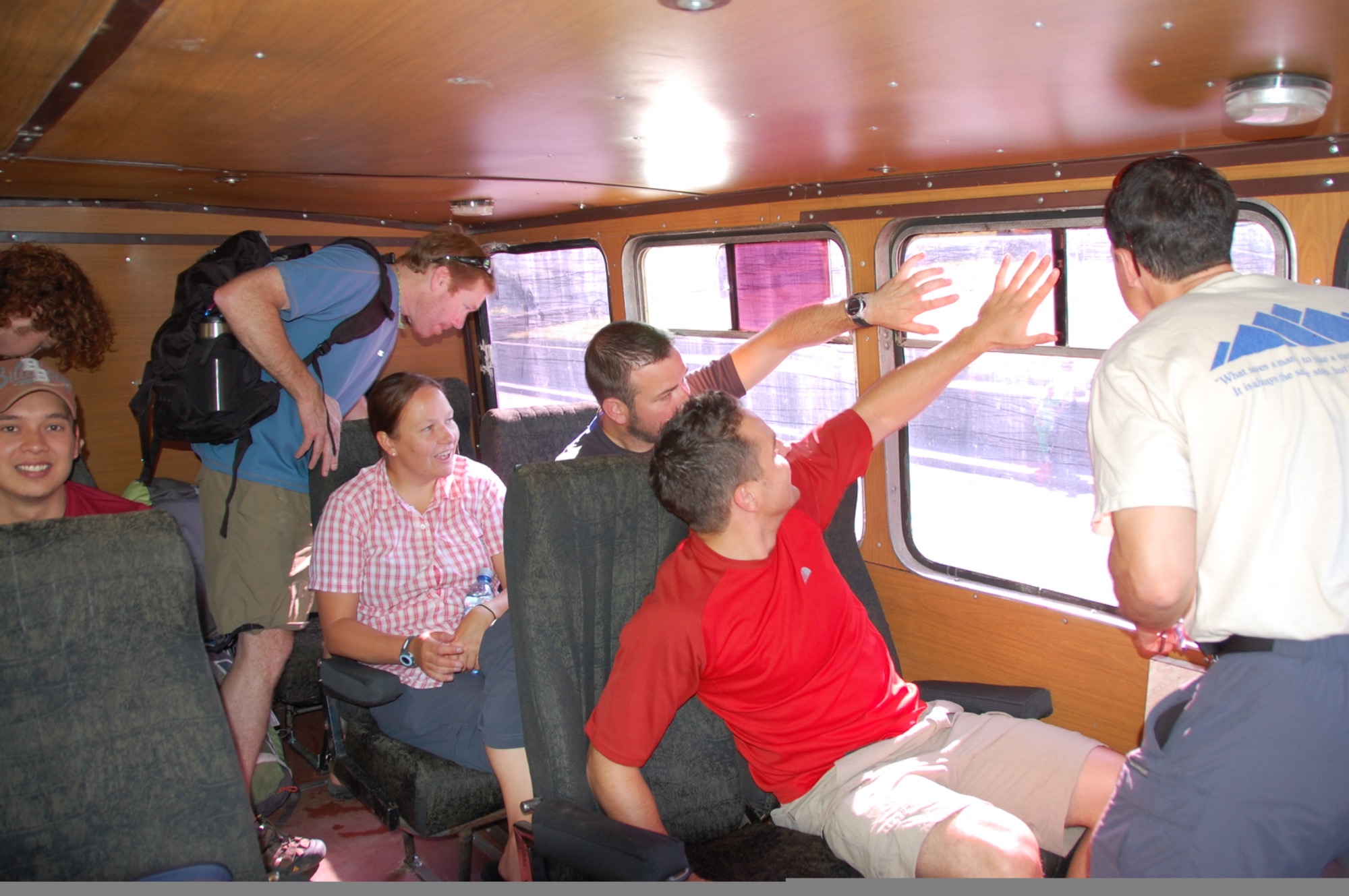
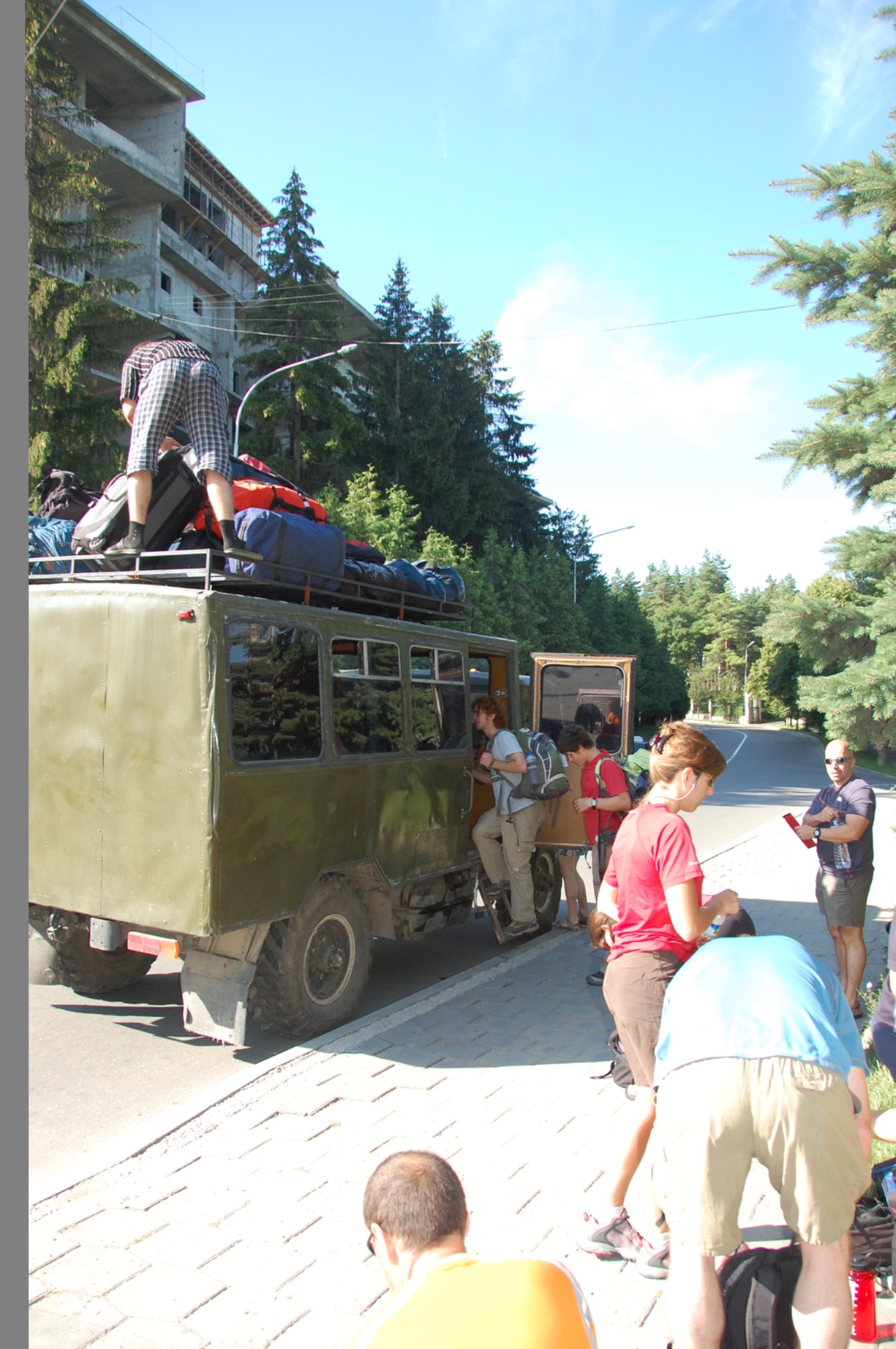
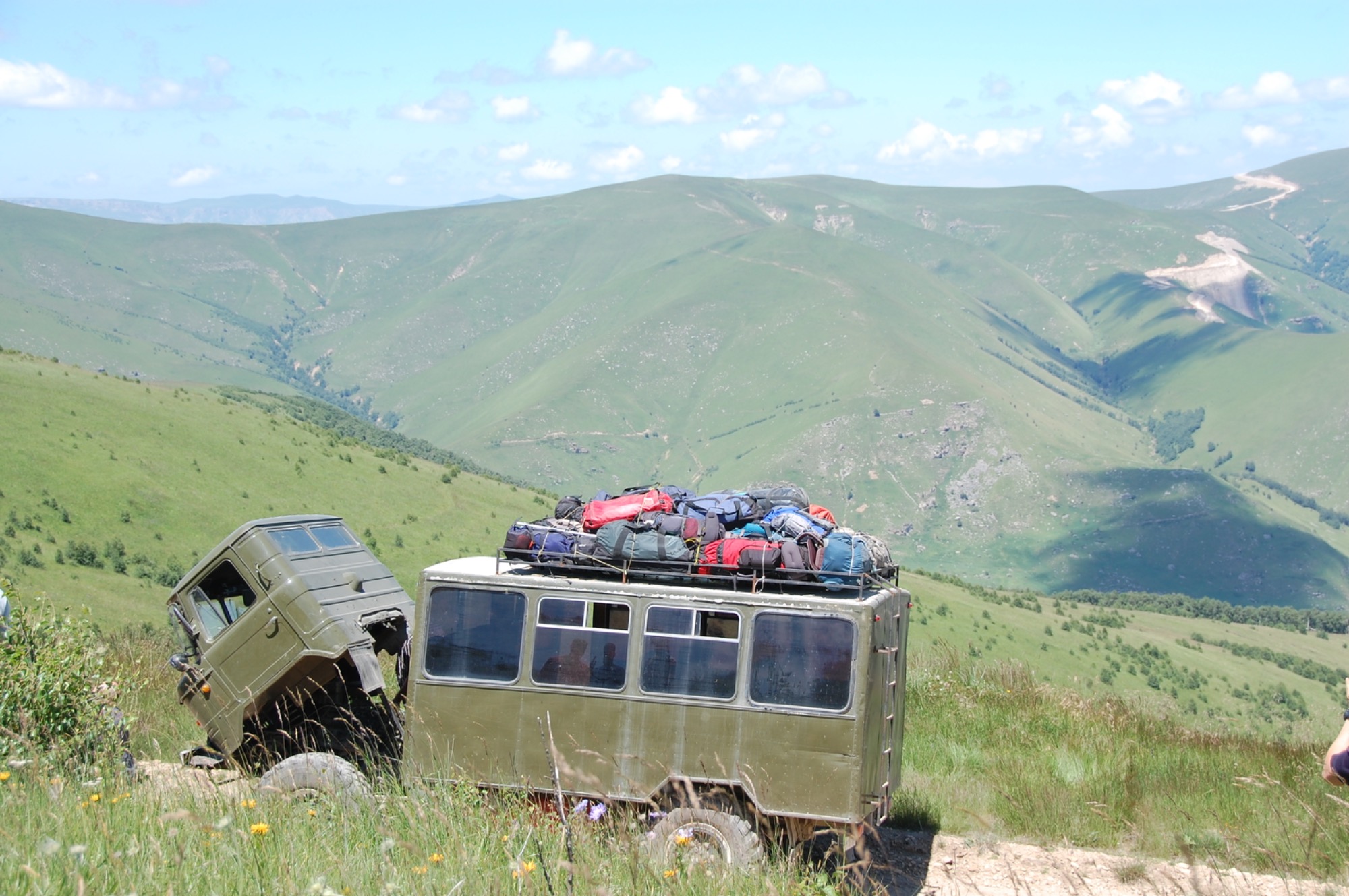
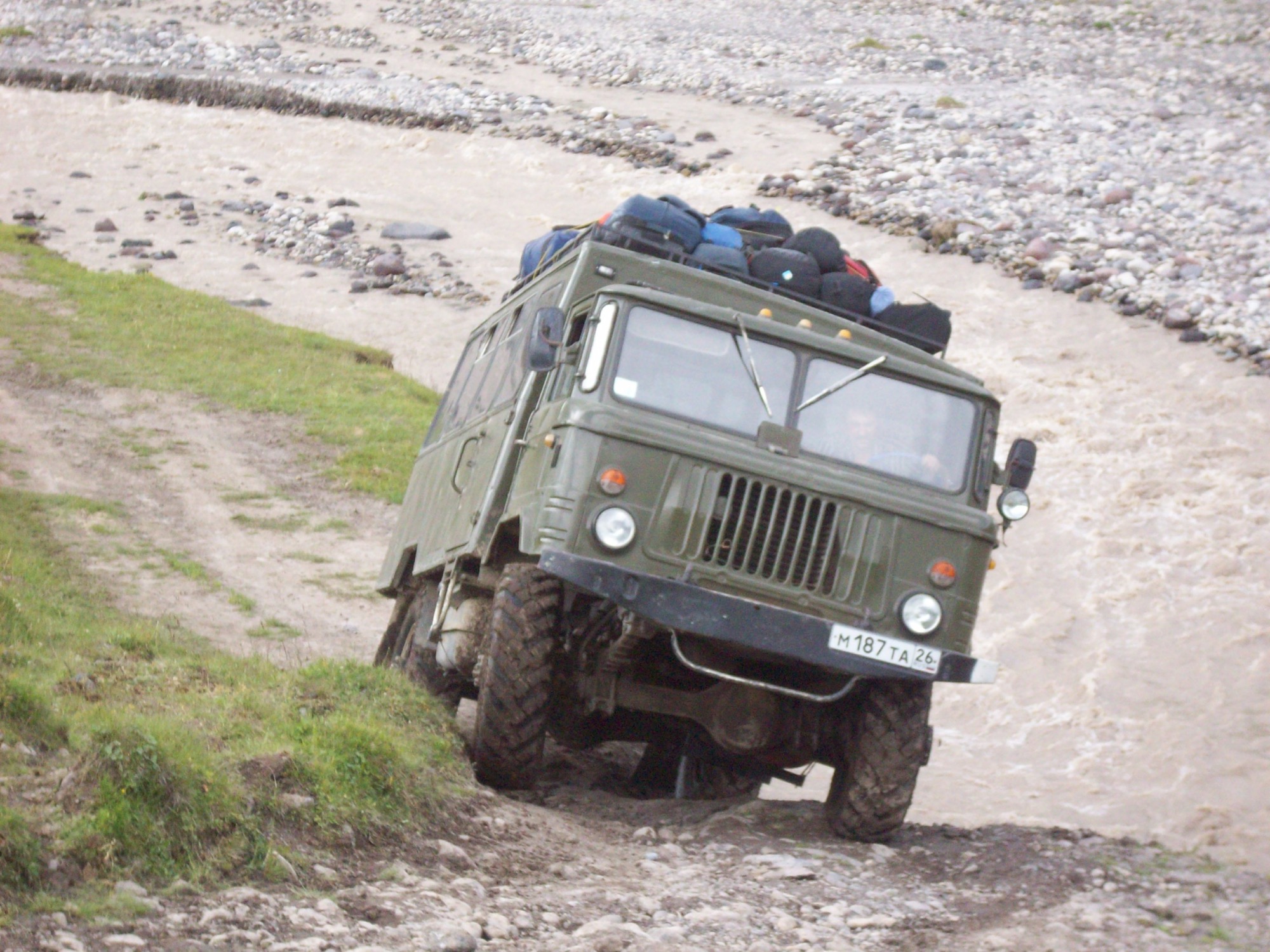
After gathering supplies, we piled into an old Soviet transport truck and began the long, bumpy journey to Elbrus’ North Side Basecamp.
The paved road gave way to dirt, dirt turned to paths, and soon we were fording knee-deep rivers. Sometimes we climbed out to lighten the truck for crossings. As the landscape grew wilder, excitement mixed with nerves - the adventure was officially underway.
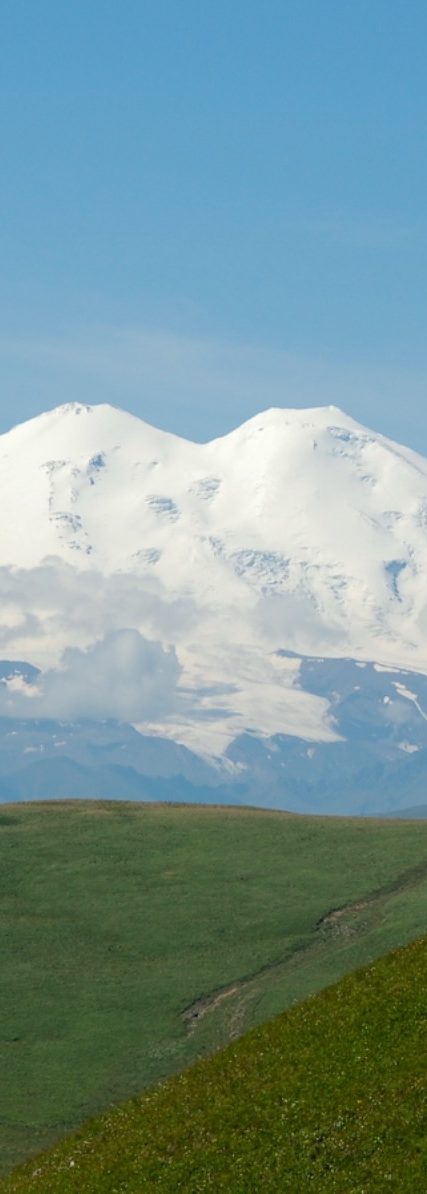
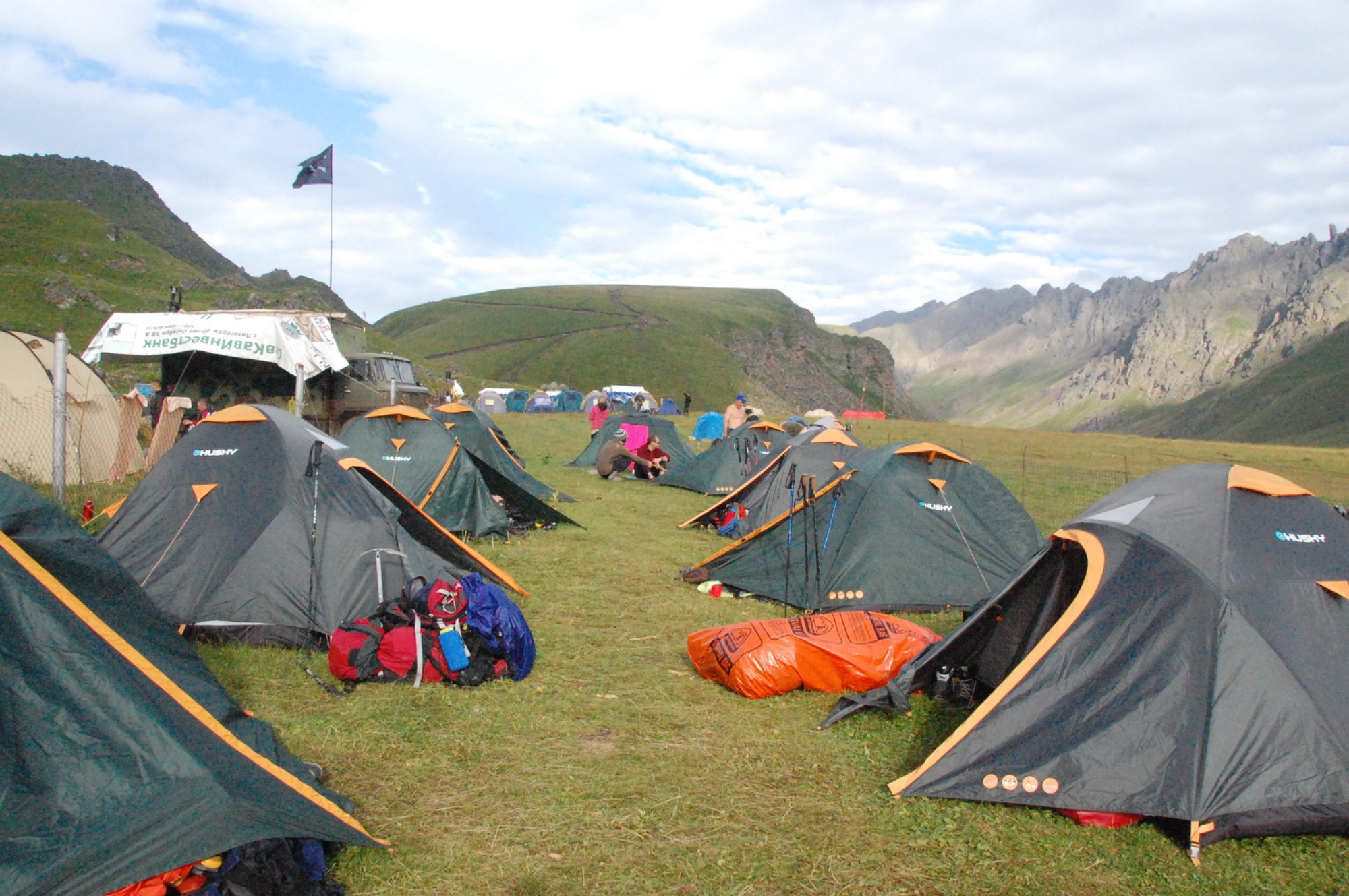
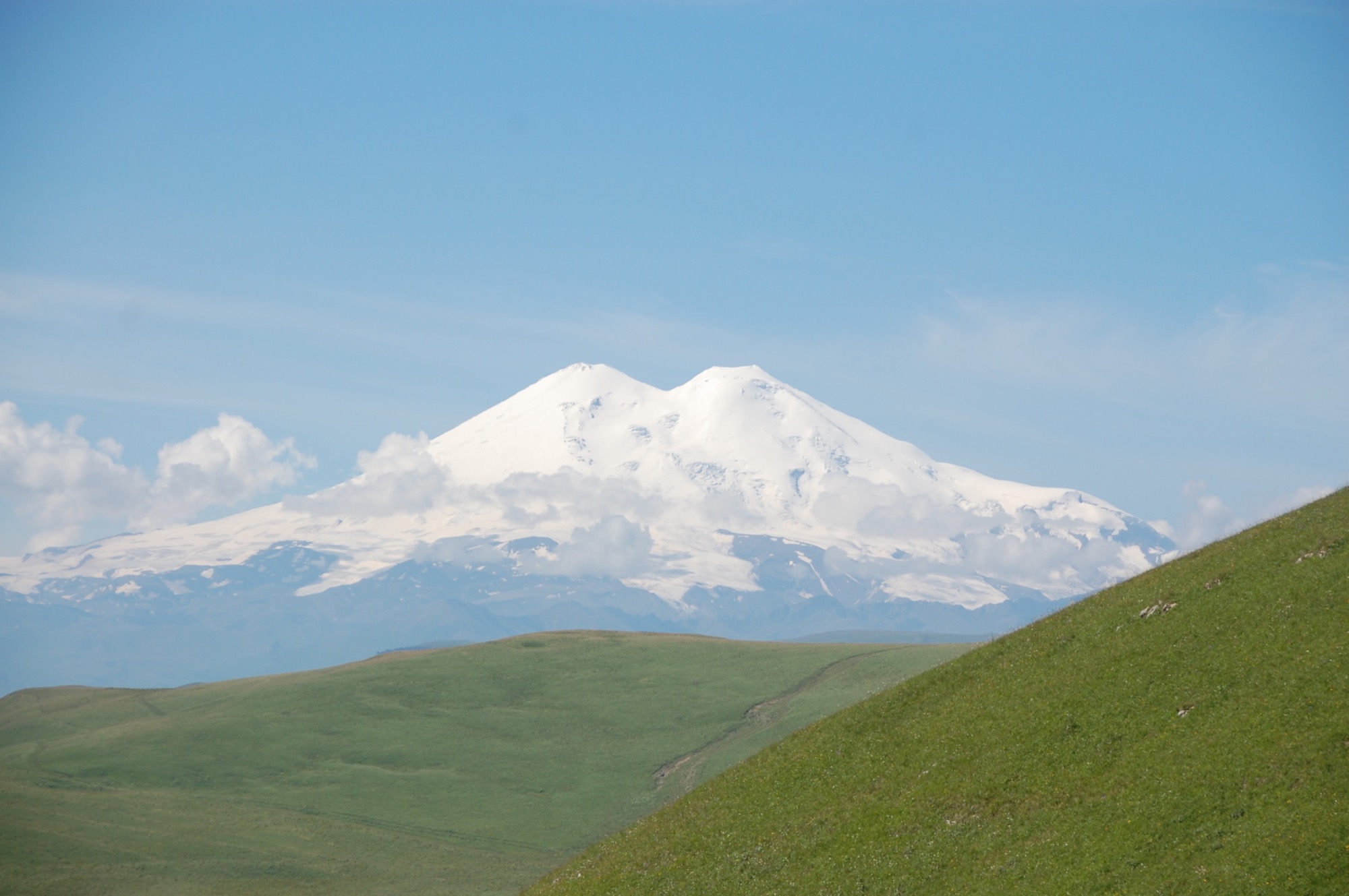
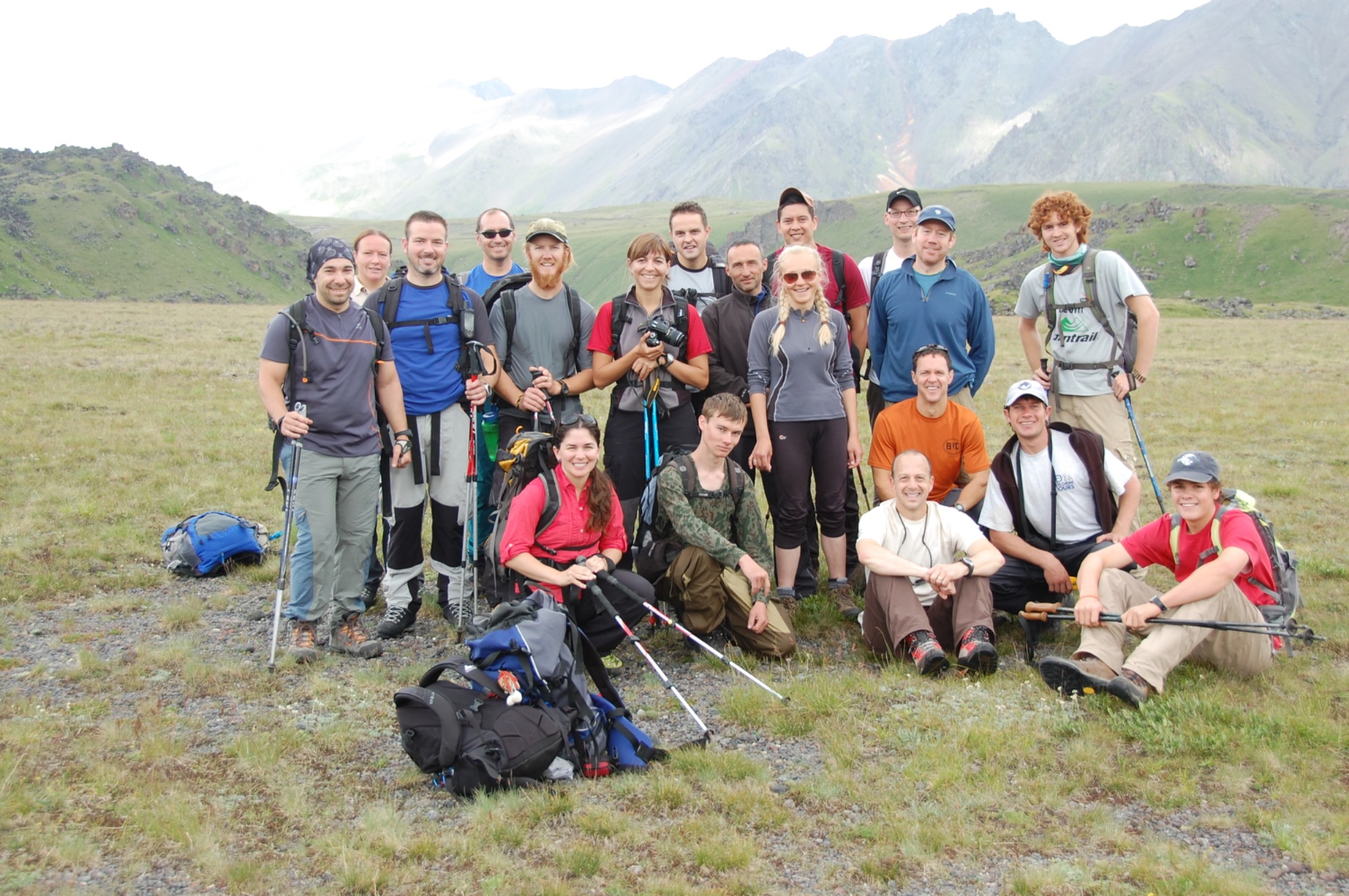
At last we reached a lush green valley surrounded by towering peaks. Elbrus loomed in the distance, capped in white. Brady and Bill shared a tent. I was paired with Cho, a climber from China. He spoke little English, and I spoke no Chinese, but we communicated through smiles and gestures - the universal language of mountain people.
🏔️ Mount Elbrus — The Russian Summit
A climb through culture shock, cold winds, and quiet triumph on Europe’s highest peak.
Waiting for the Window
The following day we rested. The British team left early to camp at Lenz Rocks, giving their teammate more time to acclimatize.
By afternoon, the weather turned — swirling clouds, snowflakes melting on our jackets. We packed for our midnight summit bid. After dinner we lay in the dark, pretending to sleep while adrenaline buzzed beneath the surface. When an alarm finally rang, headlamps flared to life. It was time.
The Summit Push
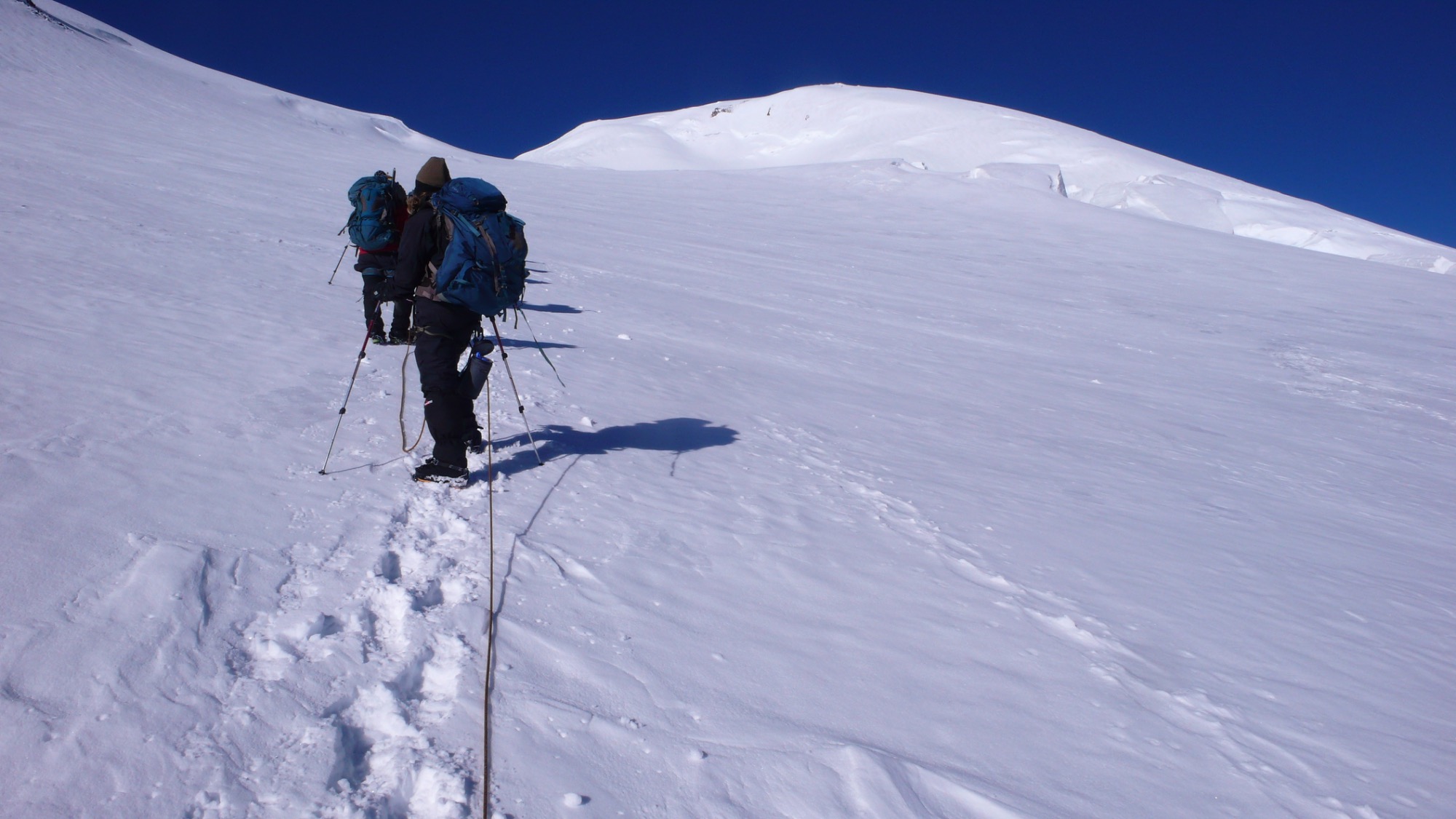
We ate in silence — hot cereal and coffee — and filled our bottles with tea and water before stepping into the cold night. Headlamps swung like fireflies as we roped up on the glacier.
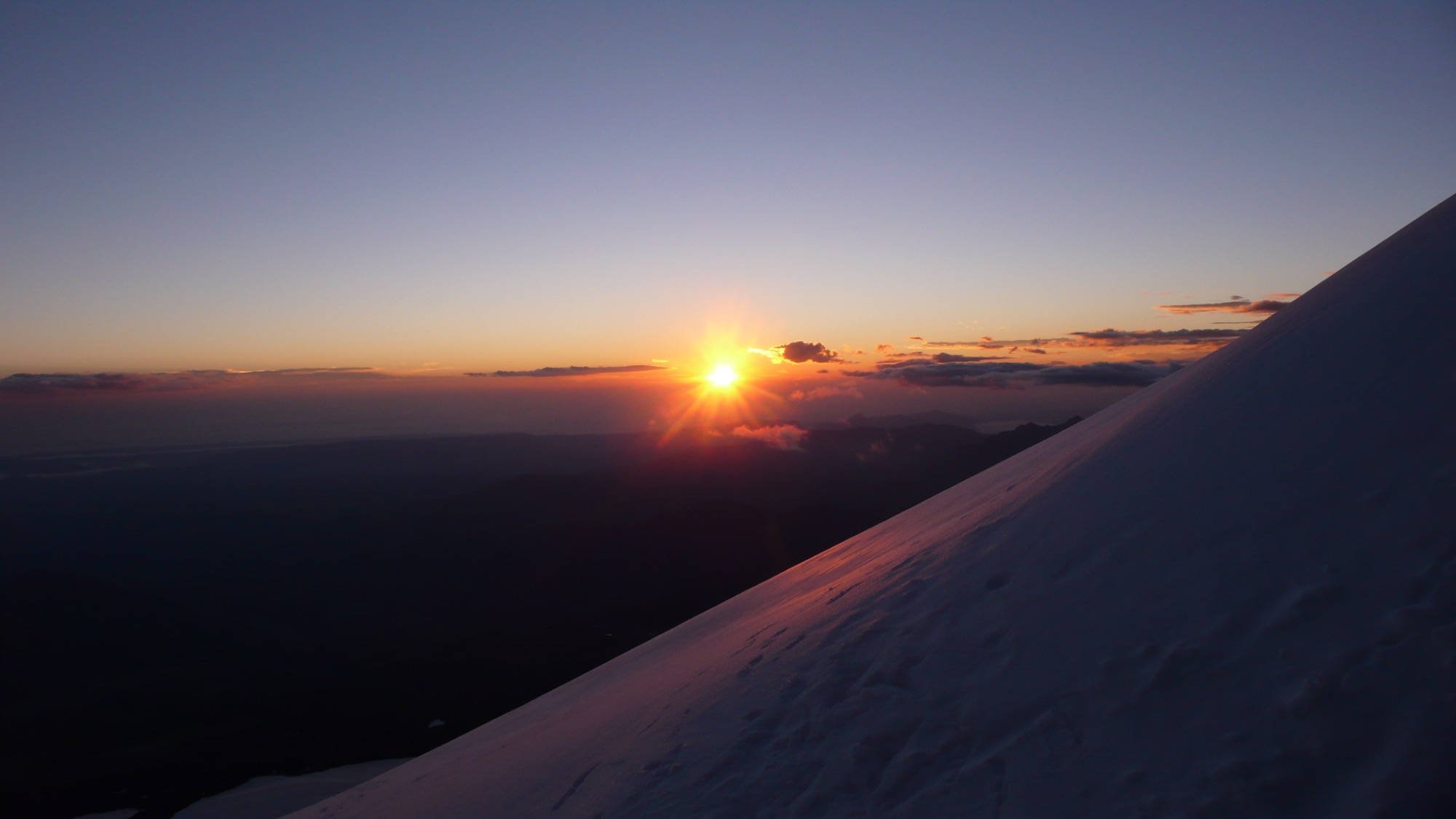
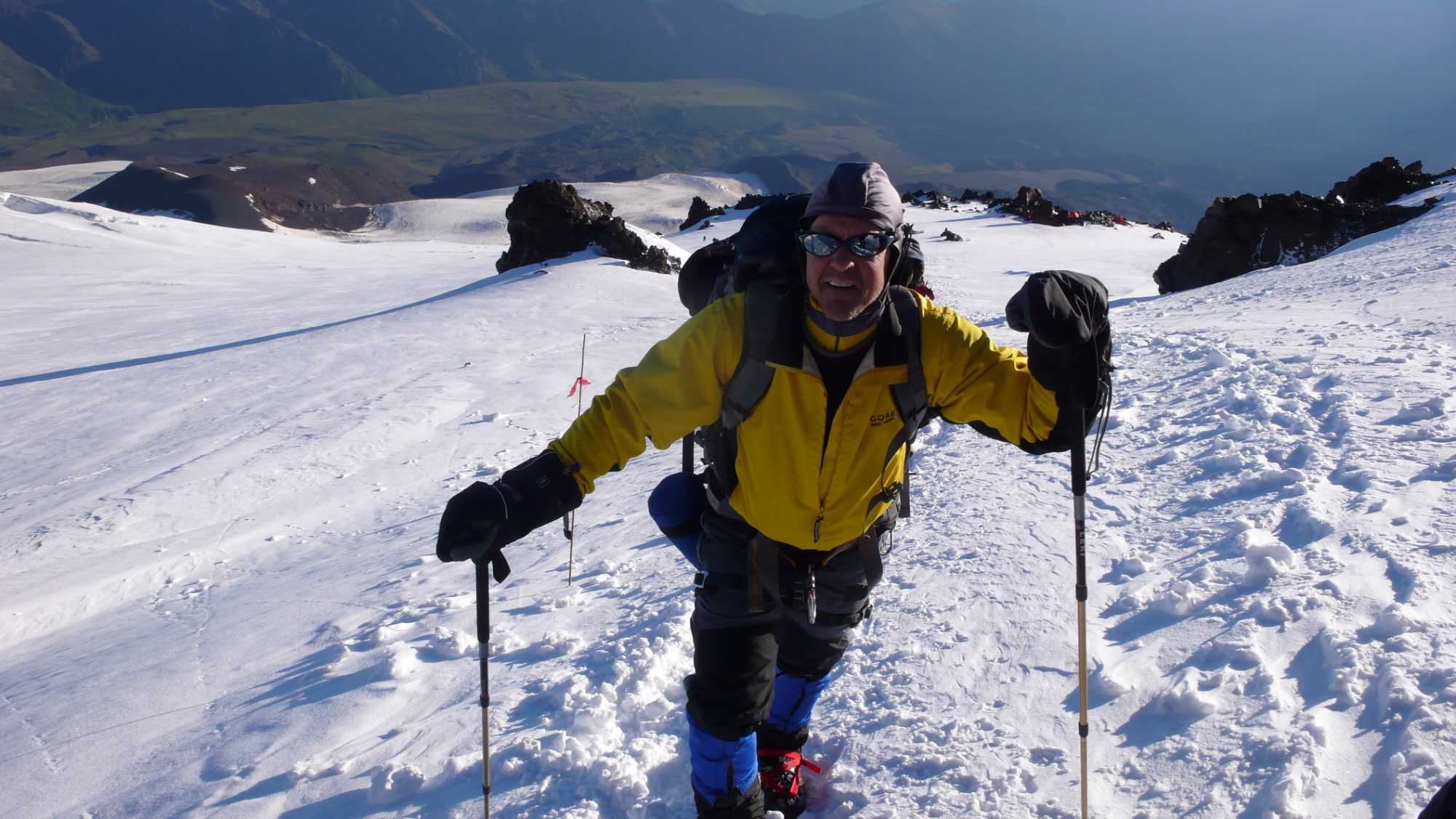
The climb began slowly, methodically. Hours passed before dawn broke, revealing the world in shades of blue and silver. From Lenz Rocks, we could see the peak faintly glowing in the east.
Above 16,000 feet, every breath was an effort. Clouds thickened, snow began to fall, and a few climbers turned back. I was moving slowly, drained, but I refused to stop.
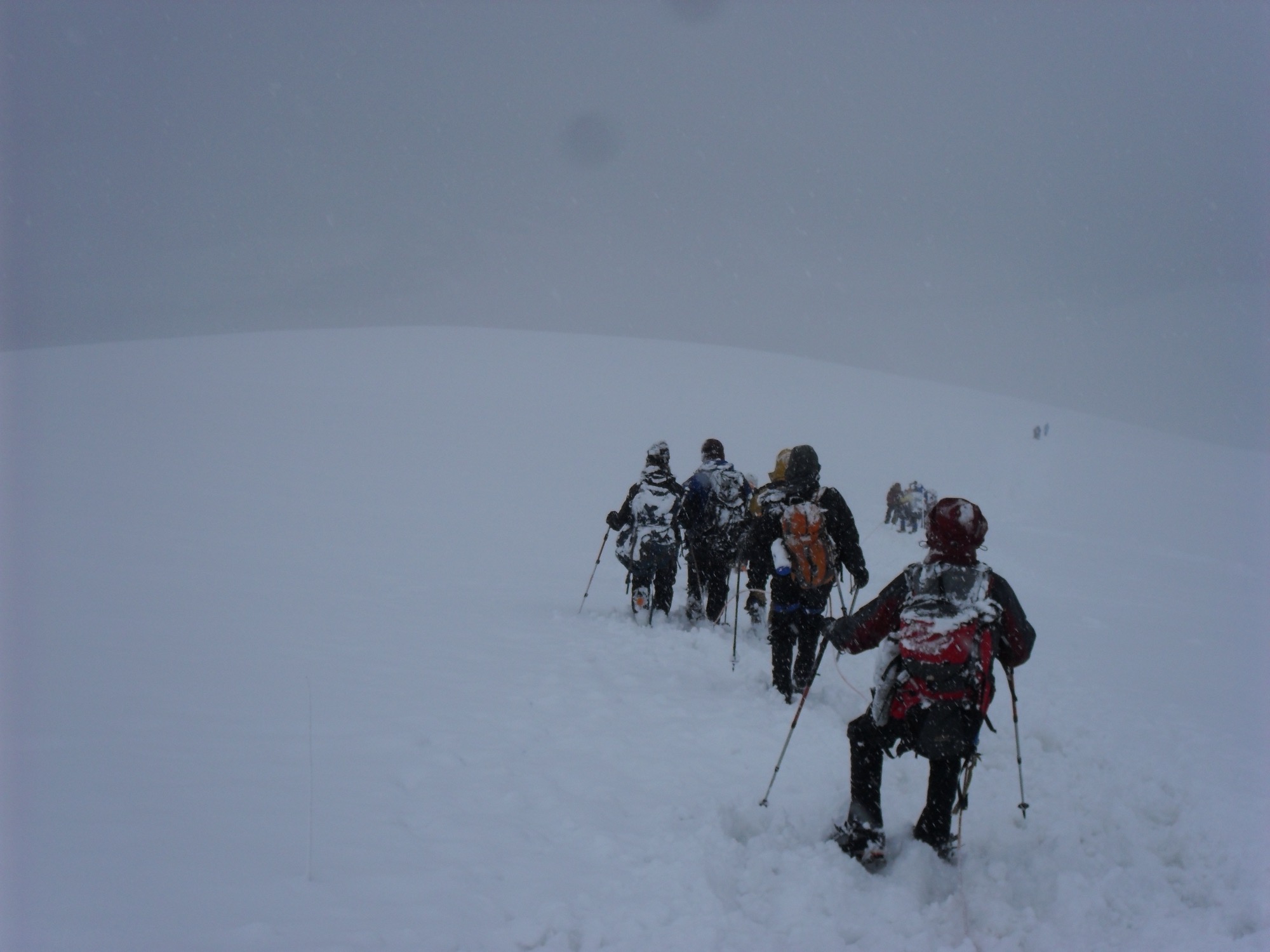
The last section was brutal — steep switchbacks, knee-deep snow, and a whiteout so heavy the world disappeared into gray. I told myself: Just one more step.
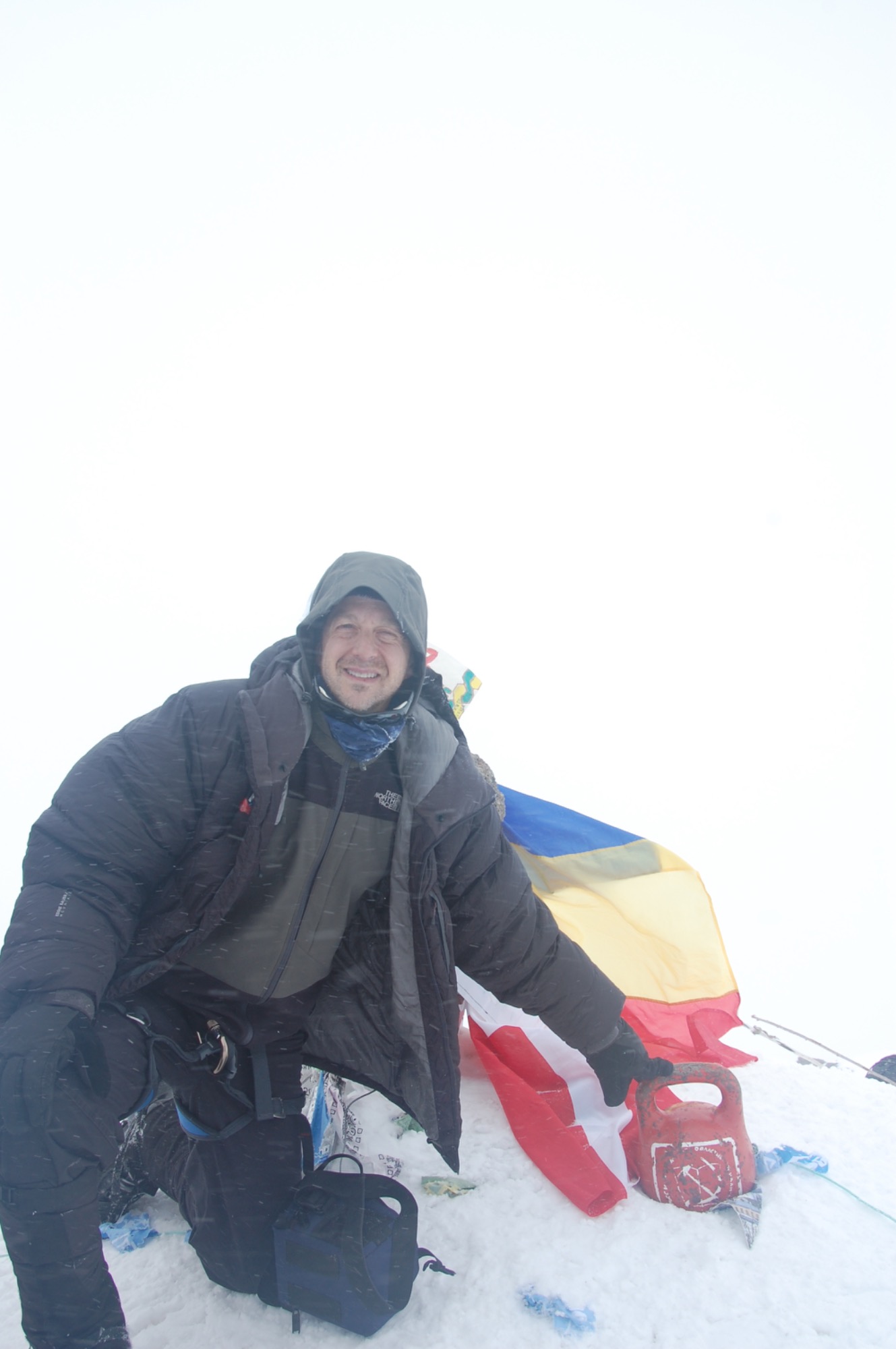
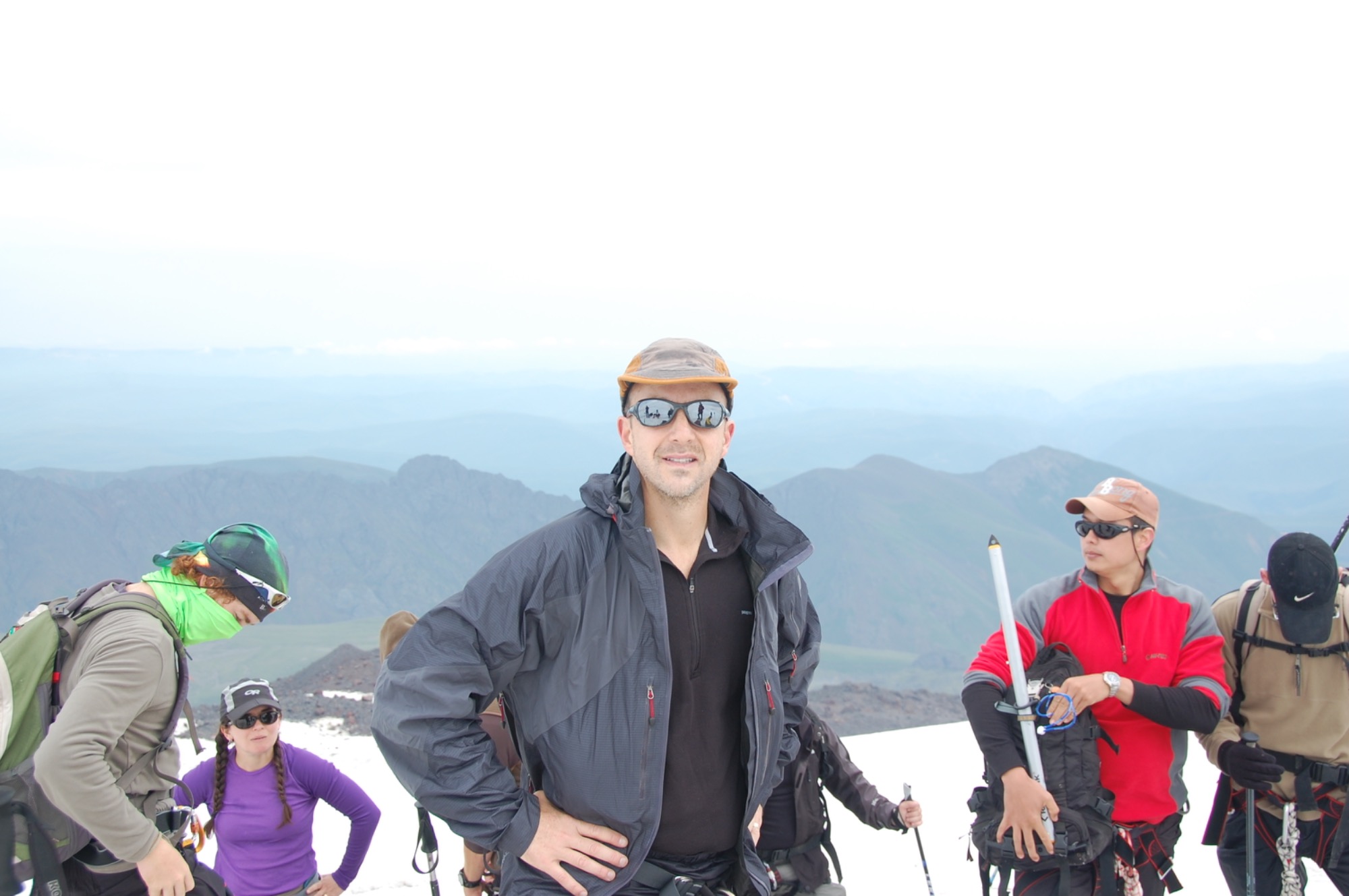
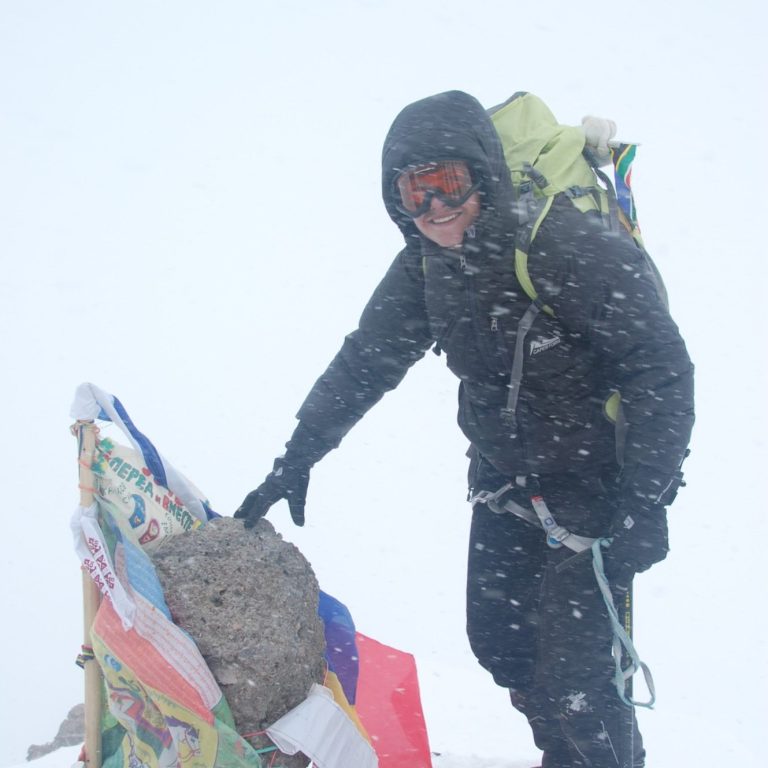
Finally, figures appeared ahead, waving arms in triumph. The summit. A post, a flag, and — unbelievably — a kettlebell someone had carried up. I touched it in disbelief, hugged Brady, and grinned through my exhaustion.
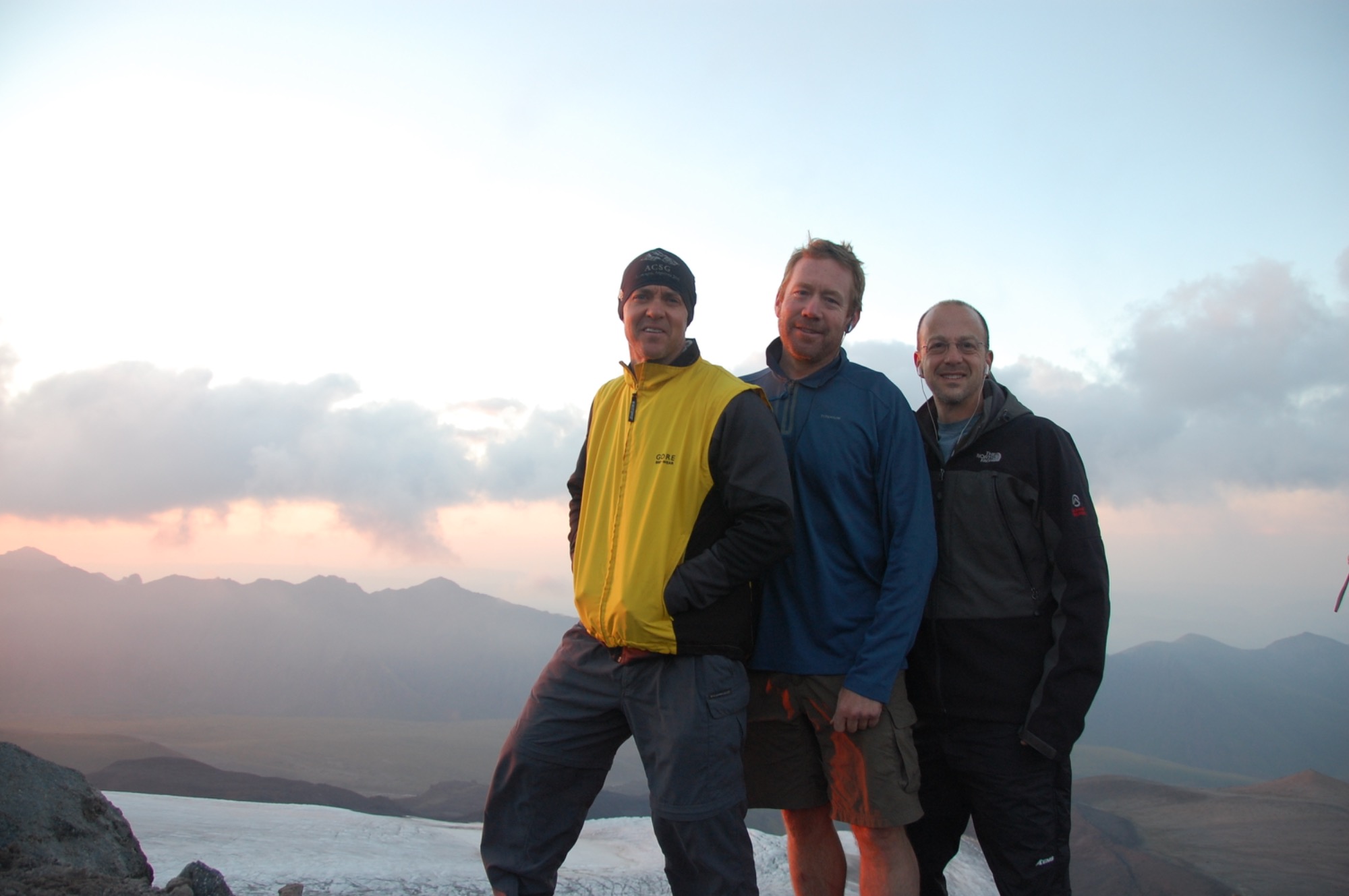
It was my second of the Seven Summits, harder and colder than Kilimanjaro, and far more technical. We snapped a few pictures — proof, if nothing else, that we had been there. The guides urged us down quickly; the storm was closing in.
The Descent
The descent tested every ounce of endurance I had left. One of the Australian climbers collapsed from exhaustion and dehydration. Brady and I stayed back to help, feeding him a Snickers bar and half-carrying him down the glacier. He staggered like a drunk, barely conscious.
We roped him between us and inched our way down for hours through blinding snow and slush. Our crampons iced up, forcing us to stop every few steps to clear them.
By the time we reached high camp, we were soaked and shivering. I crawled into my sleeping bag and shook until warmth returned. Later, with hot tea and dry socks, I learned that the British team had turned around safely - their climber had made it just above Lenz Rocks before descending.
Bill had also turned back with altitude sickness. It was the right decision. Elbrus was a mountain that punished hesitation - or overconfidence.
Life at Basecamp
Our outfitter ran a simple camp - at $1,800, it was the cheapest way up the mountain, and it showed. Meals were basic: oatmeal and cereal for breakfast, sandwiches for lunch, and rice with chicken or pork for dinner. The dining tent was a parachute canopy strung over the grass, with blankets for seats. No tables, no chairs - just camaraderie.
Other groups had elaborate setups with big tents and proper kitchens. We didn’t envy them for long; we were too busy enjoying the rugged simplicity.
Days passed in a rhythm of hiking, resting, and acclimatizing. We trekked to Mushroom Rocks, then climbed the steep headwall to stash gear at high camp (12,400 ft). Russians from the neighboring camp set up a pull-up bar and held an impromptu strength contest, laughter echoing across the valley.
Arrival in Moscow
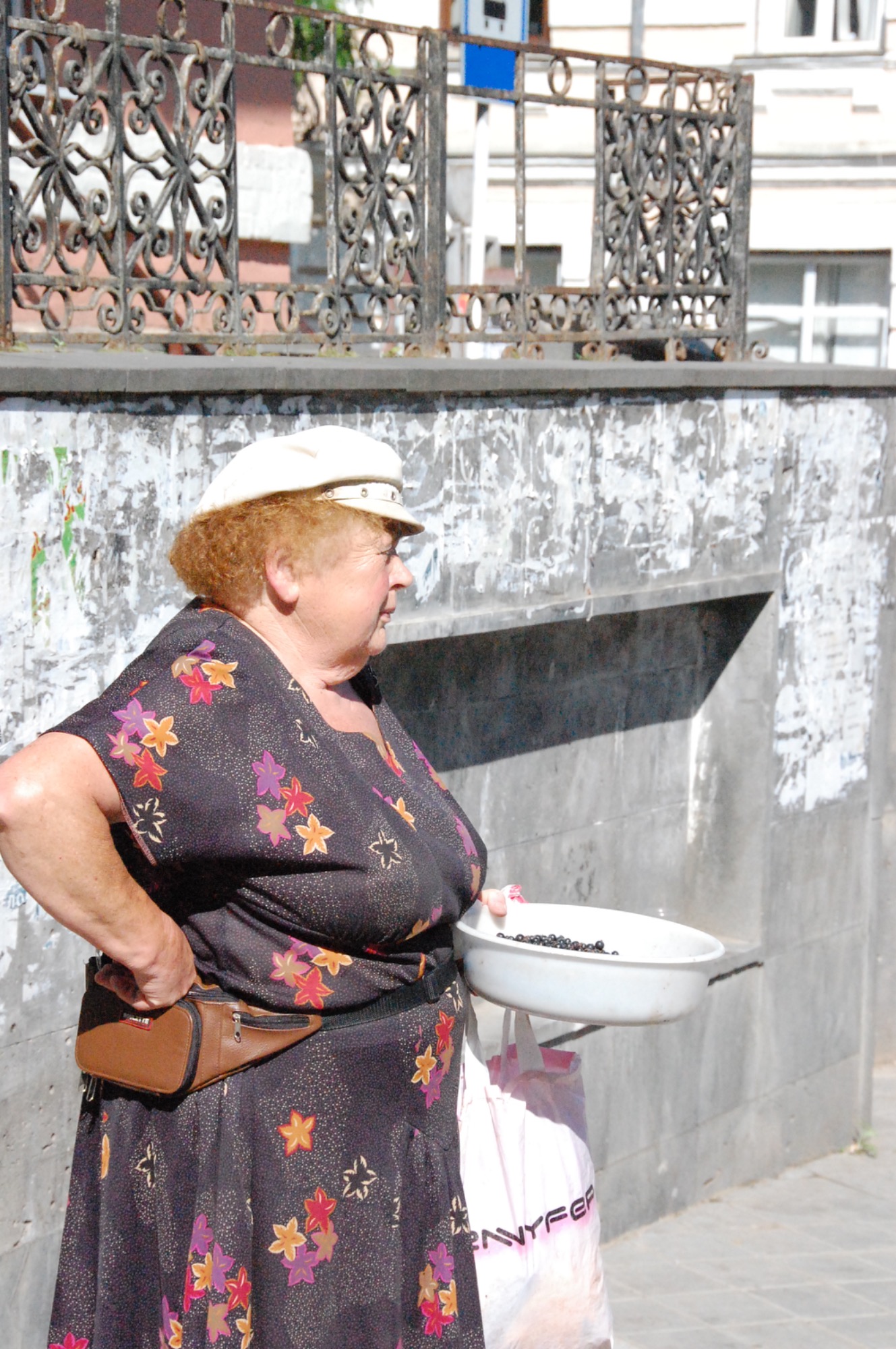
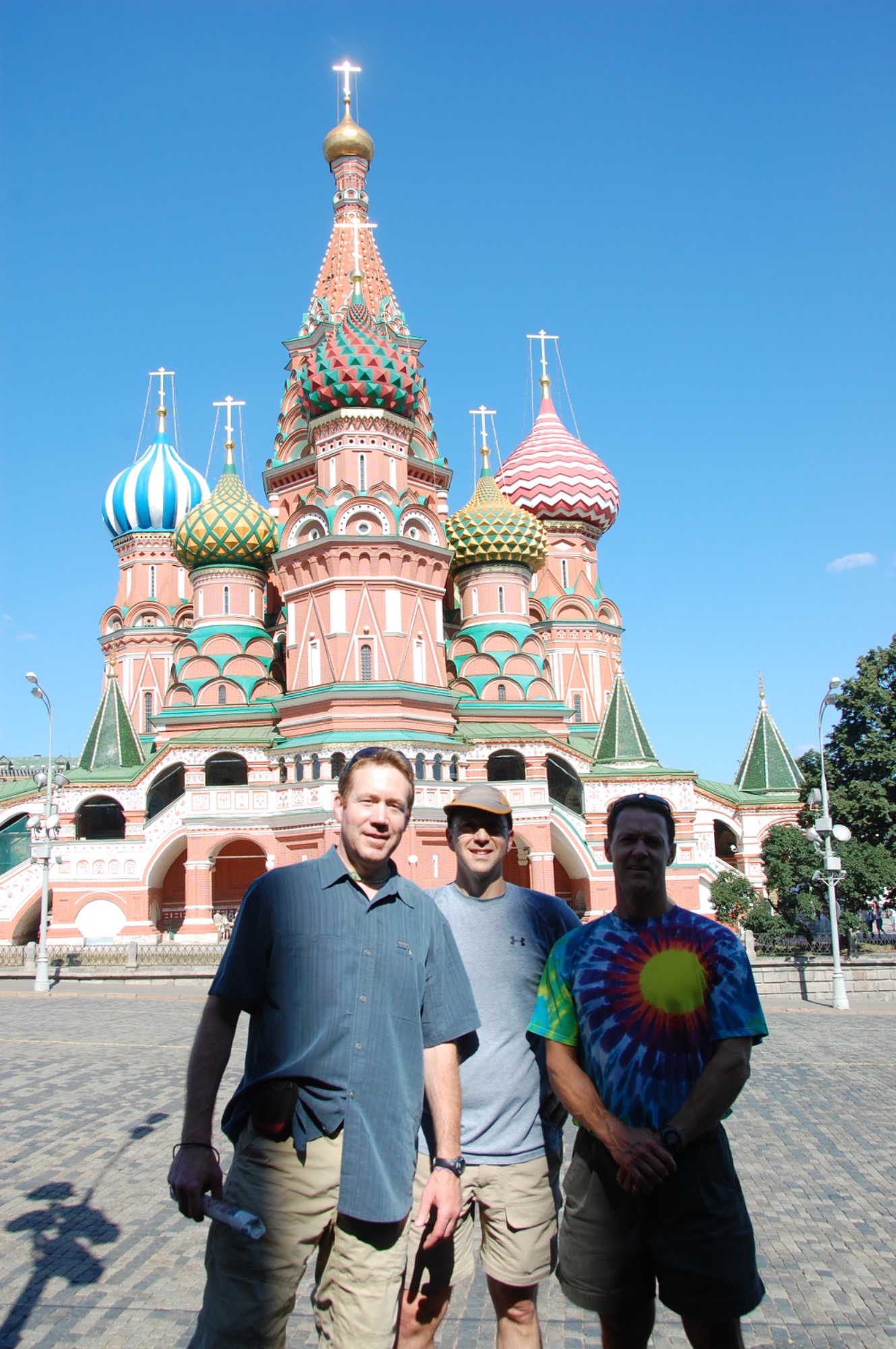
Arriving in Moscow with my climbing partner Brady and his college friend Bill was the first step toward Mount Elbrus. From the moment we stepped off the plane, we were fish out of water. Russia felt foreign in every way - the language, the people, the gray Soviet-era buildings, and the uneasy sense that someone was always watching us.
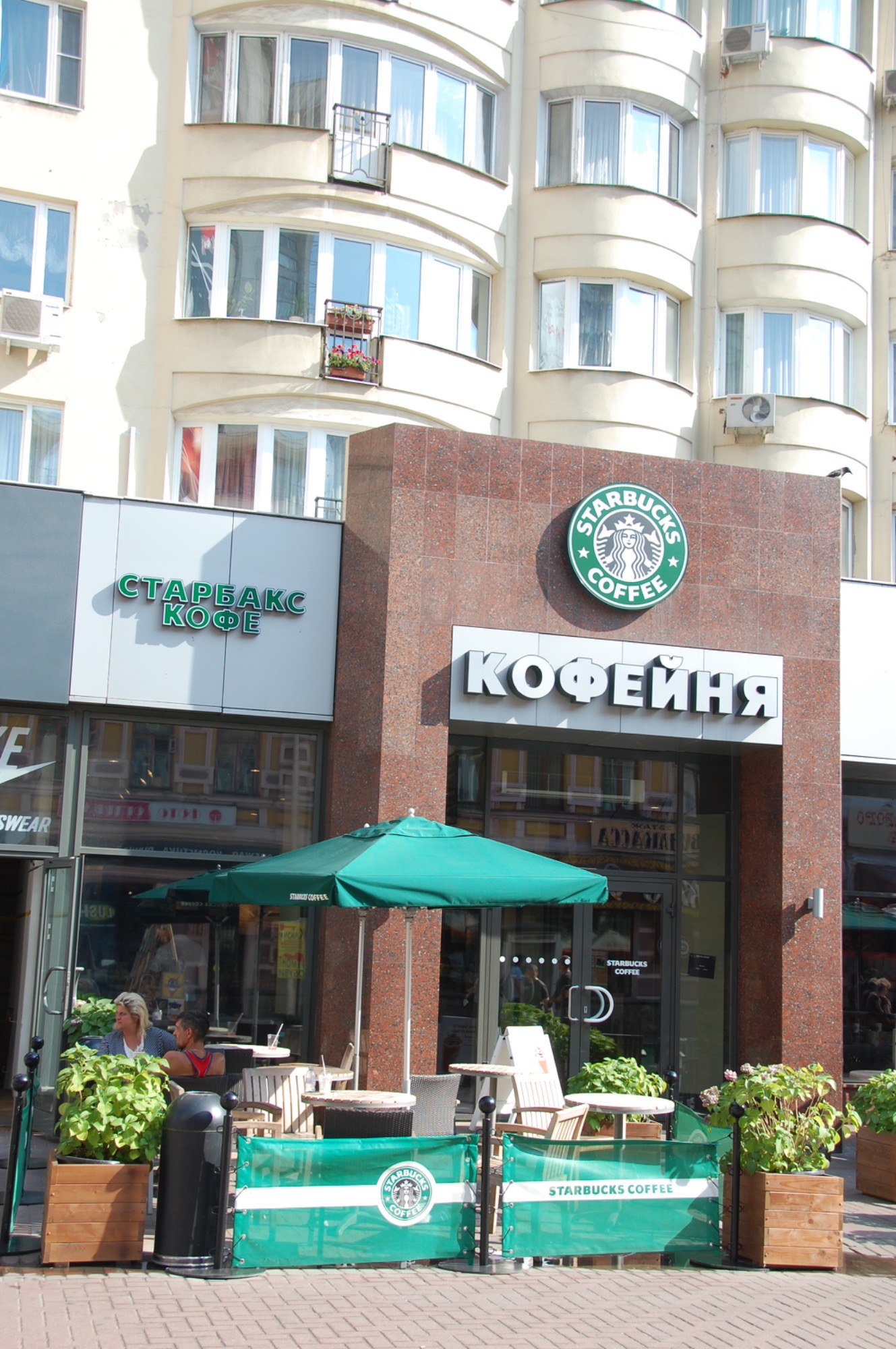
We rented a small room on Arbat Street, a lively tourist district just ten minutes from Red Square. It was there that we met our Ukrainian guides, who helped us “exchange” dollars for rubles - a transaction that felt more like a scene from a spy movie than a currency trade.
They led us through an abandoned shopping mall to a heavy steel door. One by one, we entered a dimly lit room, handed over our dollars, and received rubles in return. Supposedly, it was a better rate than the banks. We weren’t sure whether we were being scammed or auditioning for a crime drama, but we made it out unscathed and laughed about it for the rest of the trip.
Exploring Moscow
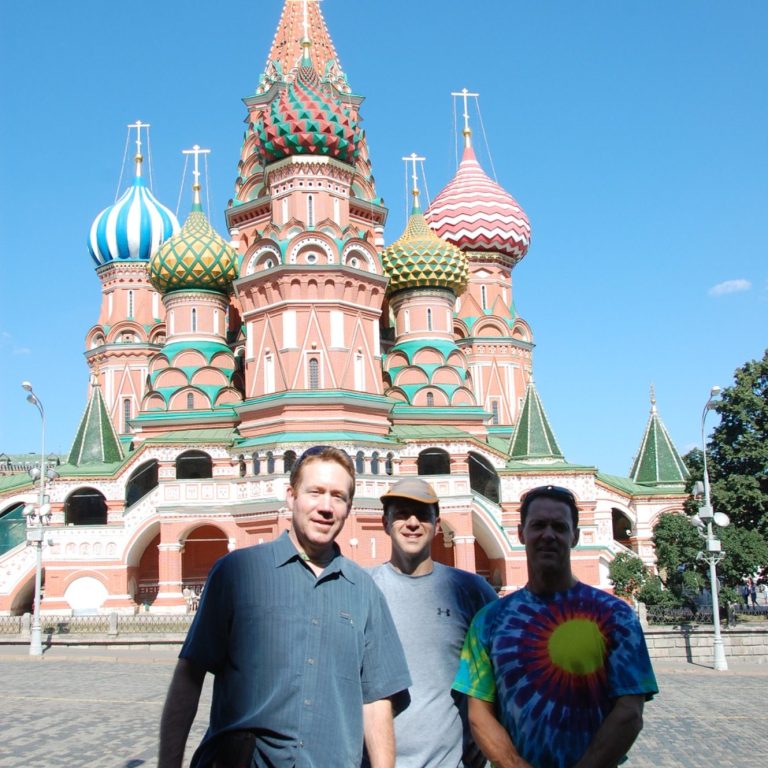
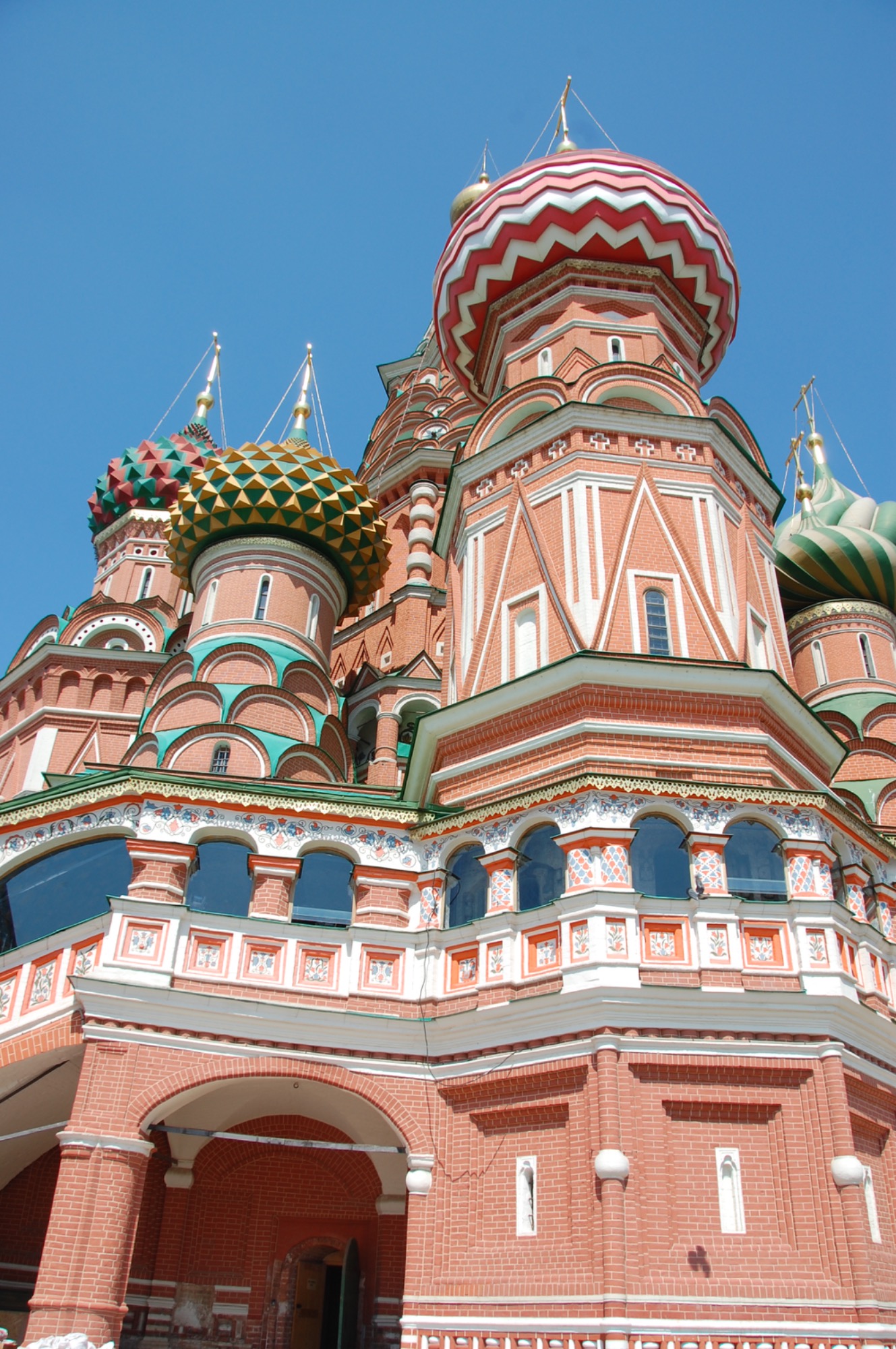
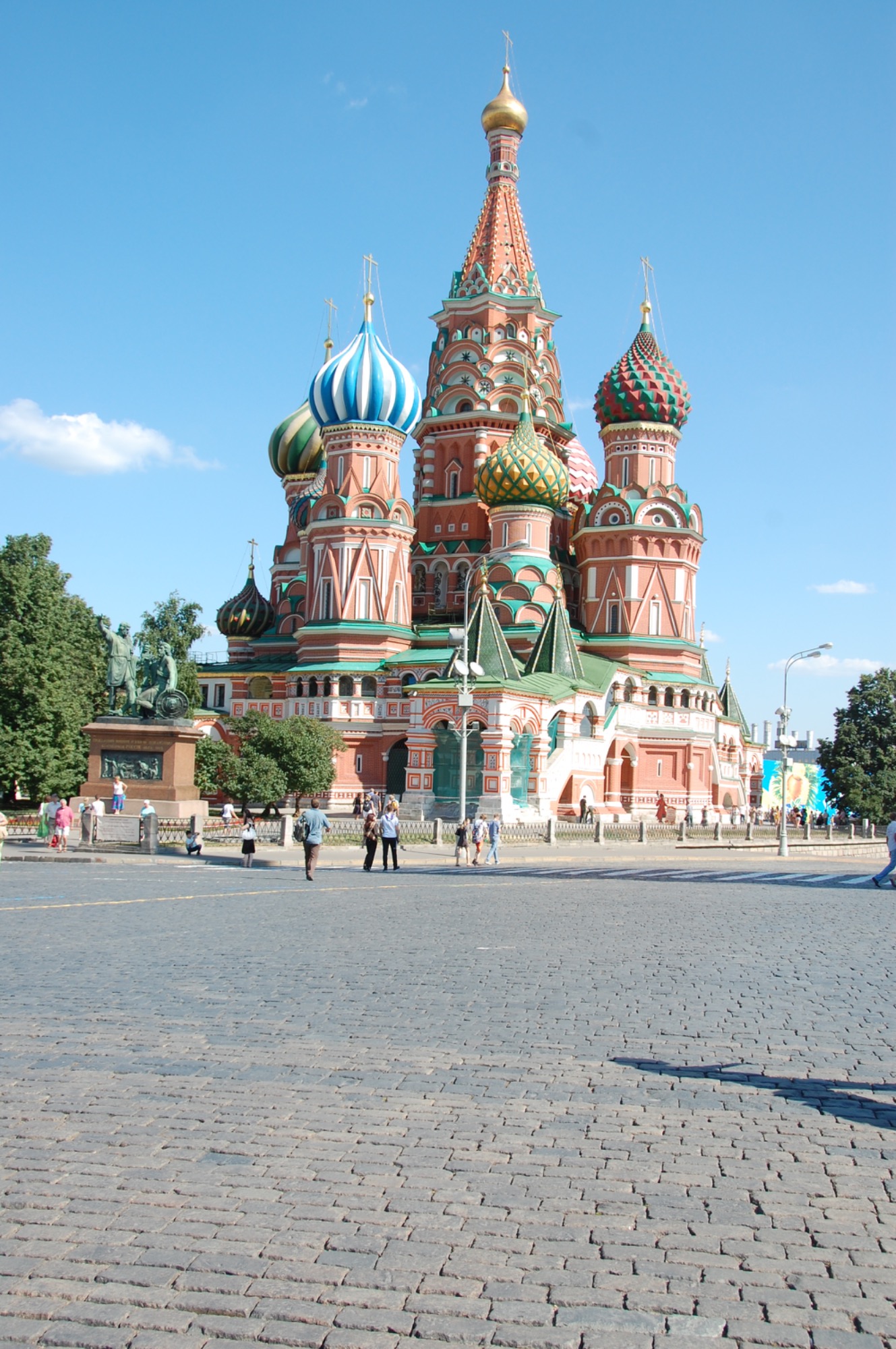
We spent a day with a local guide riding the ornate Moscow Metro, visiting Red Square, and standing beneath the colorful domes of St. Basil’s Cathedral. The grandeur of it all felt like a different planet compared to what was coming next.
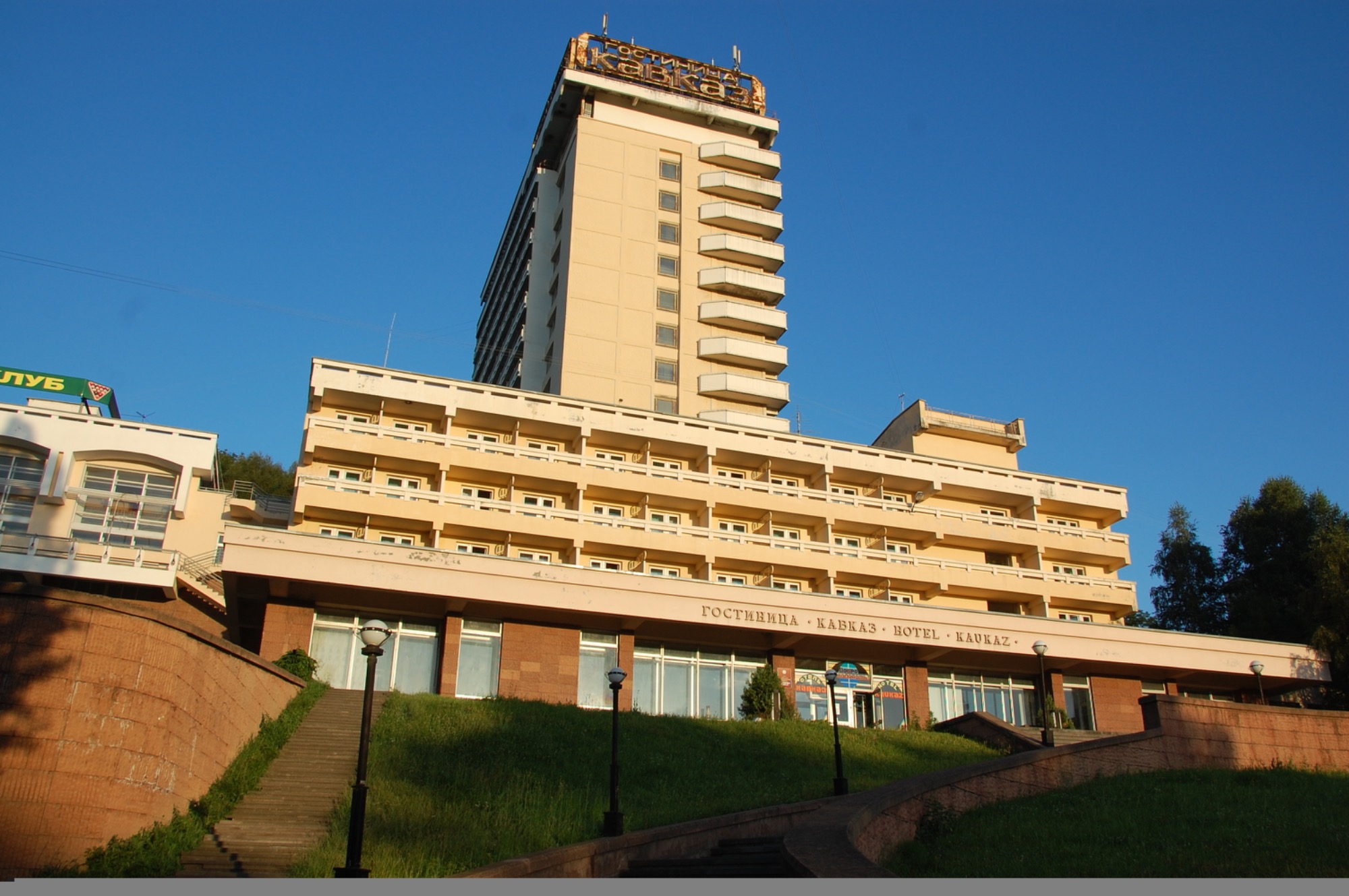
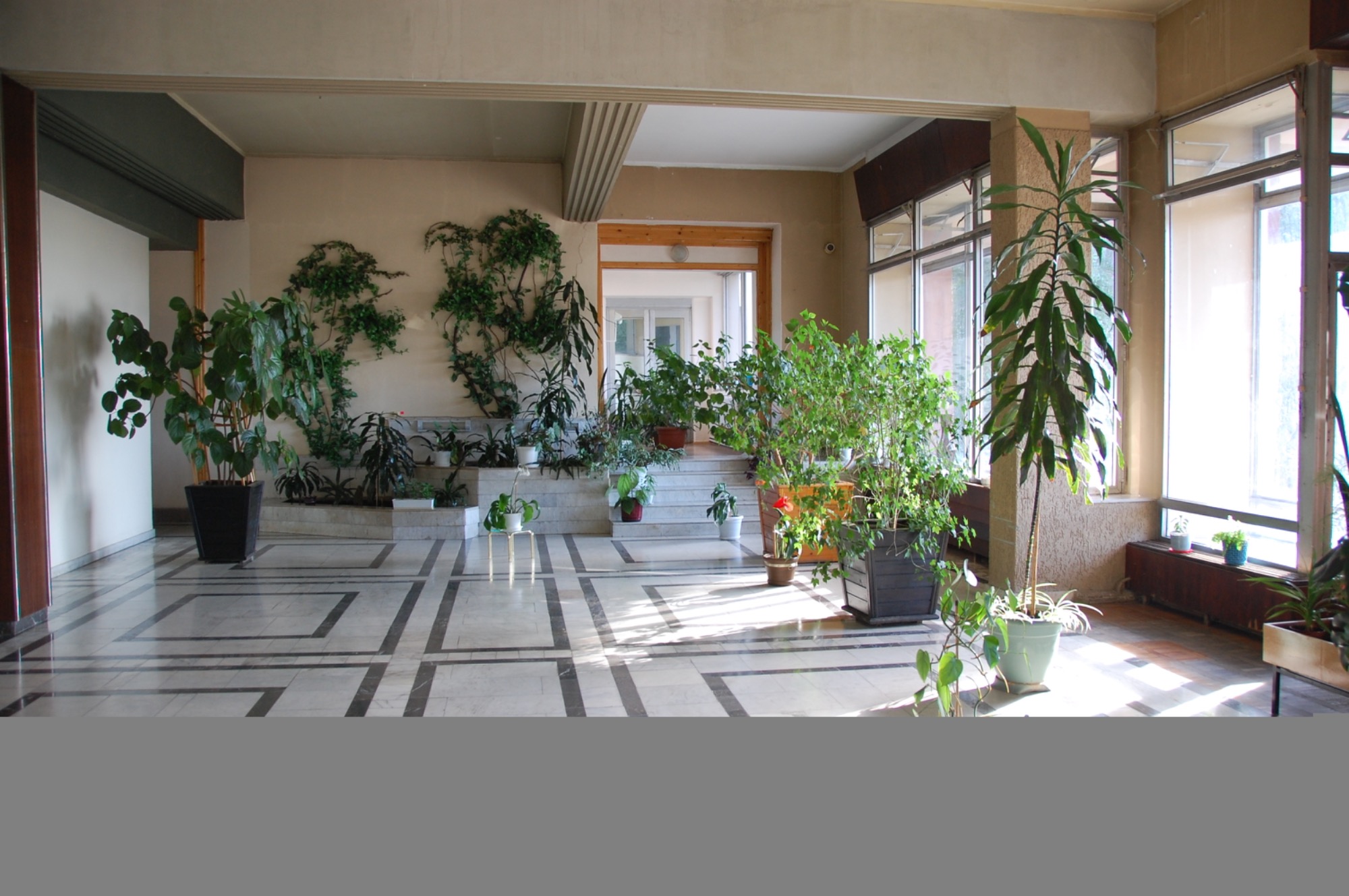
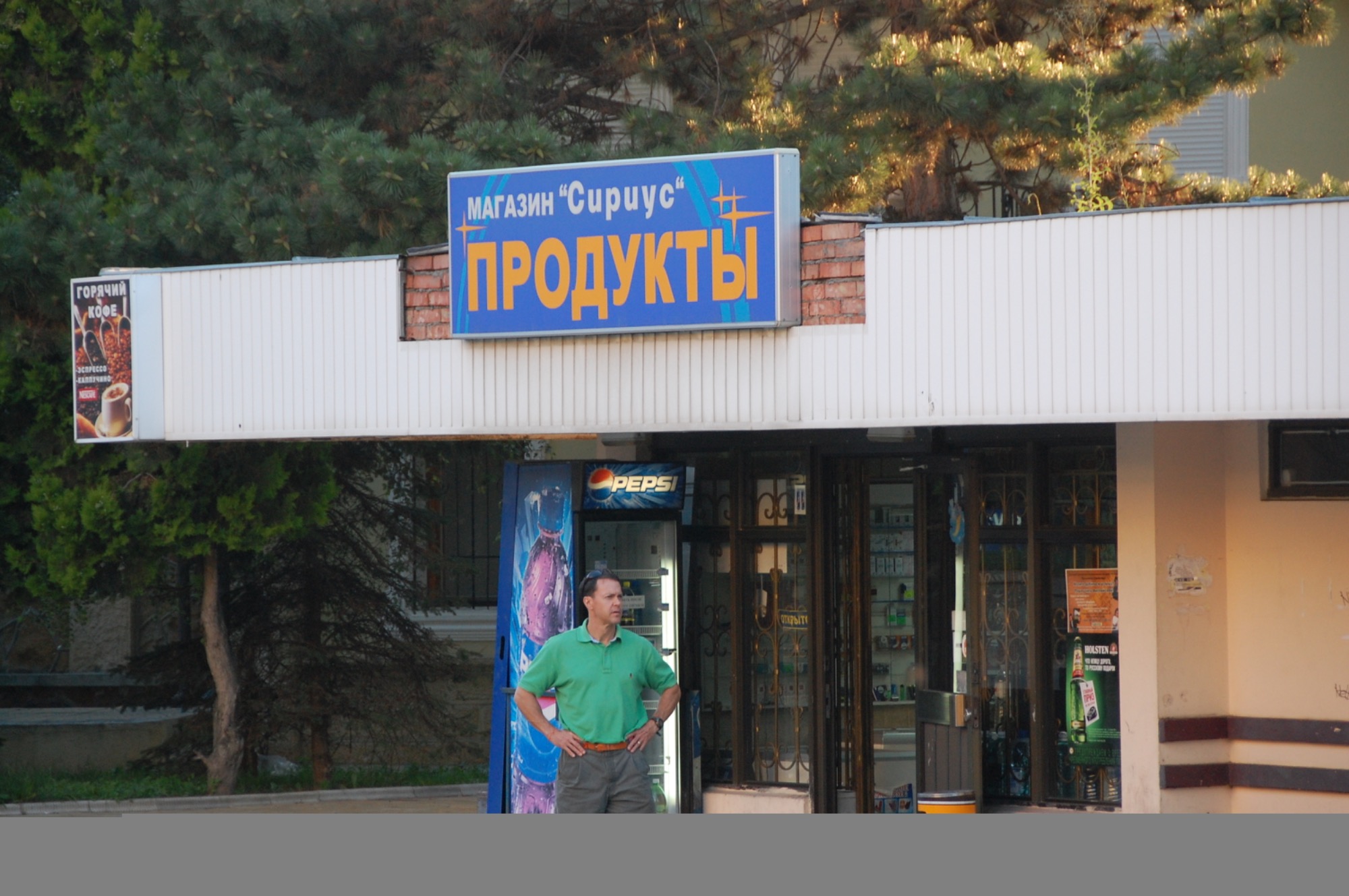
Soon, we boarded a three-and-a-half-hour flight south to Mineralnye Vody, a once-popular resort town turned quiet relic. Our hotel was a ten-story building - but only two floors had electricity. When we walked the streets, locals watched us with quiet curiosity. “They just don’t see many foreigners here,” our guide Anna said reassuringly.
The Mountain Sauna
By day four, we were desperate for a wash. Word spread of a local who had built a makeshift sauna in a hut down the valley. It was barely larger than a double porta-potty: one side with a steaming cauldron filled with eucalyptus leaves, the other a washroom with a cold-water hose from the stream.
For two dollars we each soaked in the hot water, then rinsed off with icy mountain runoff. It was the simplest, most brilliant contraption I’d ever seen - and after days without a shower, it felt heavenly.
Up to High Camp
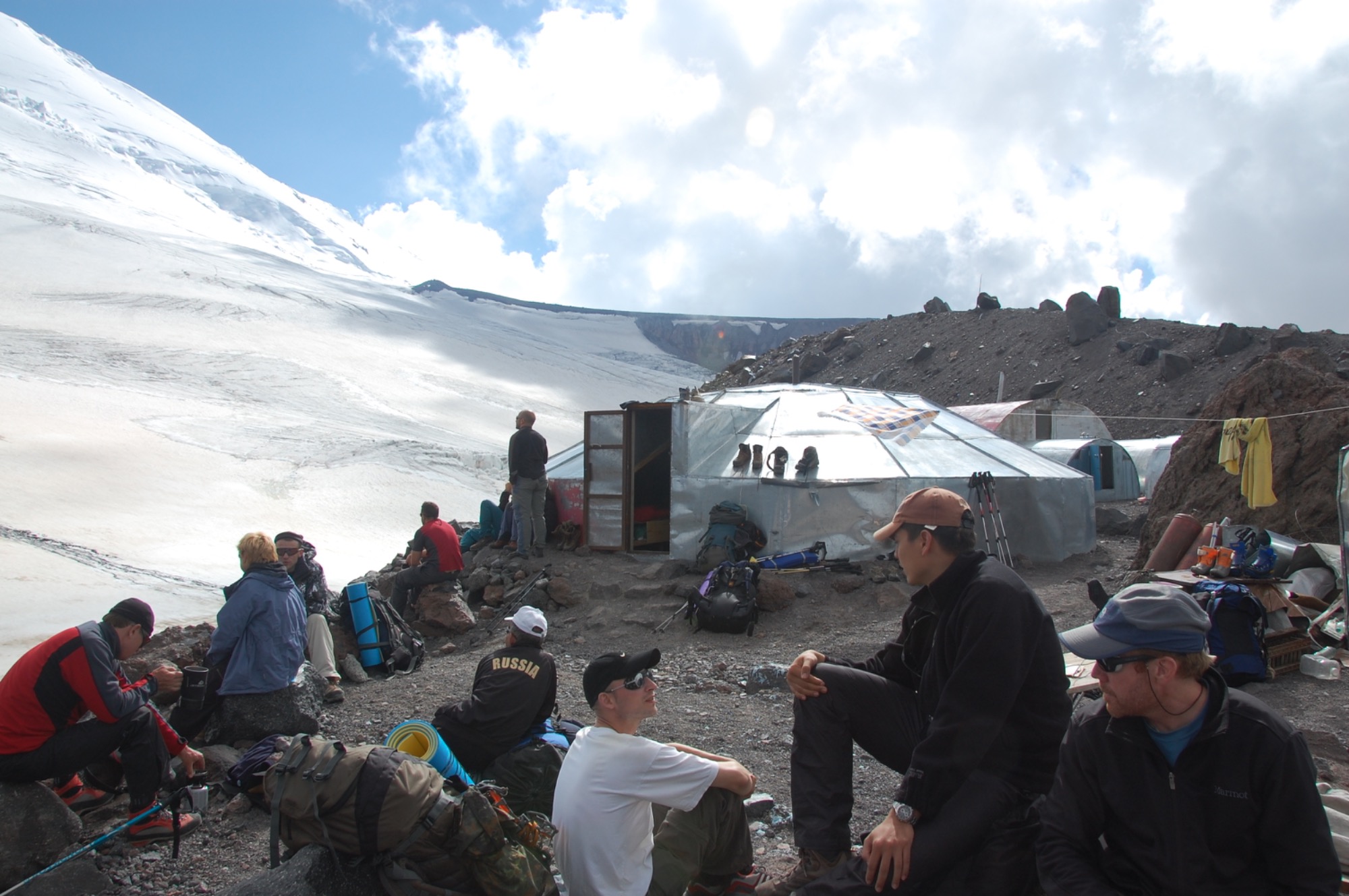
The climb to high camp took four to five hours under heavy packs. The yurt at the top was crowded - twenty climbers packed shoulder to shoulder, with wet gear hanging from every hook and line. Sleep came in fragments, drowned by snoring and rustling.
The next morning, we hiked to Lenz Rocks (15,400 ft) for glacier training: knots, rope travel, crampon work, and self-arrest with ice axes. Familiar drills, but invaluable practice.
Among our group was a British team, including a climber with Cystic Fibrosis, hoping to become the first to summit Elbrus. His determination was contagious - a quiet reminder of why we climb.
Moscow and Mineralyne Vody
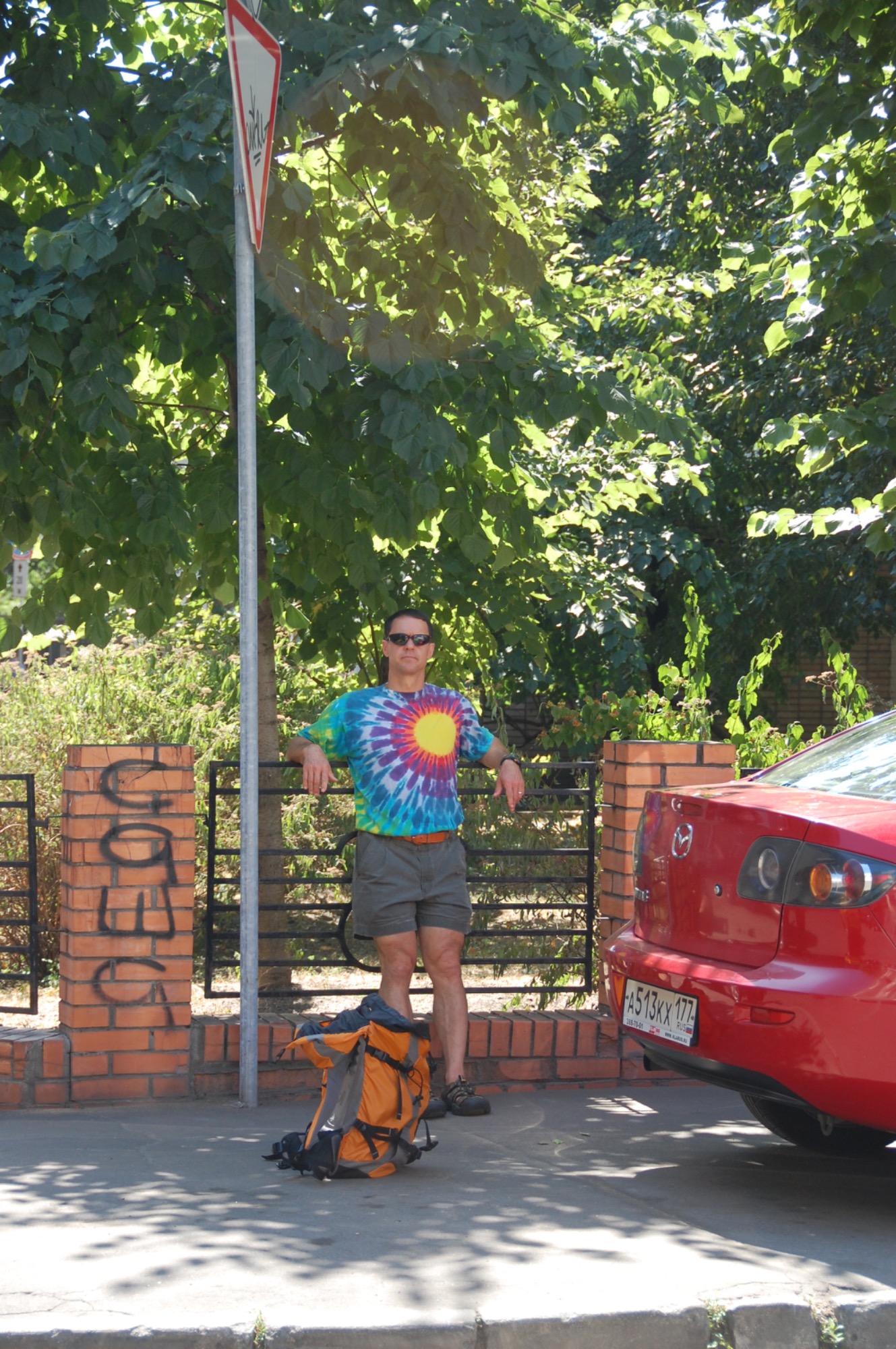
We explored Moscow and Mineralyne Vody before we arrived at Elbrus North Base Camp
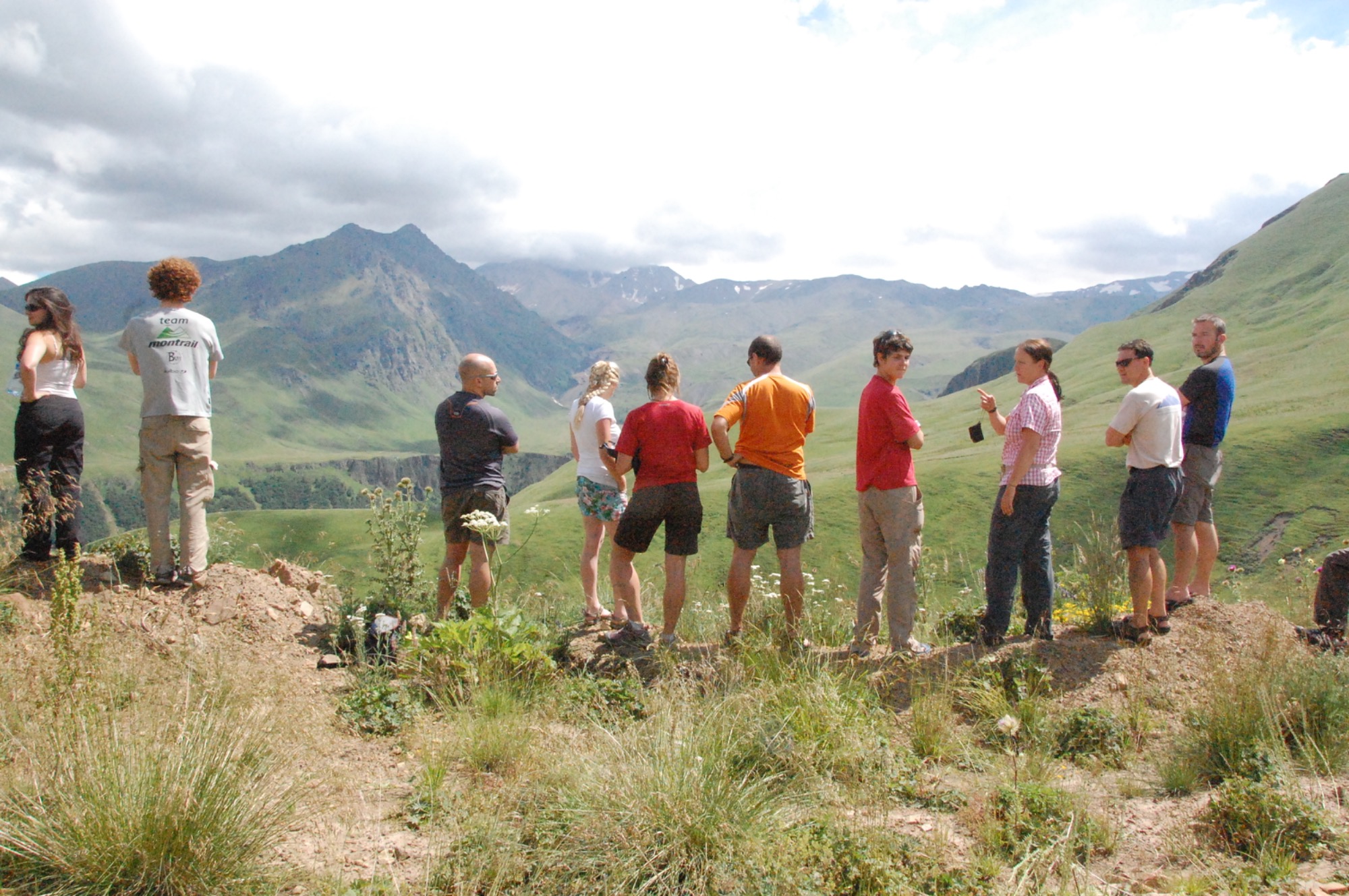
Northside Basecamp
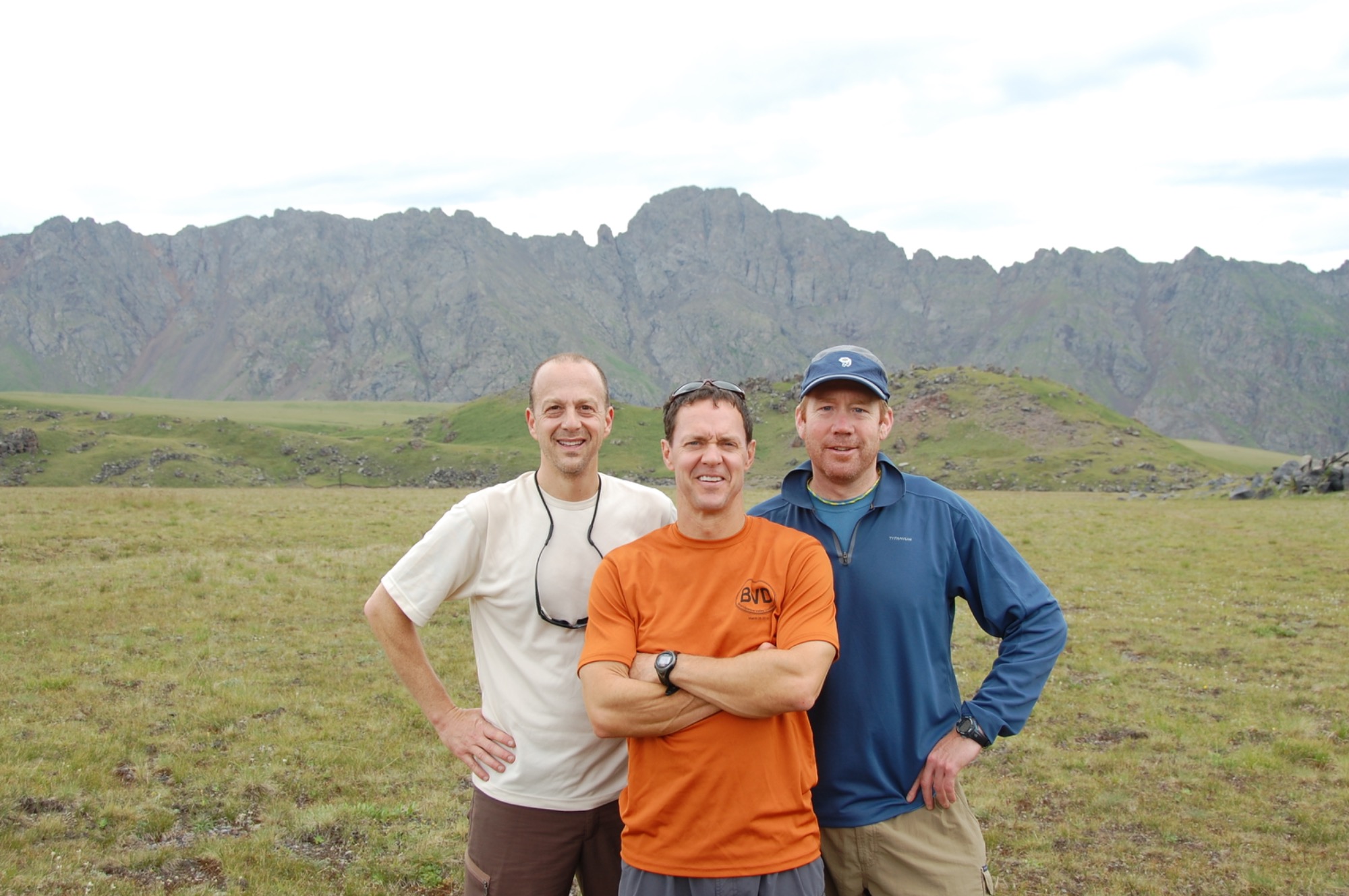
The Northside basecamp was in a very lovely green valley at the foot hills of Elbrus.
There were several teams either getting ready to climb or returning from the summit. Others were on the same timetable as us.
High Camp and the Summit
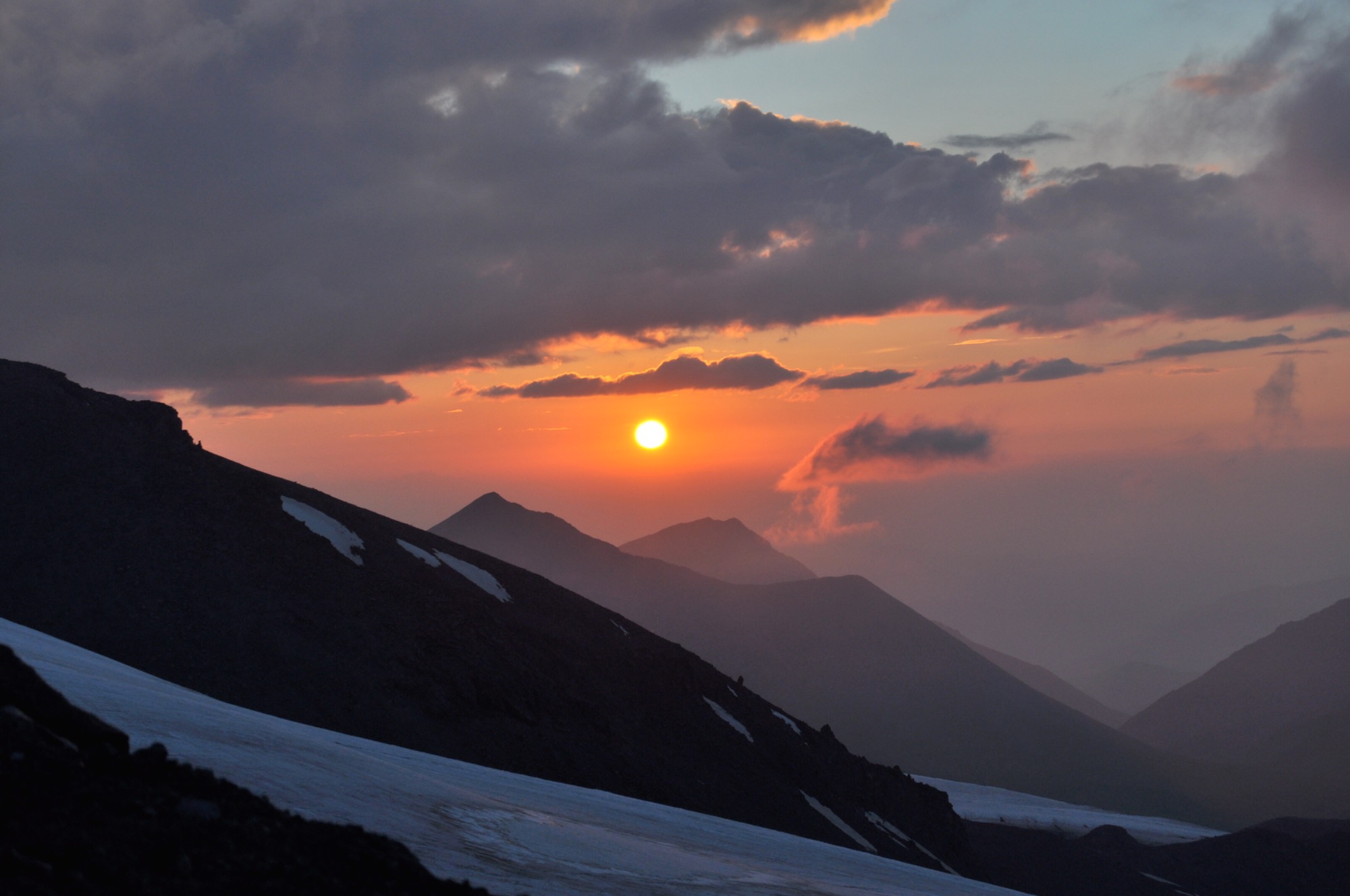
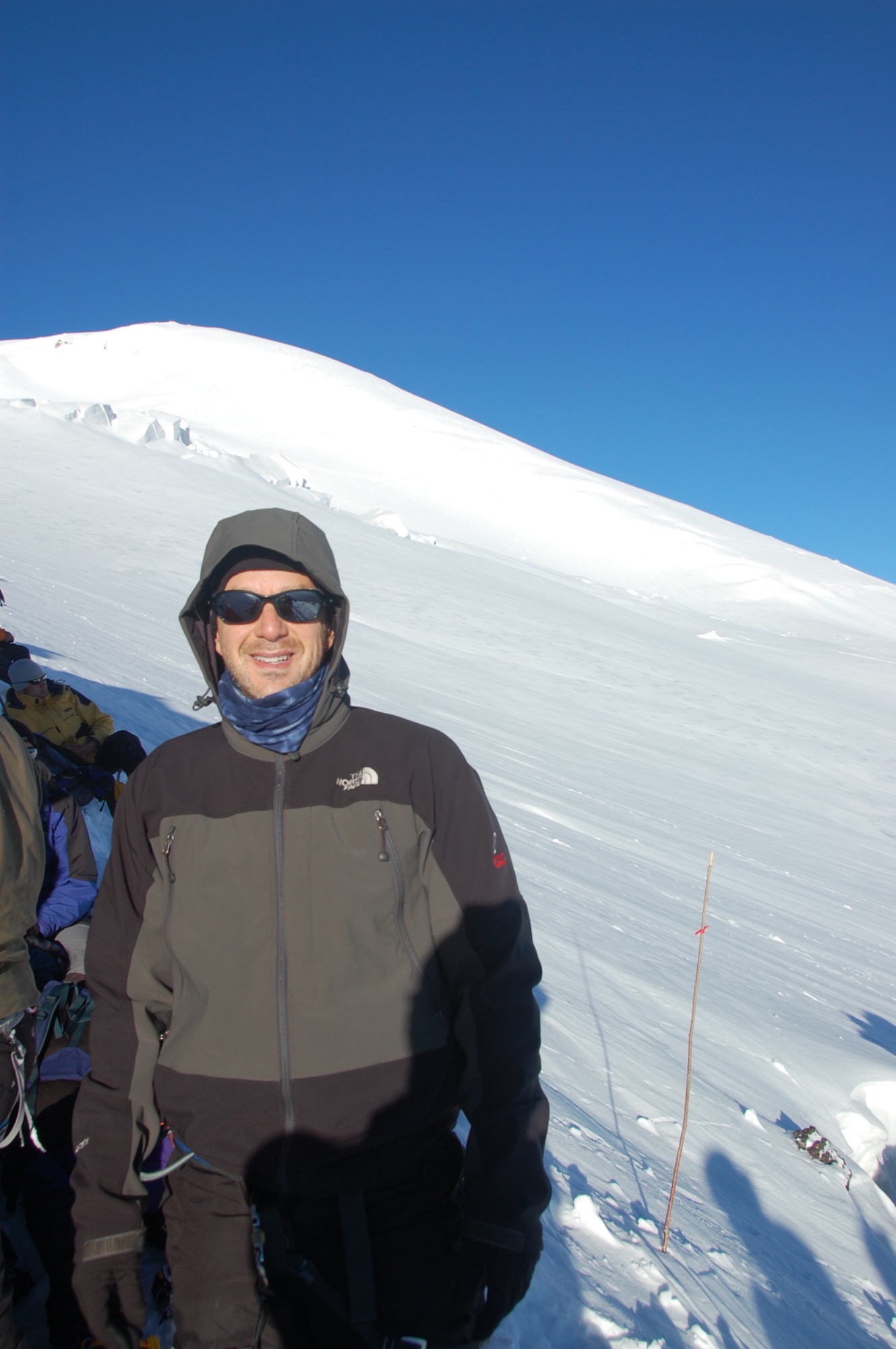
Sunset the night before the climb to the summit was exceptional. Climbing during the night and the sight of the summit at dawn was also amazing. We reached the summit in a storm with no visibility.