Greenland Ice Cap 2024
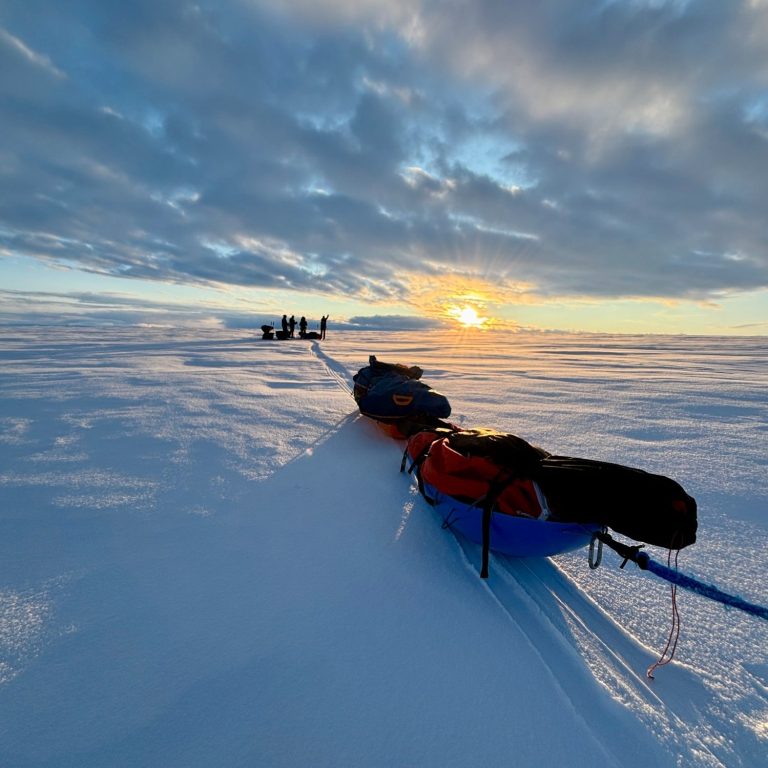
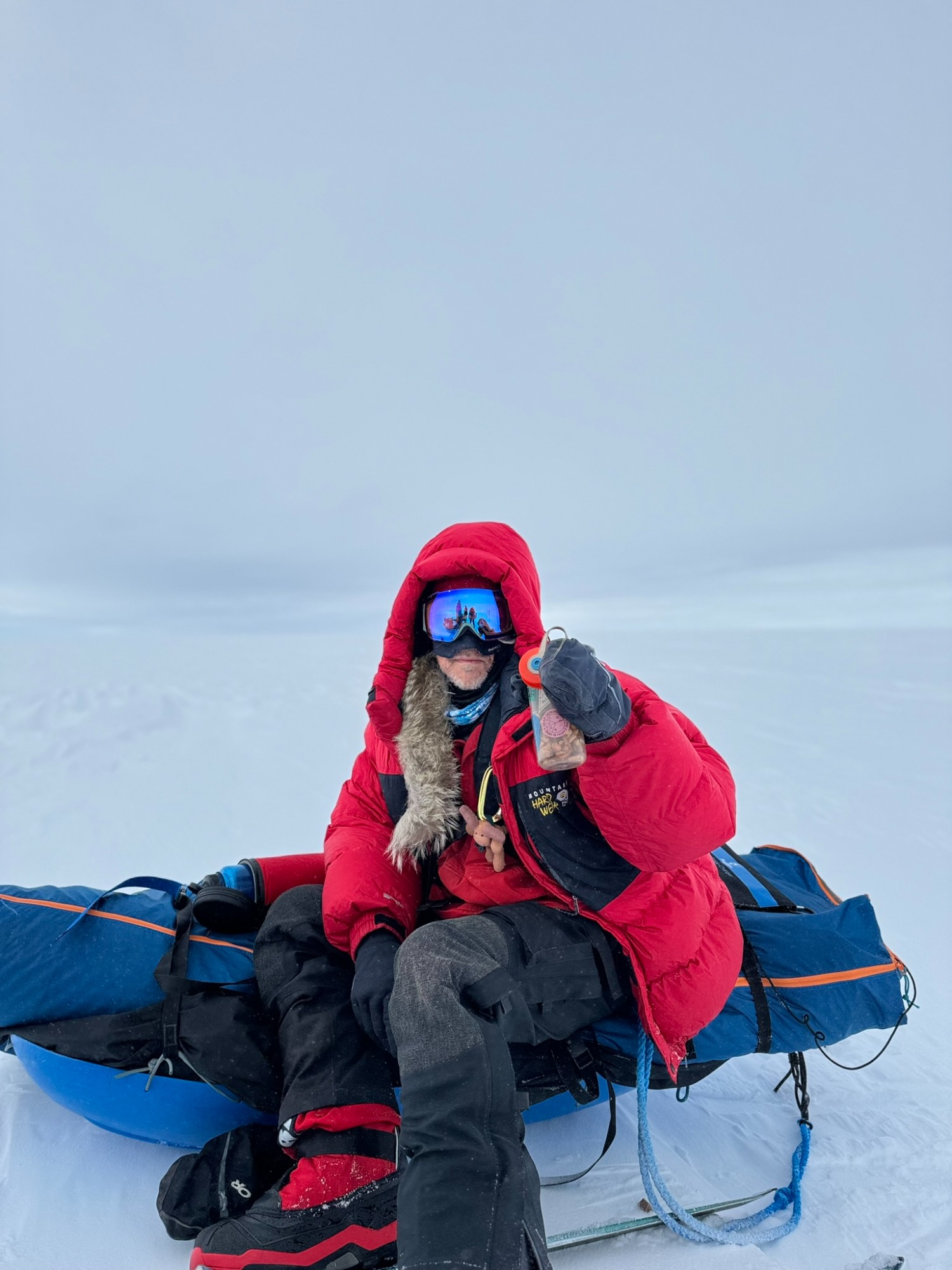
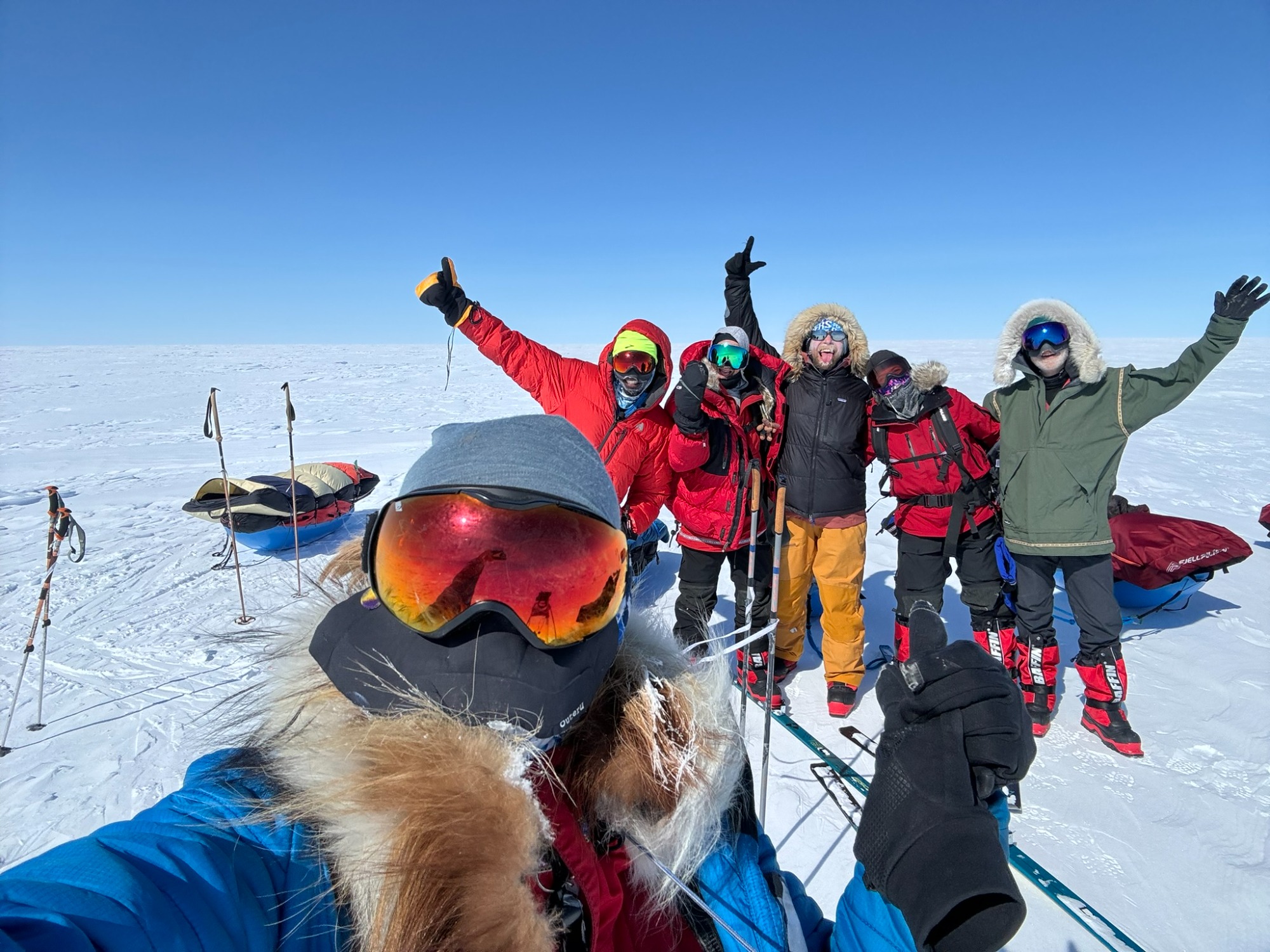
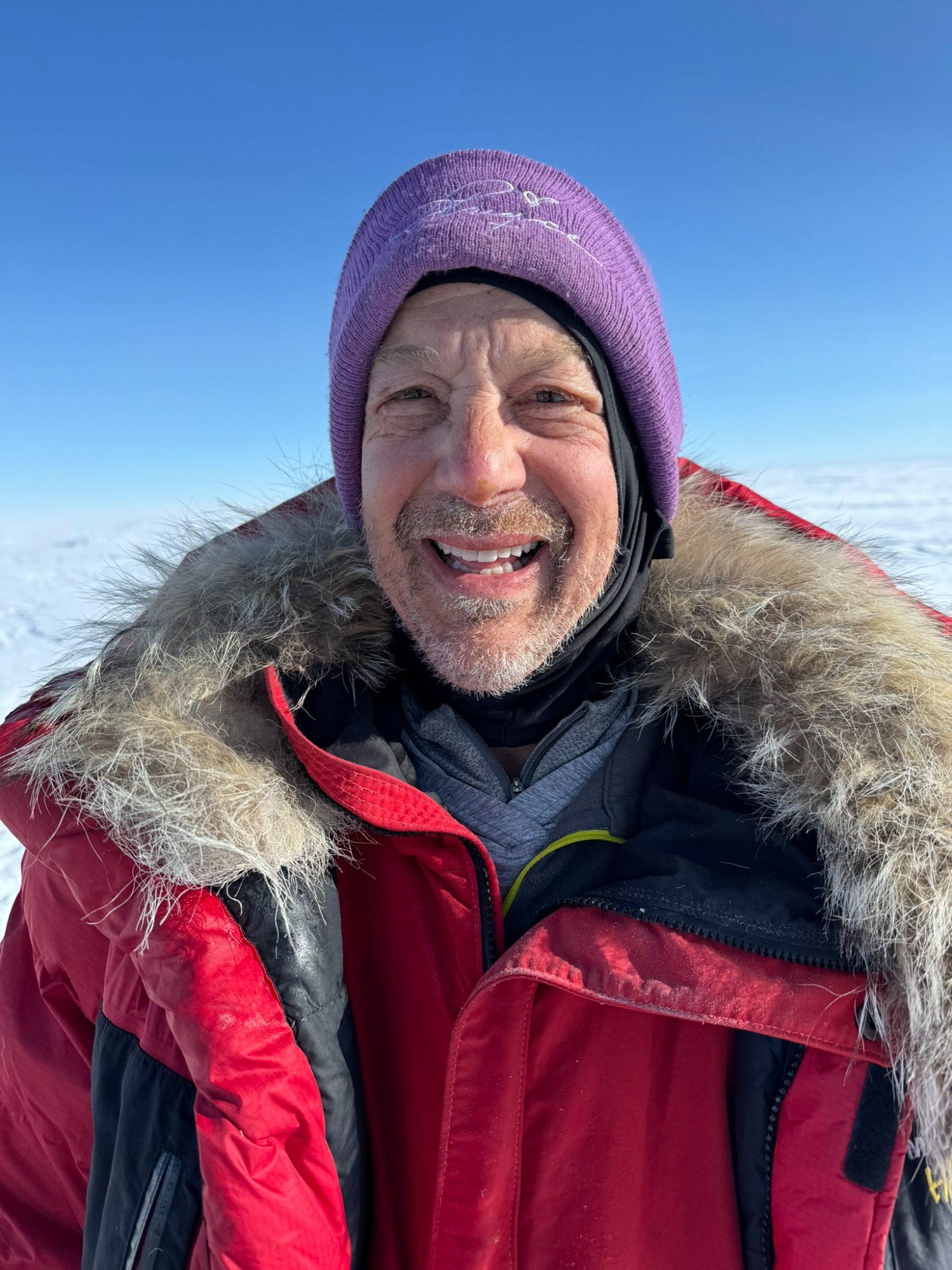
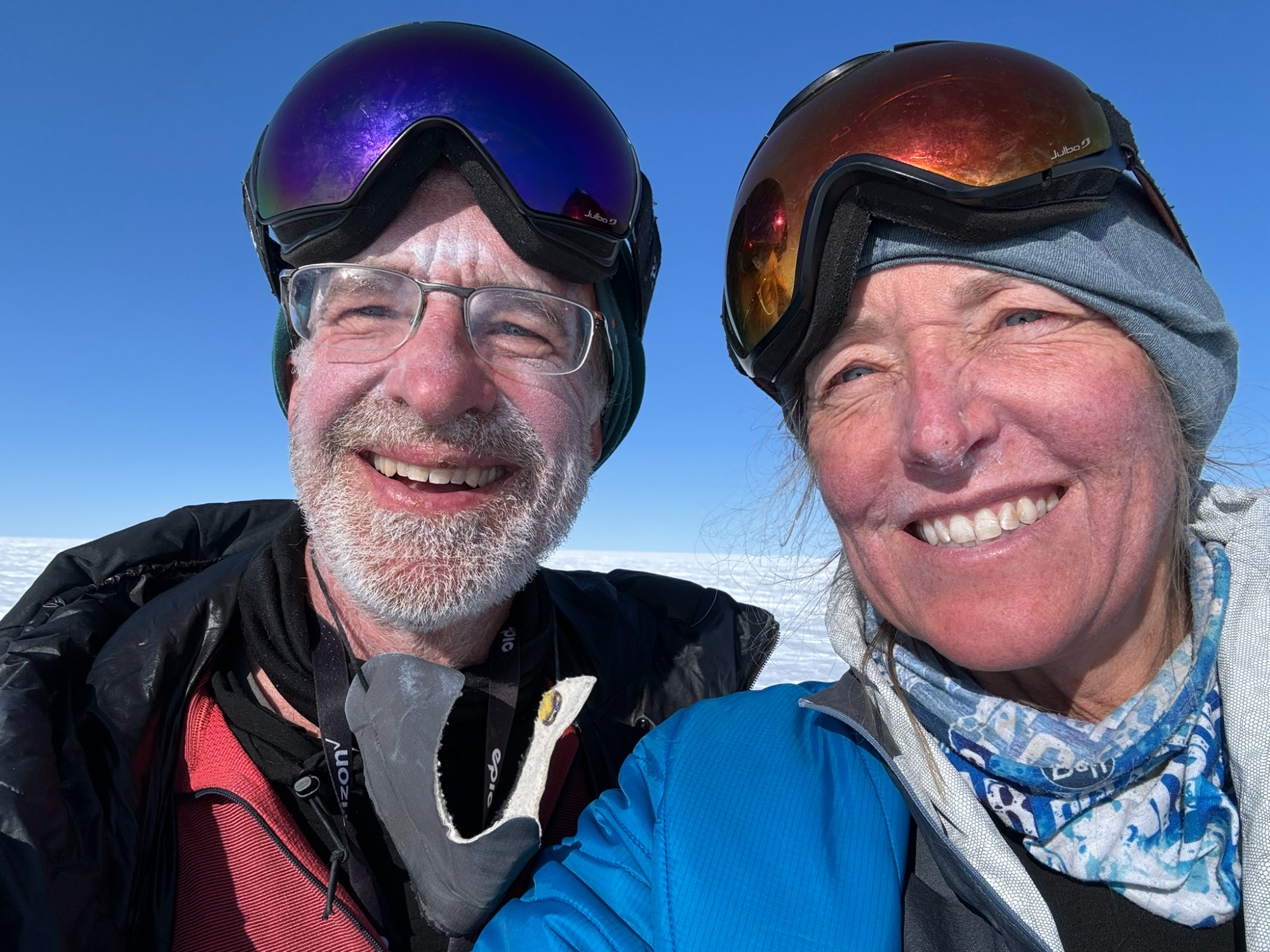
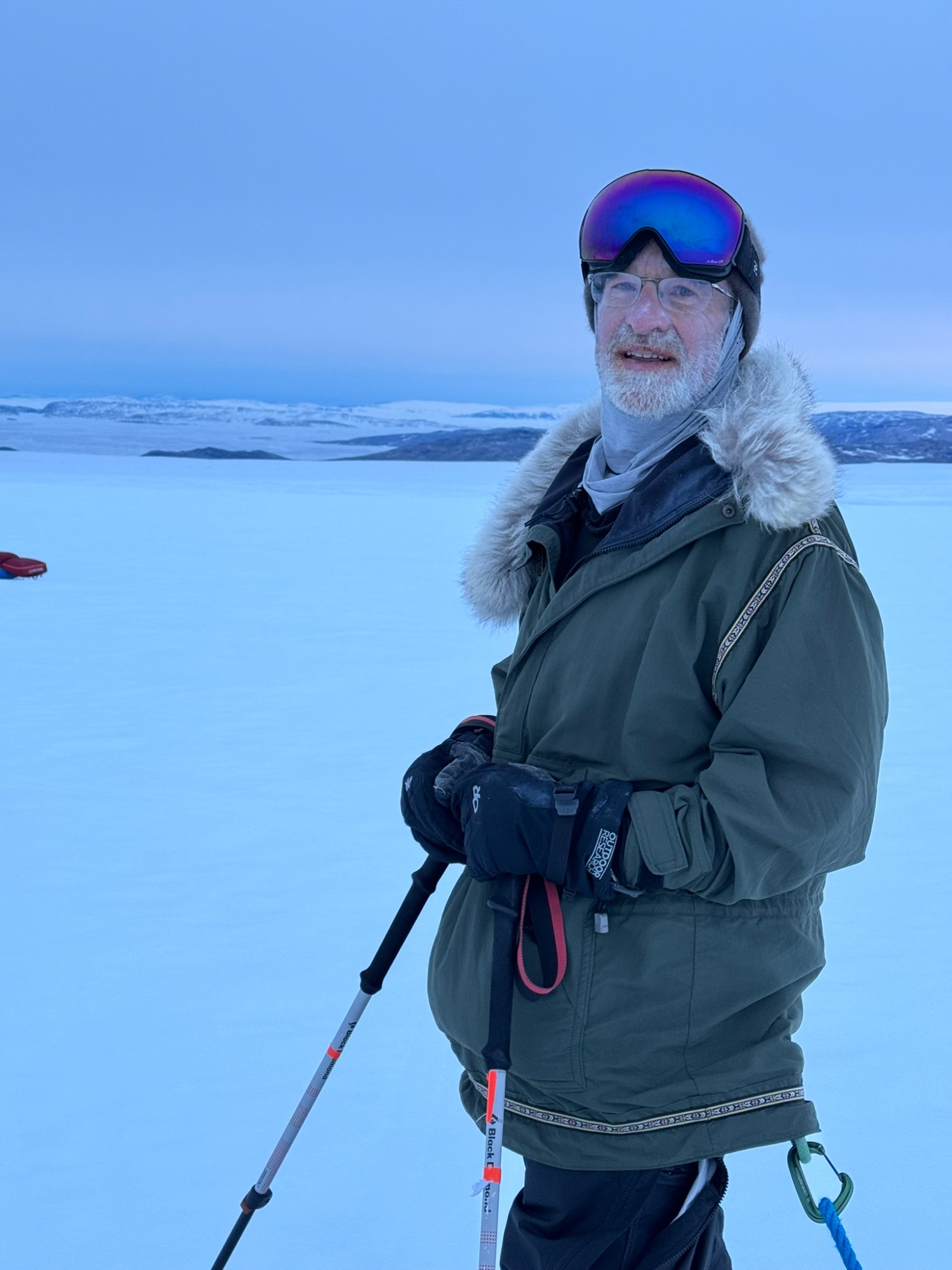
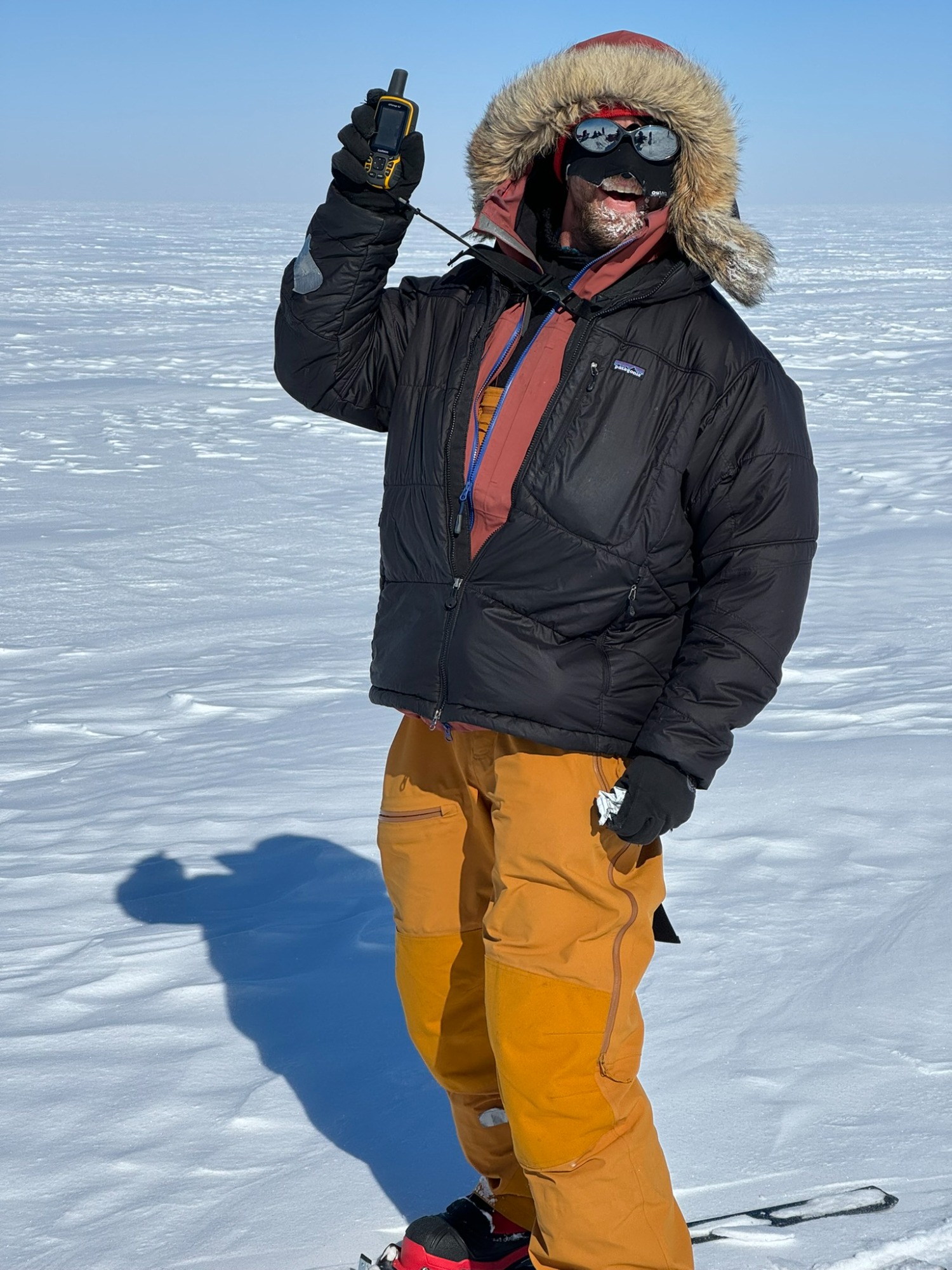
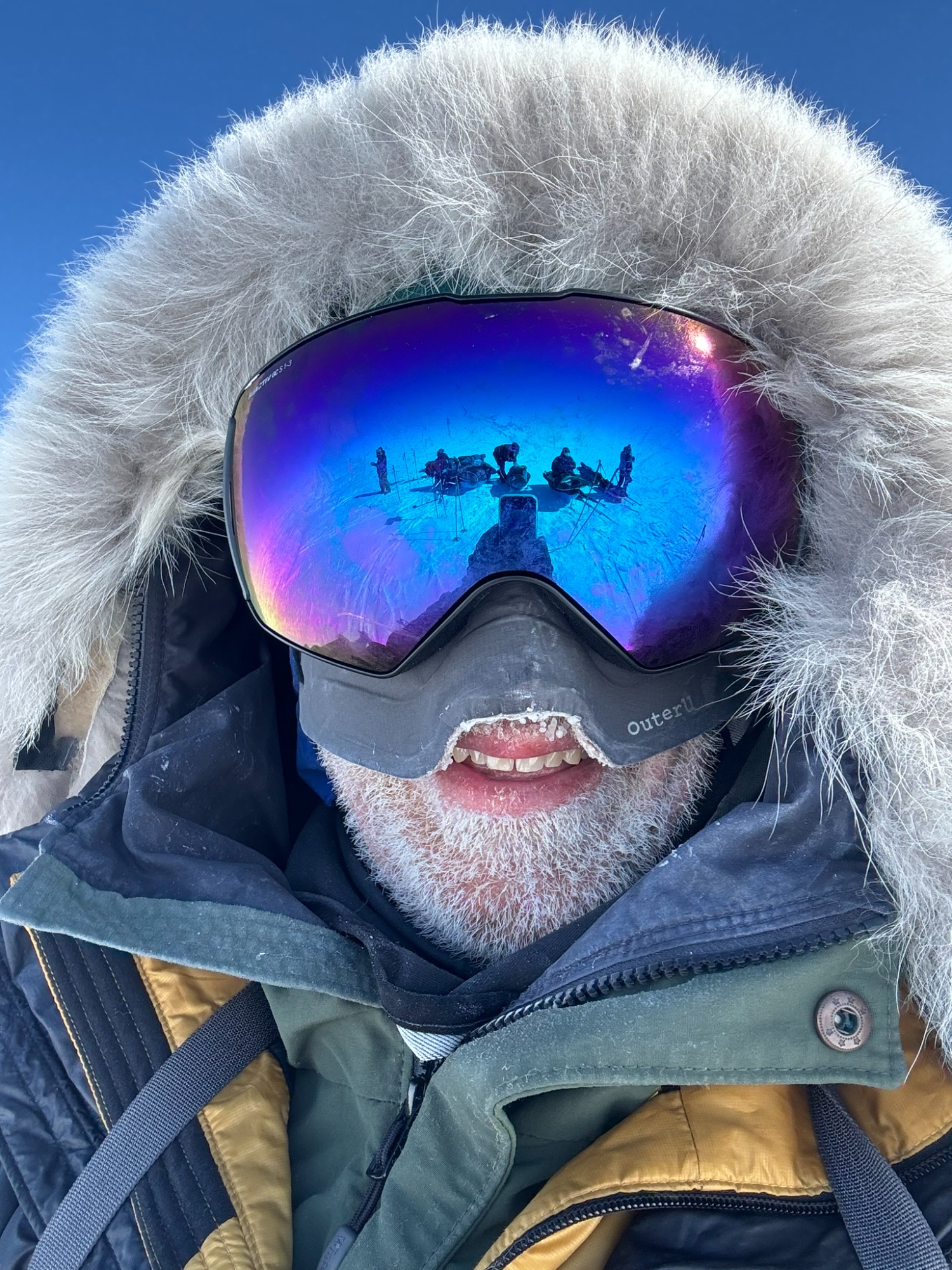
One of the best adventures of my life. Thank you Polar Explorers (www.polarexplorers.com) The journey was incredible, but the team was the story.
The Ice Cap
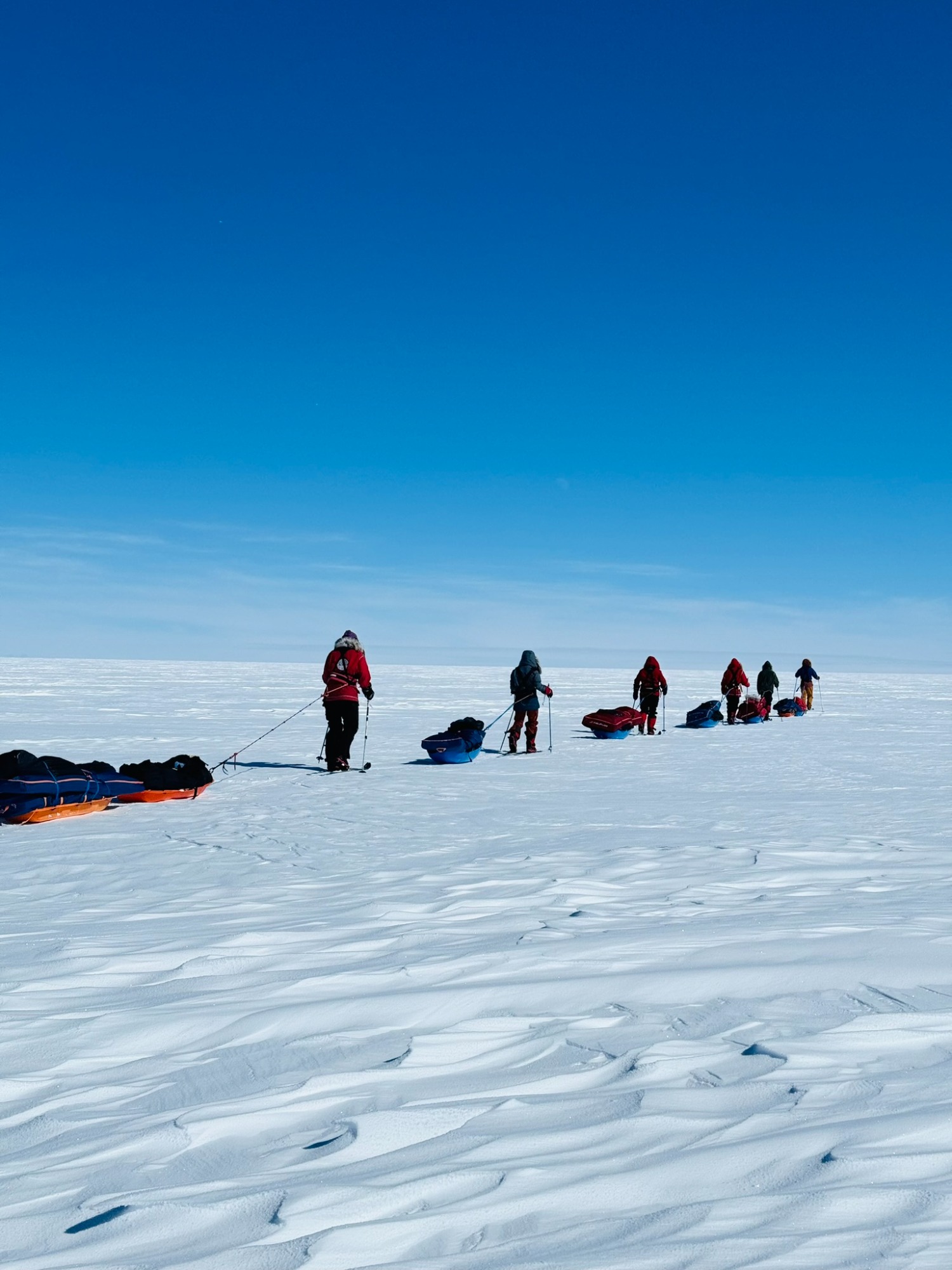
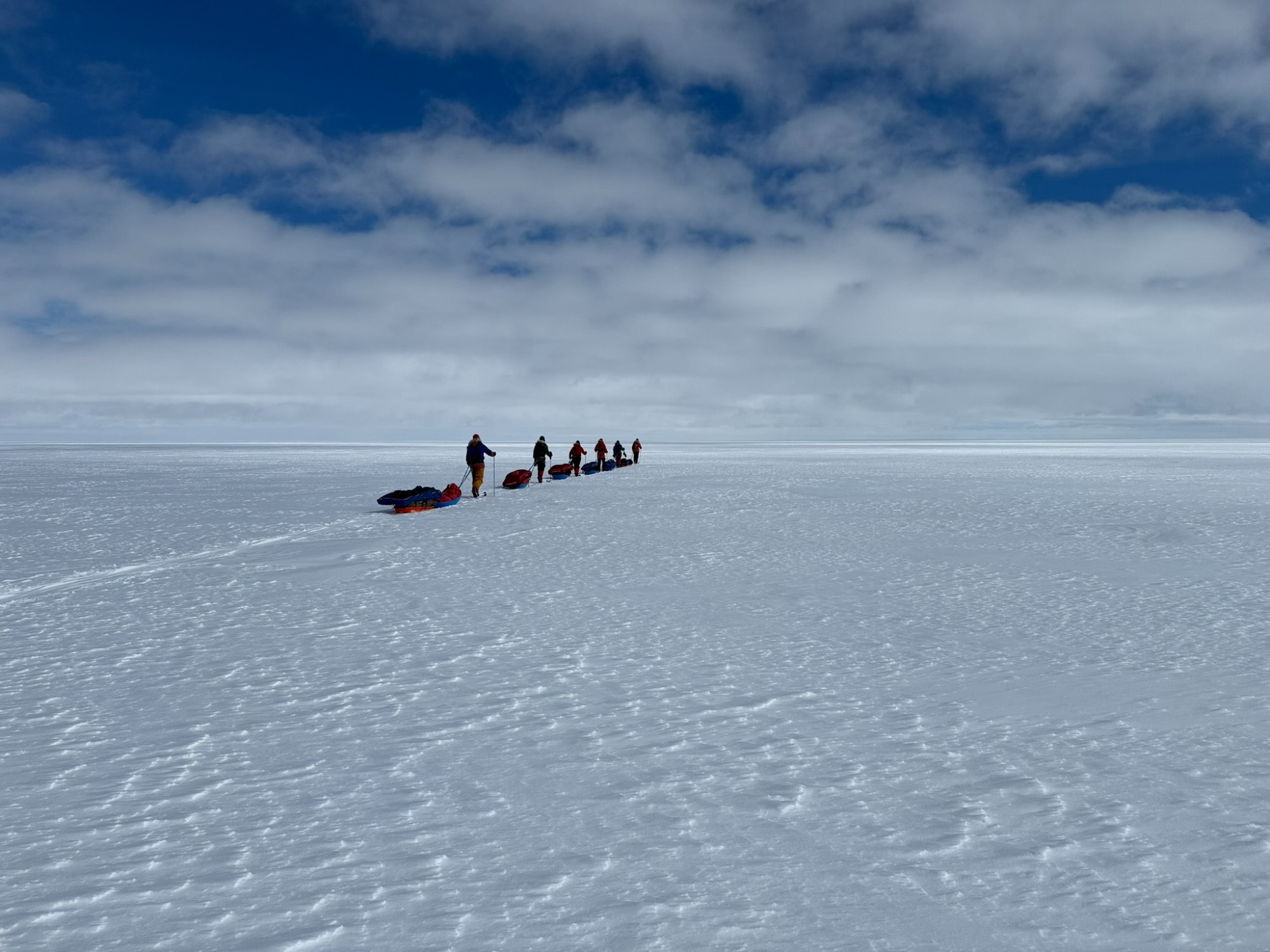
Over 375 miles in 30 days.
Pulling 170 lbs
Moving 13 miles per day
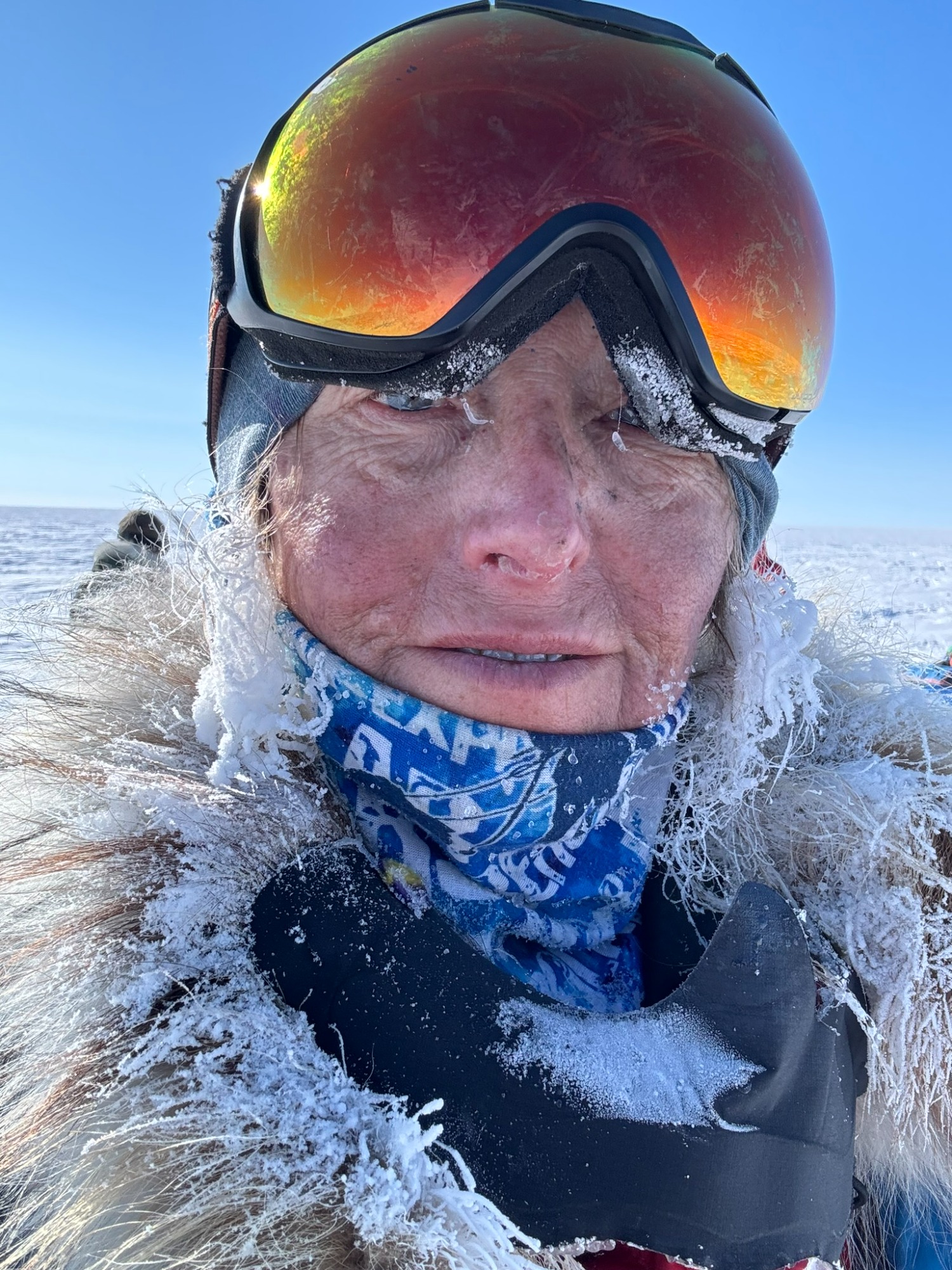
Encountering all forms of weather
The Team
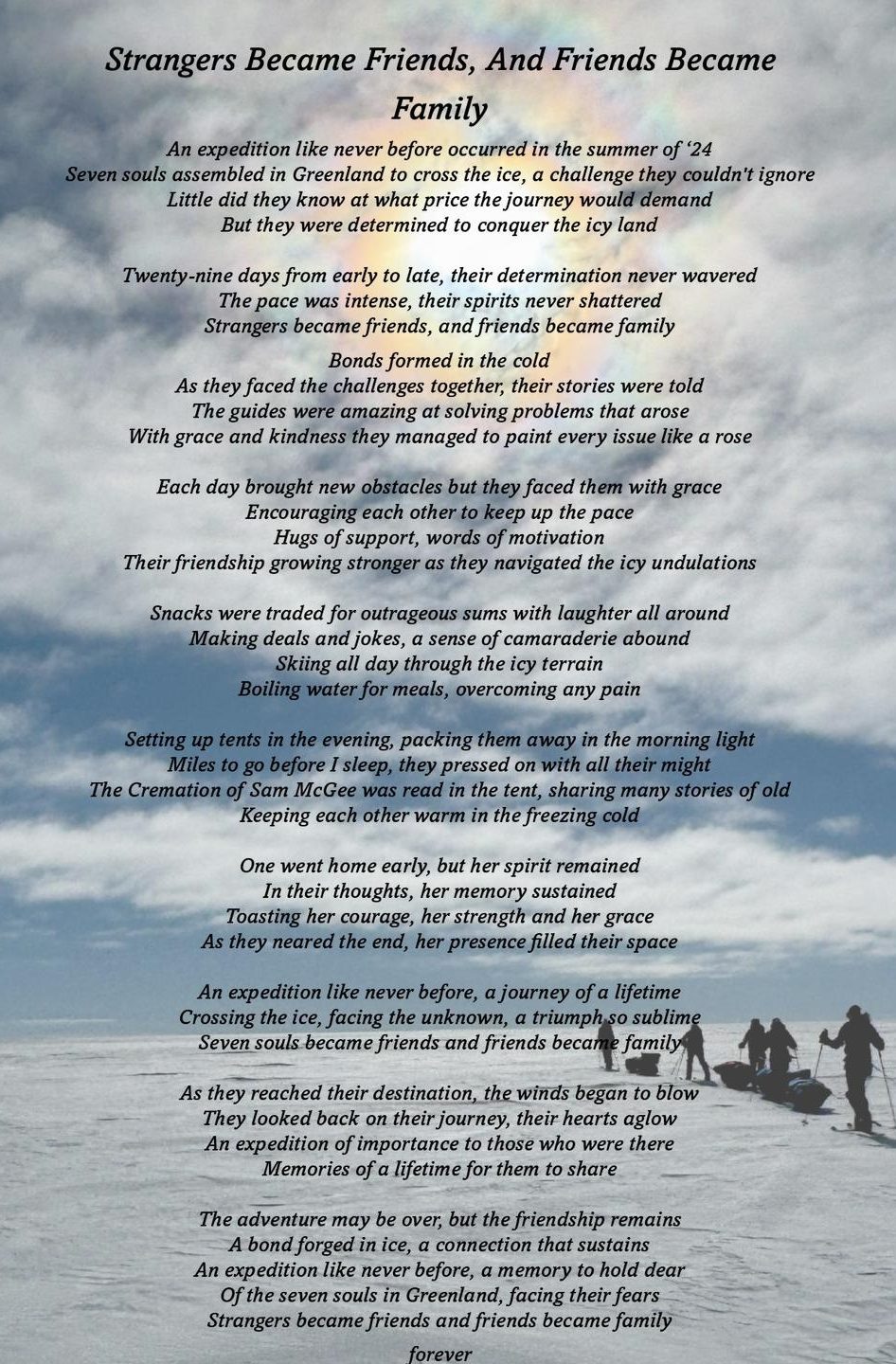
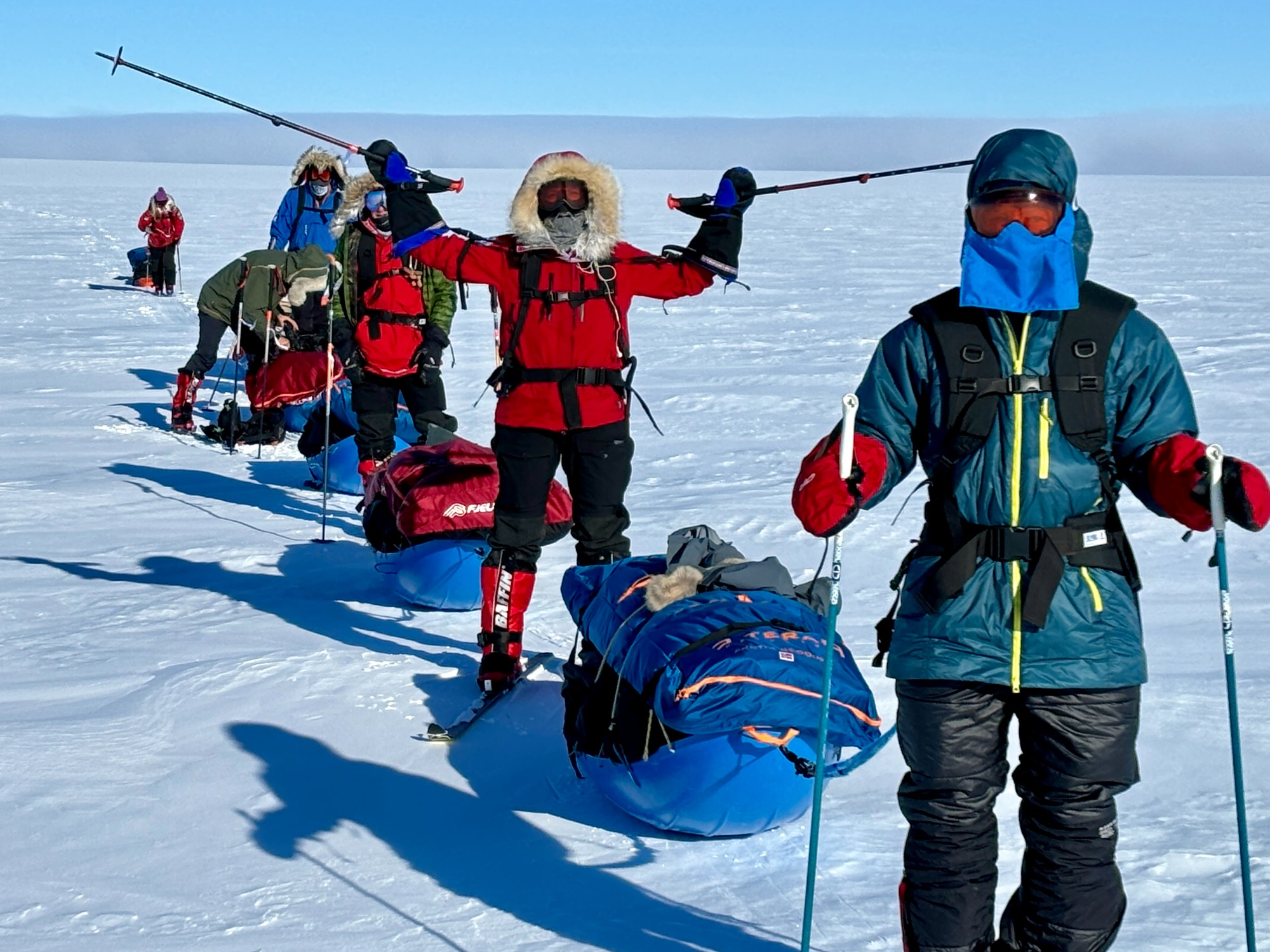
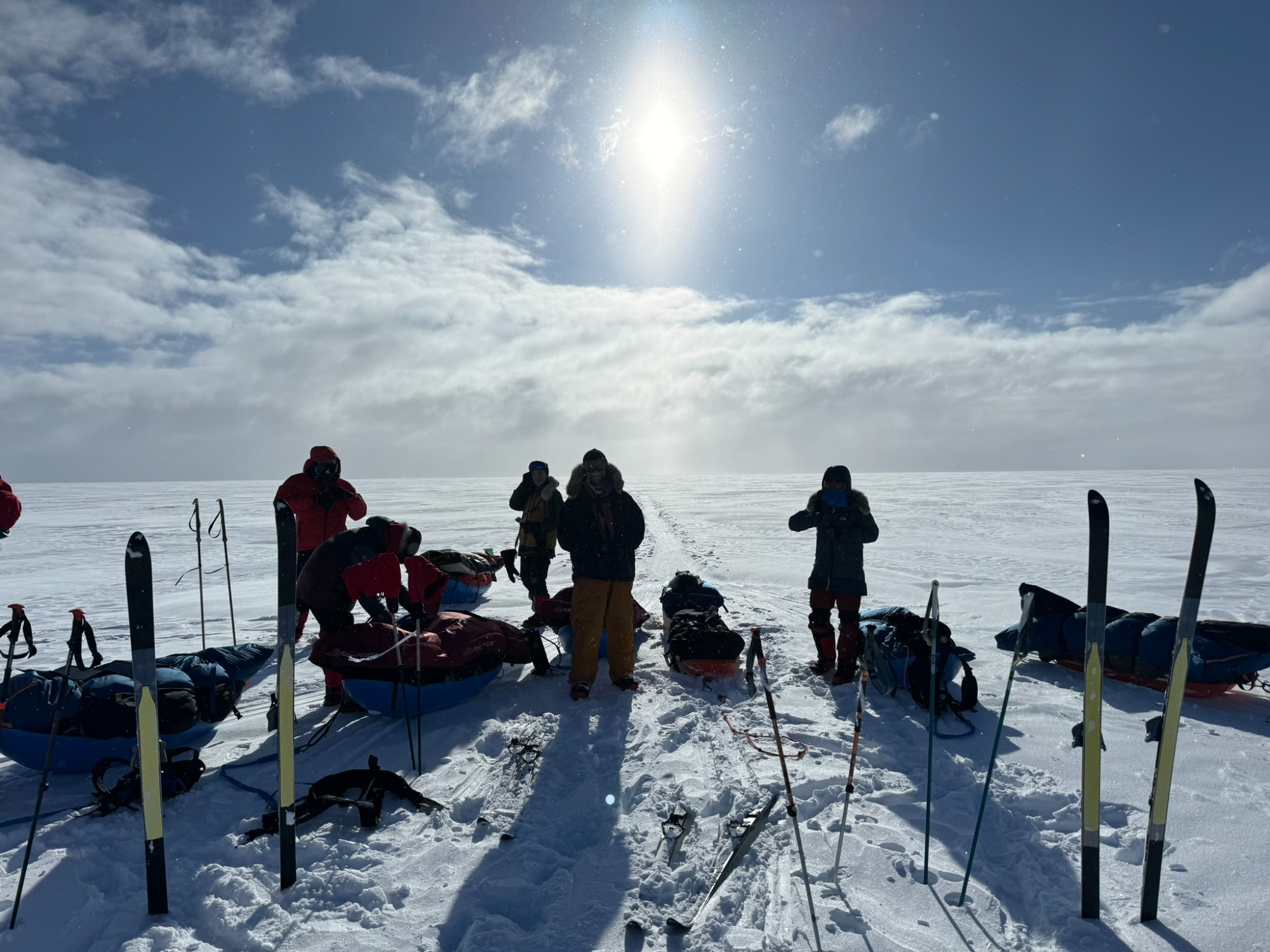
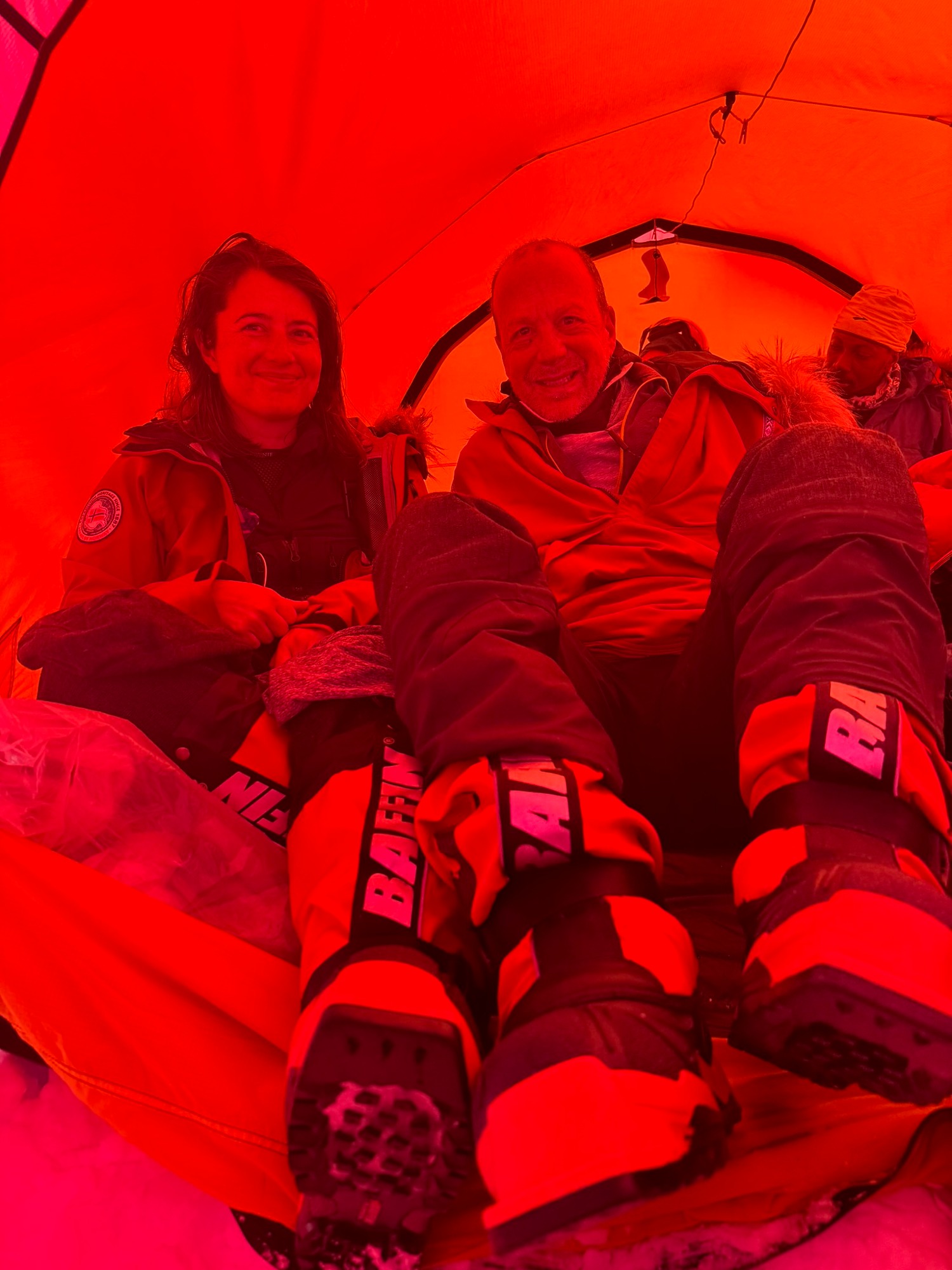
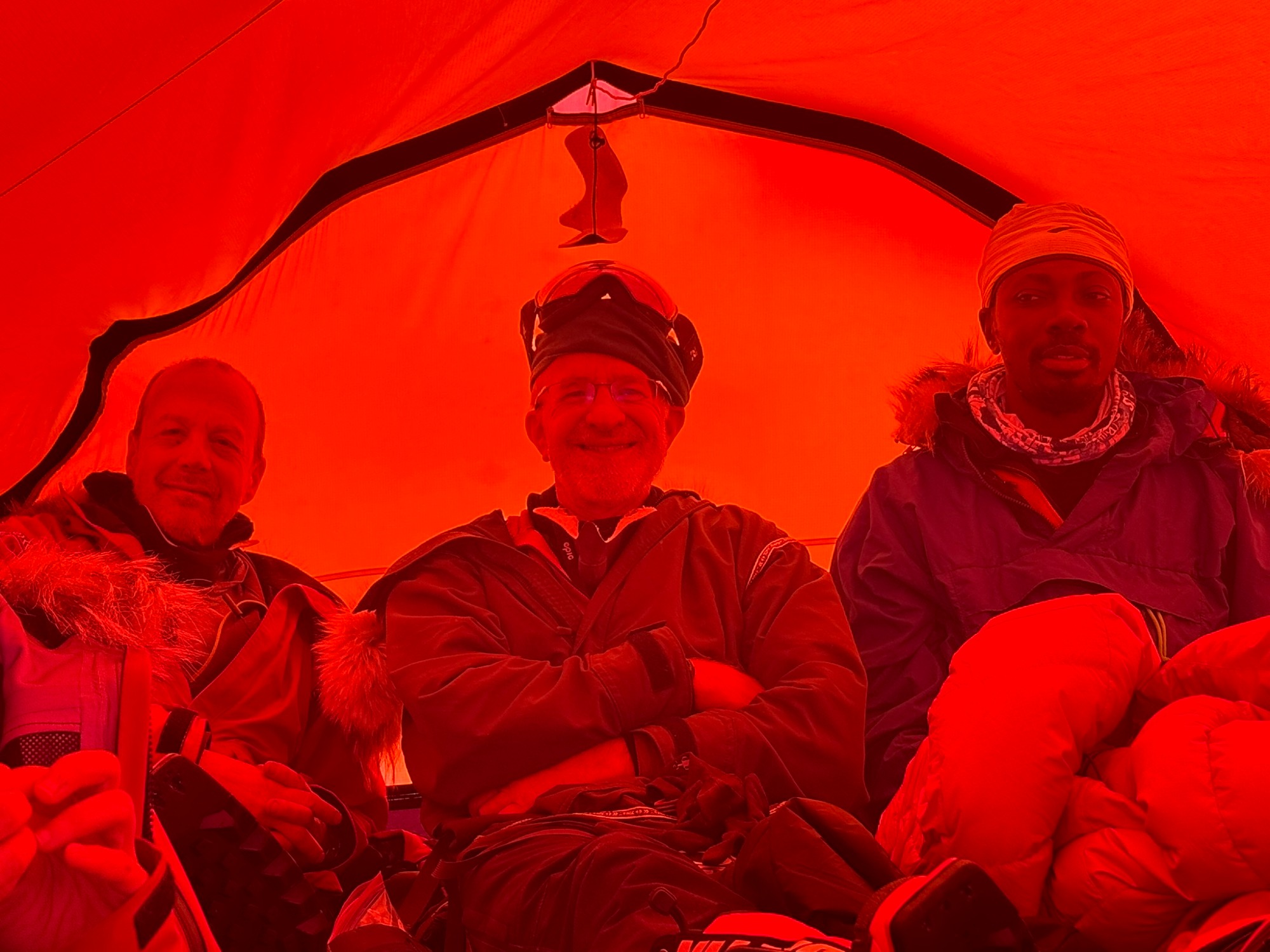
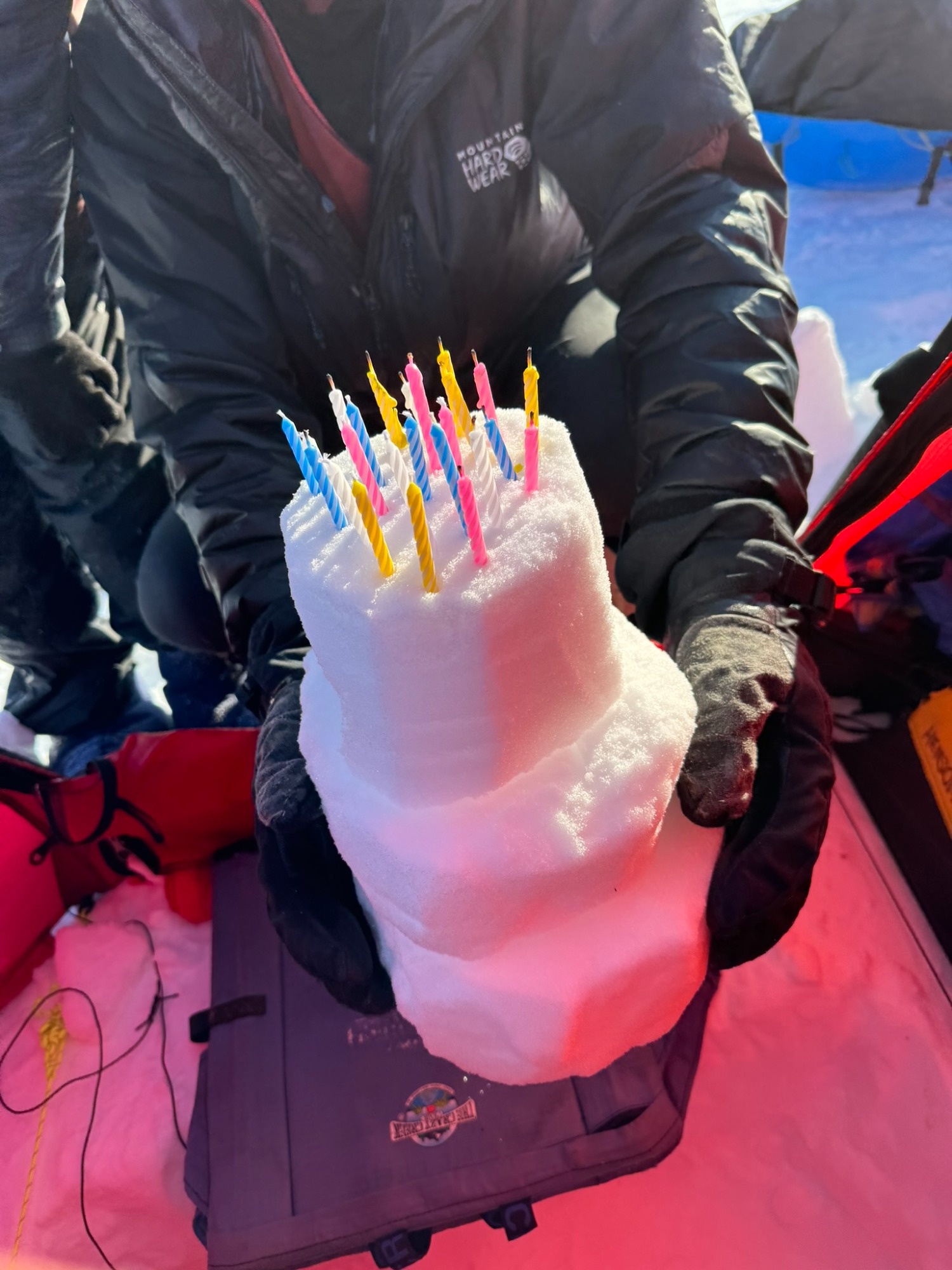
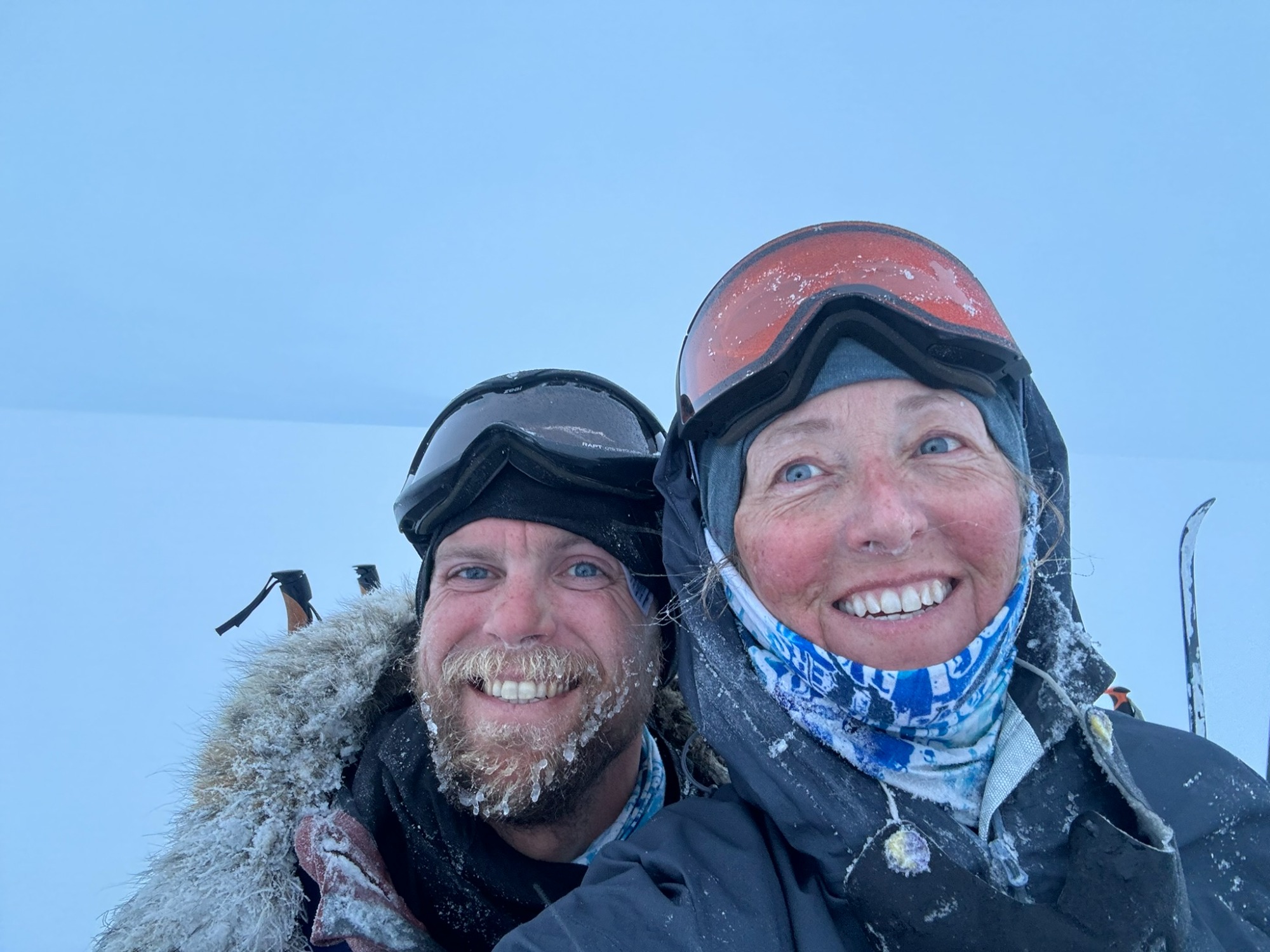
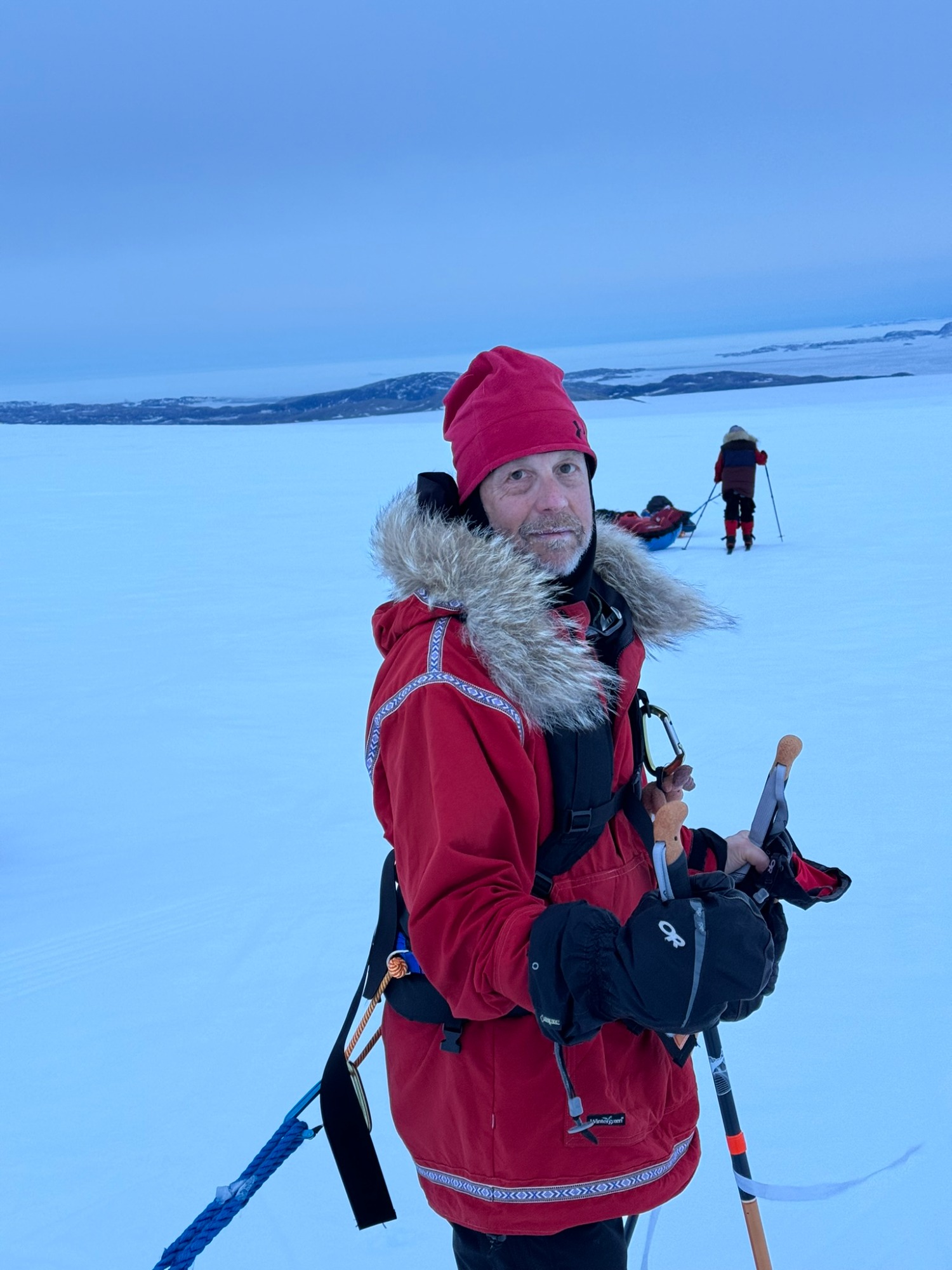
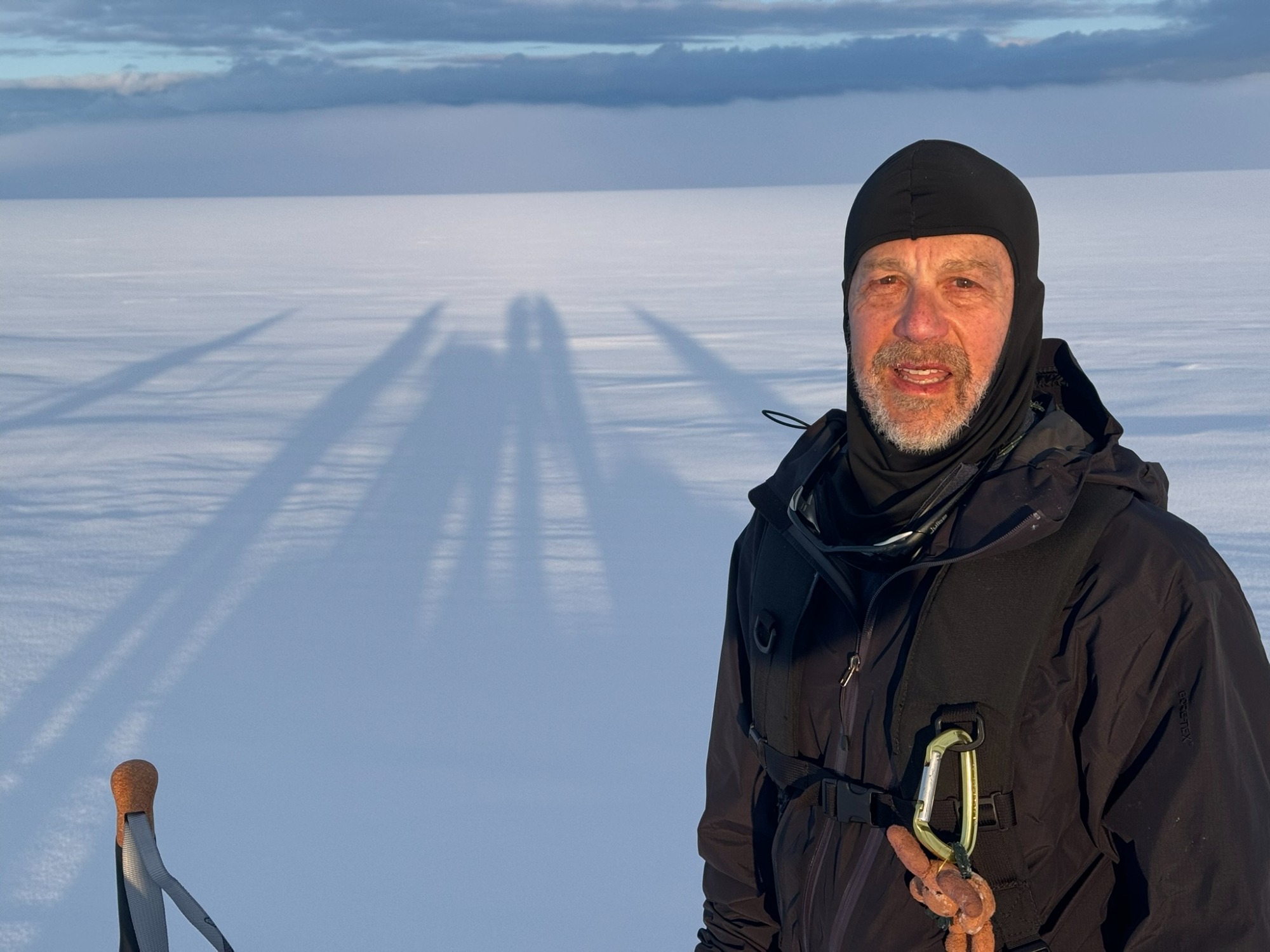
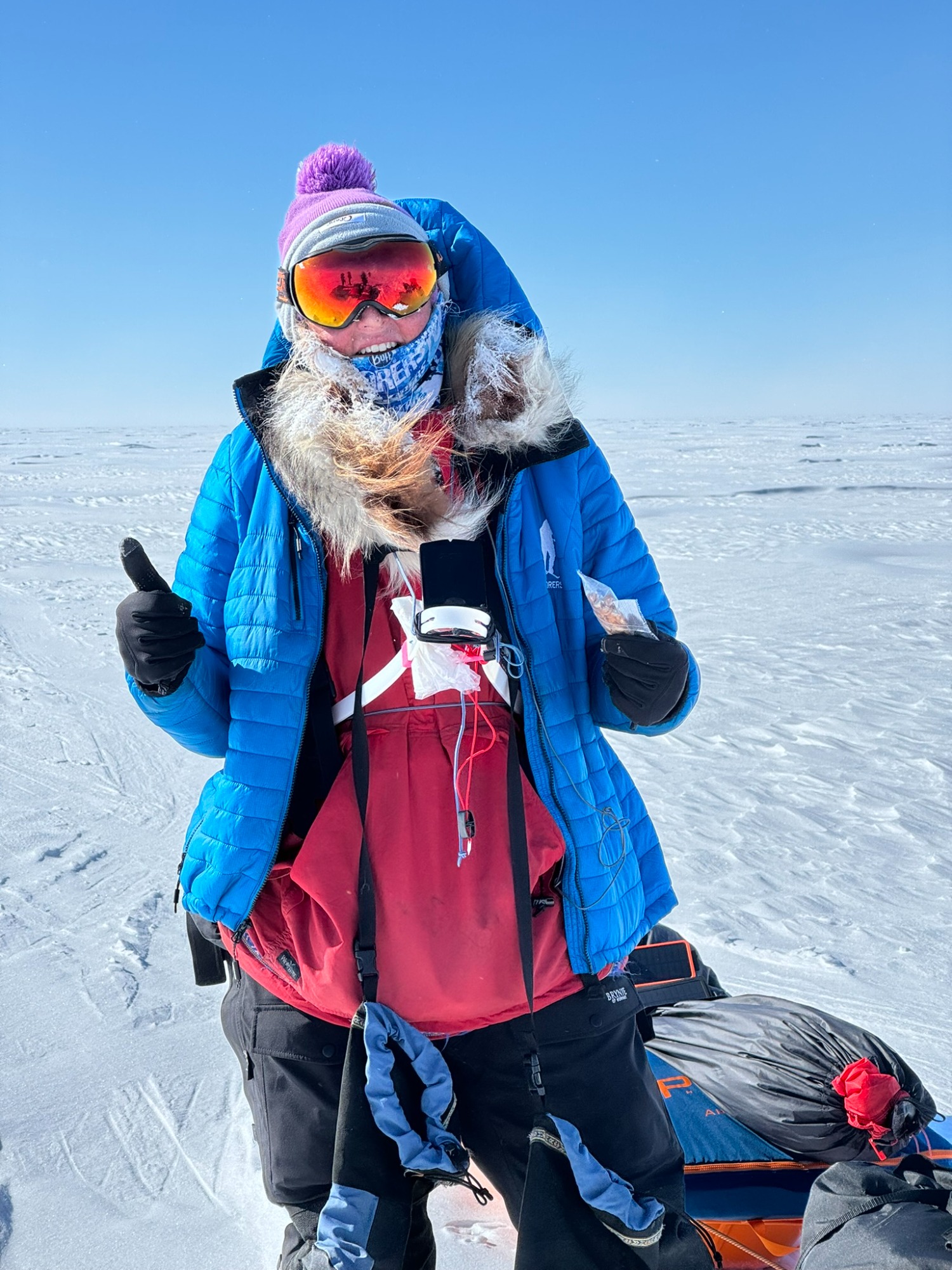
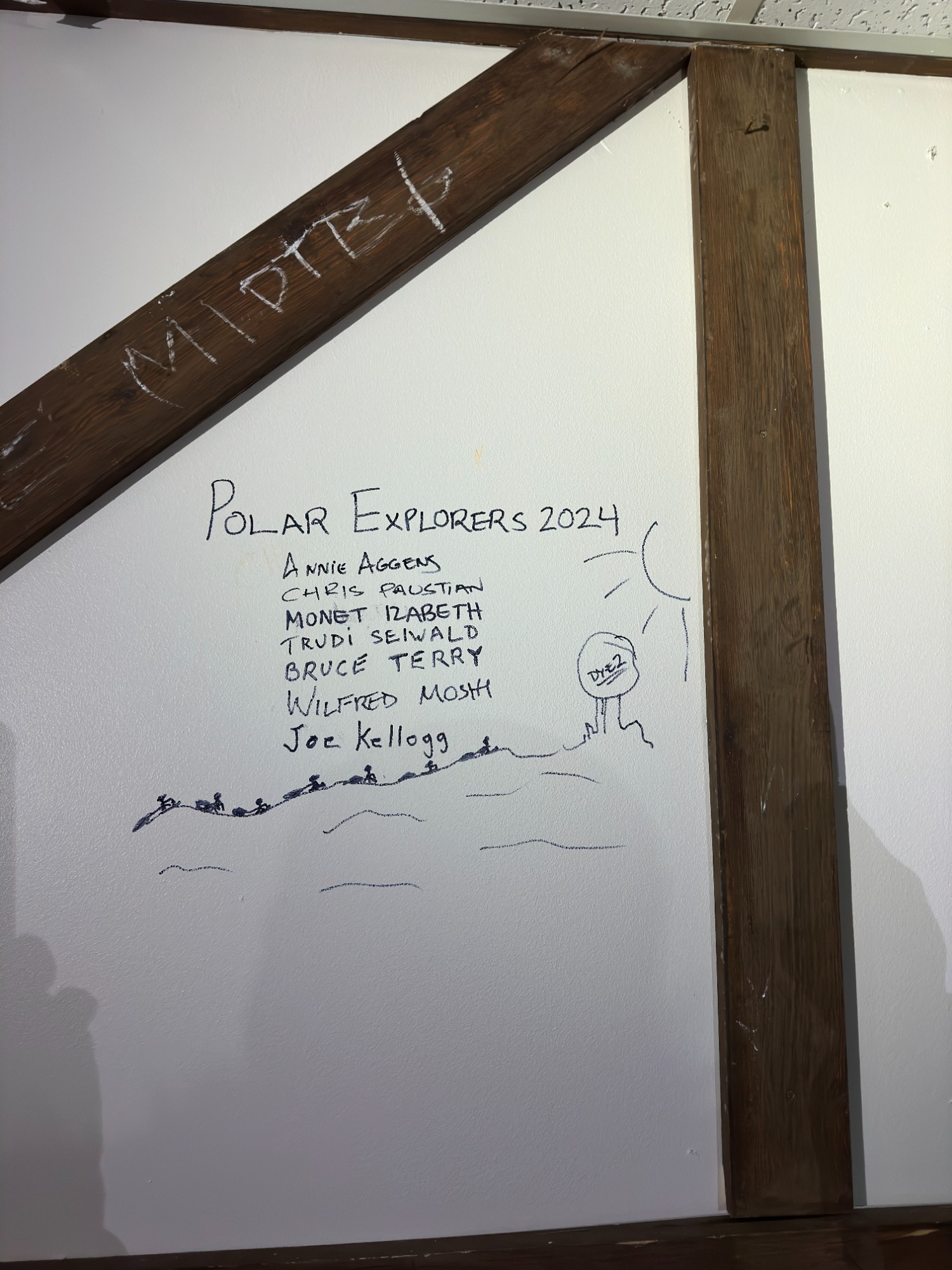
The group consisted of seven people, six of whom had previously met for a "shakedown" in Minnesota a few months earlier. We formed a strong bond in Februrary and learned about each other. The Ice Cap adventure was a once-in-a-lifetime event. Each teammate was more than another person on the journey. We helped each other on the bad days. We laughed at the funny and stupid stuff. We hunkered down when thing got bad. We hugged each other in good times and bad.
Greenland: A Crossing
On April 30, 2024, I arrived in Kangerlussuaq, Greenland - not to climb a mountain this time, but to cross-country ski across the entire Greenland ice cap. It felt strange to be in a place synonymous with polar expeditions, yet knowing that ropes, carabiners, and summit bids were not the point. This time the challenge was horizontal and endless.
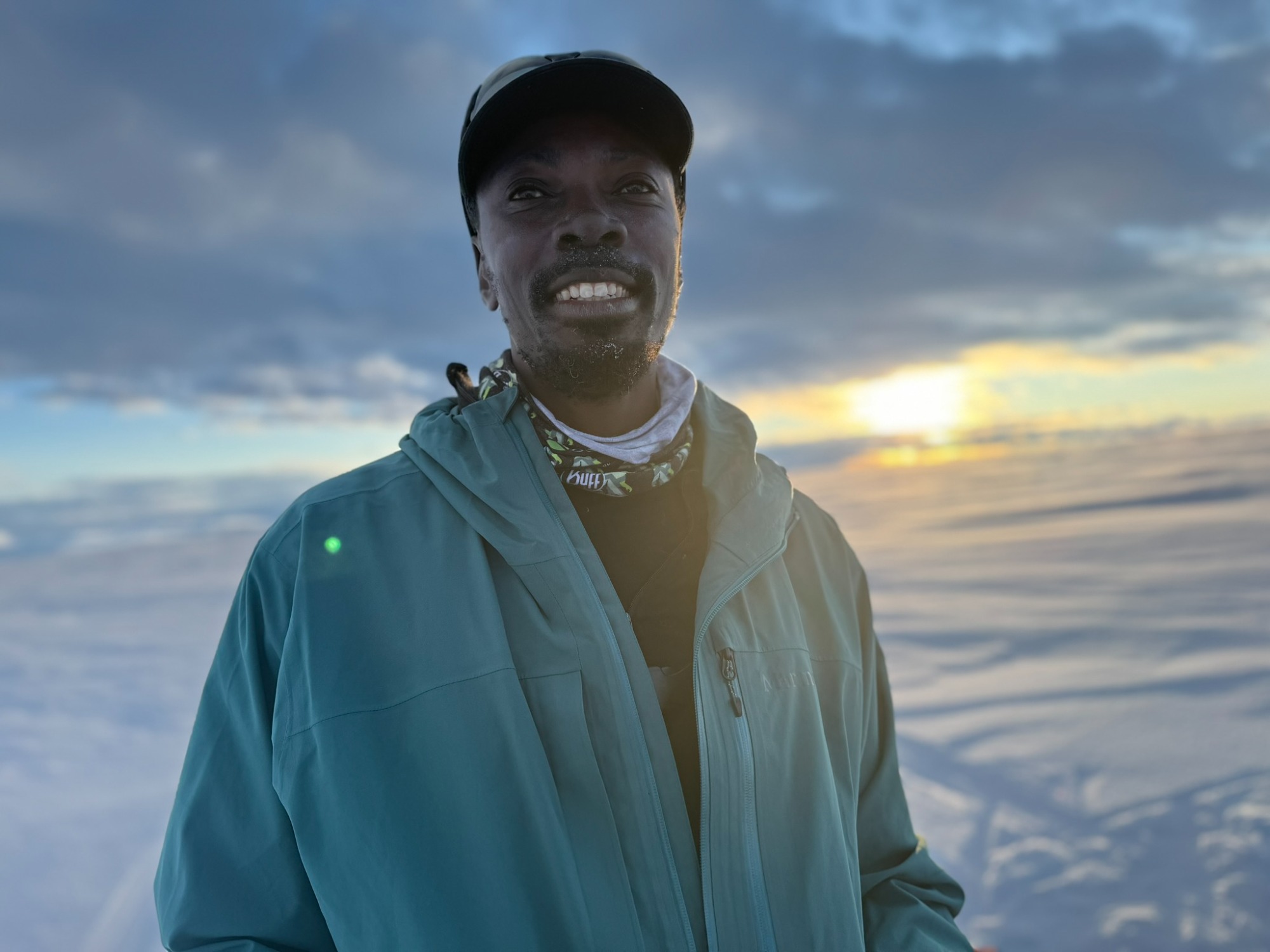
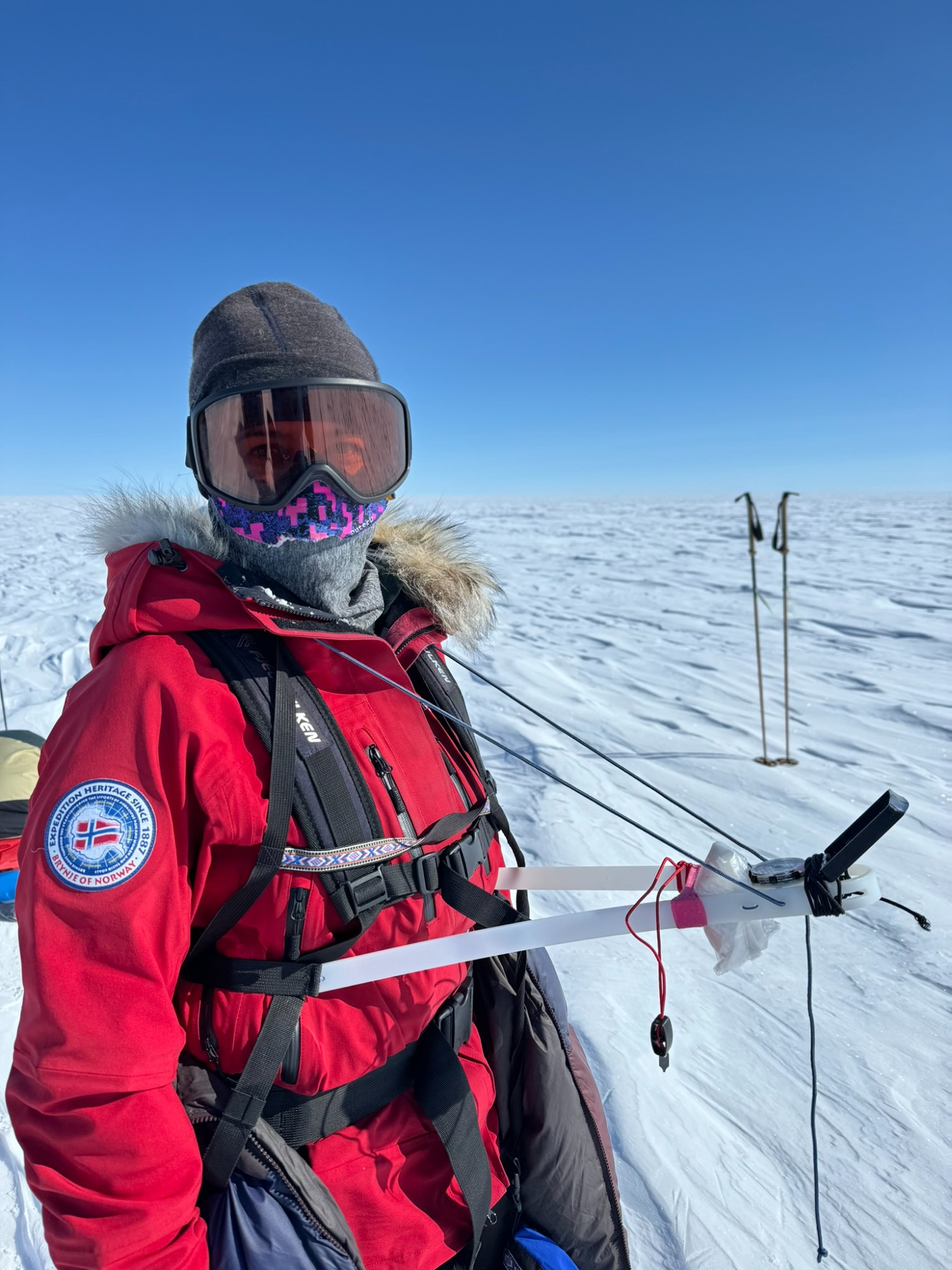
Our small team gathered in the warmth of the Polar Lodge and the noisy comfort of the airport cafeteria. There were our guides, Annie and Chris (with www.polarexplorers.com) calm, capable, and unshakably steady - and my teammates: Joe, Wilfred, Monet. We were a strange mix of personalities and backgrounds, but we were not strangers.
In February we had all met in Ely, Minnesota for a shakedown training weekend. For four days we learned about each other and what it would be like to pull a sled over ice, pitch a tent, cook and sleep. We had laughs and built friendships. We left Ely and prepared to meet next in Greenland.
The next morning we began the awkward choreography of getting ourselves and our nine sleds to the ice. Our truck had no storage for the sleds, so we shuffled them into the bus - a process that ate more than an hour and most of our patience. Then, finally, we headed out toward Point 660, the edge of the ice cap, bumping along for two hours past open tundra, scattered buildings, and flashes of Arctic hares darting across the gravel.
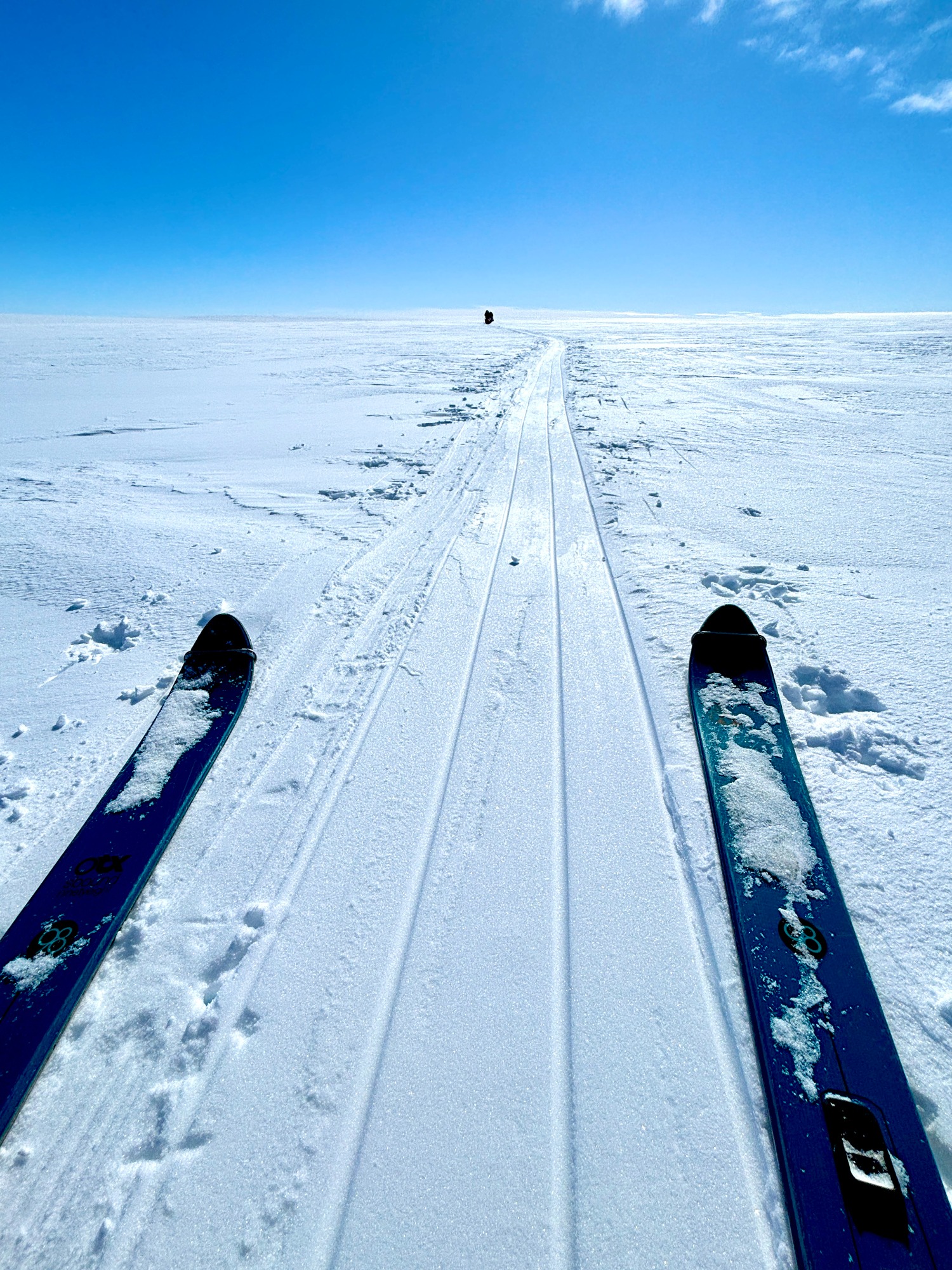
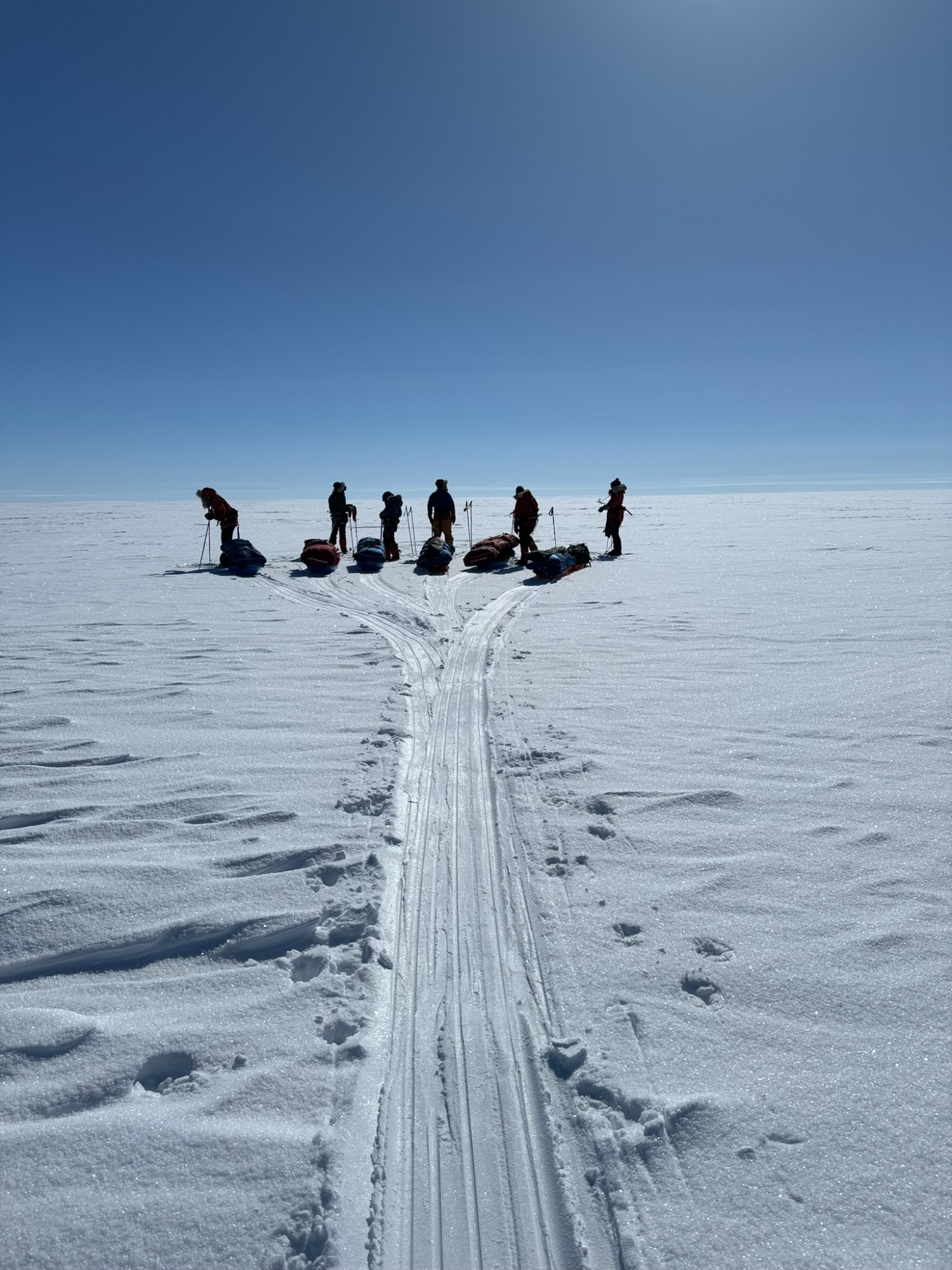
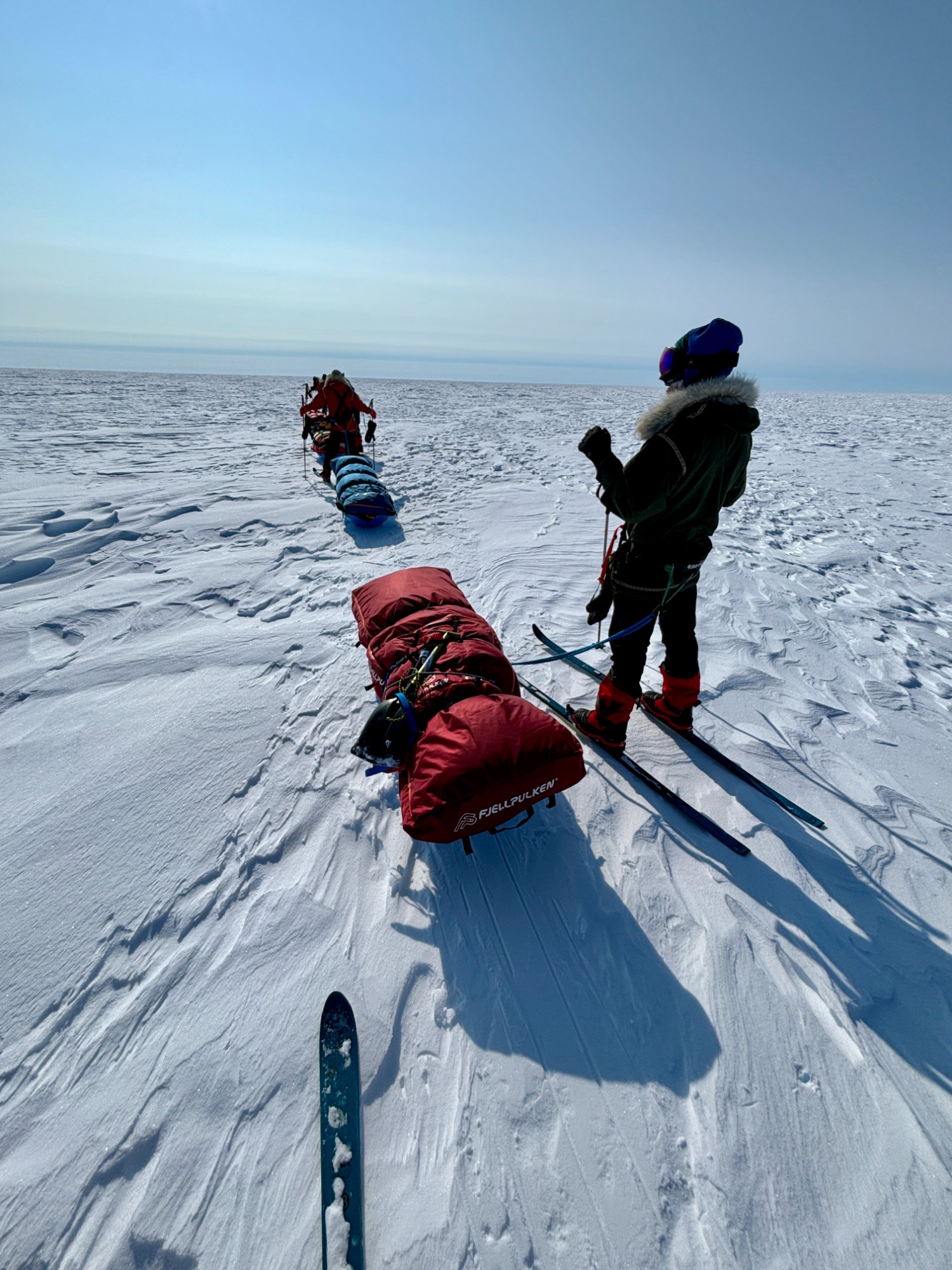
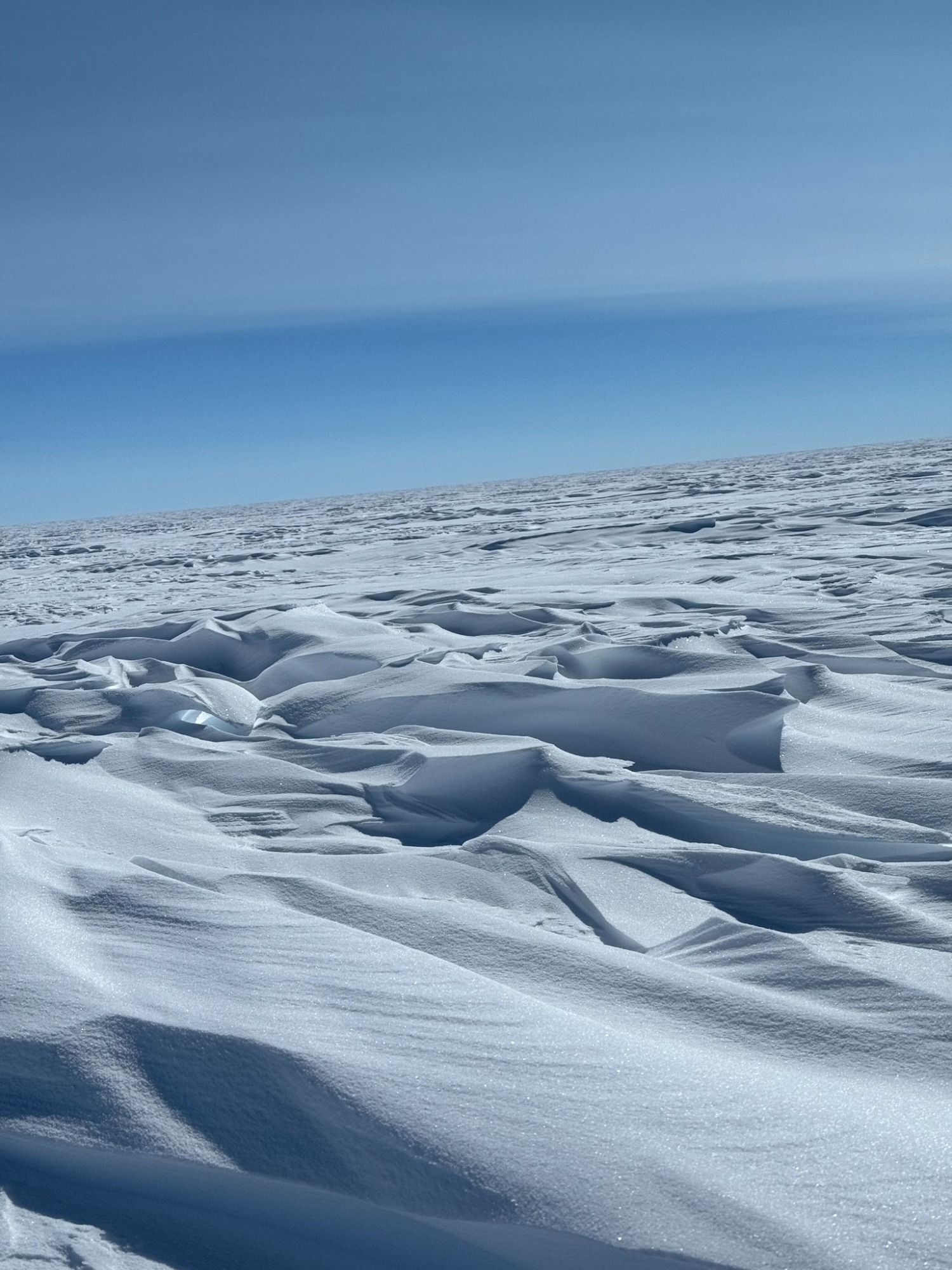
At 660, we unloaded everything, then ferried the disassembled sleds and the duffles overland to the ice. Half a mile felt like several as we carried load after load. But the moment our skis touched the ice, the world shifted. Ahead of us lay nothing but white - broken, choppy, crusted white - and the faint track of those who had come before.
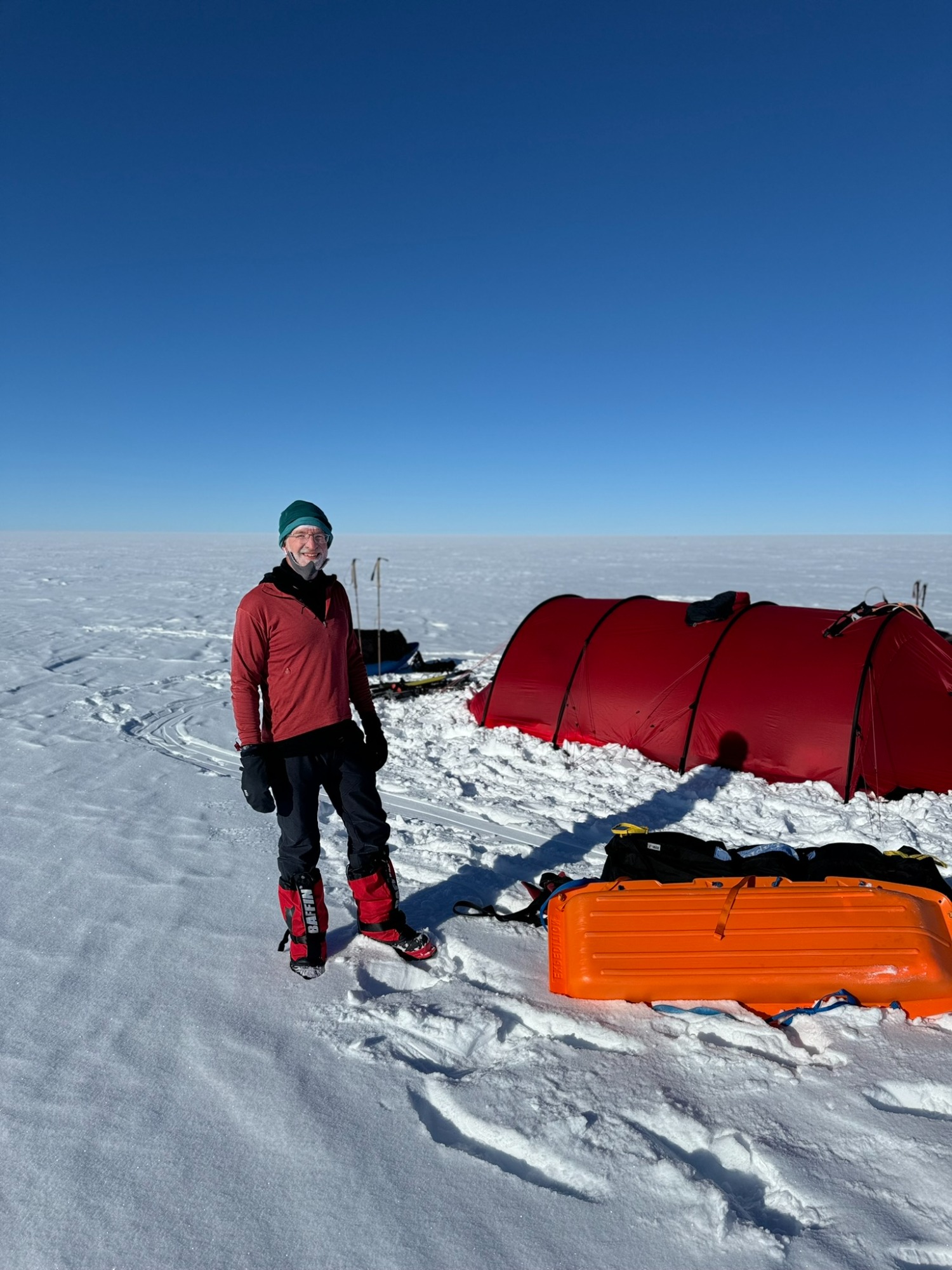
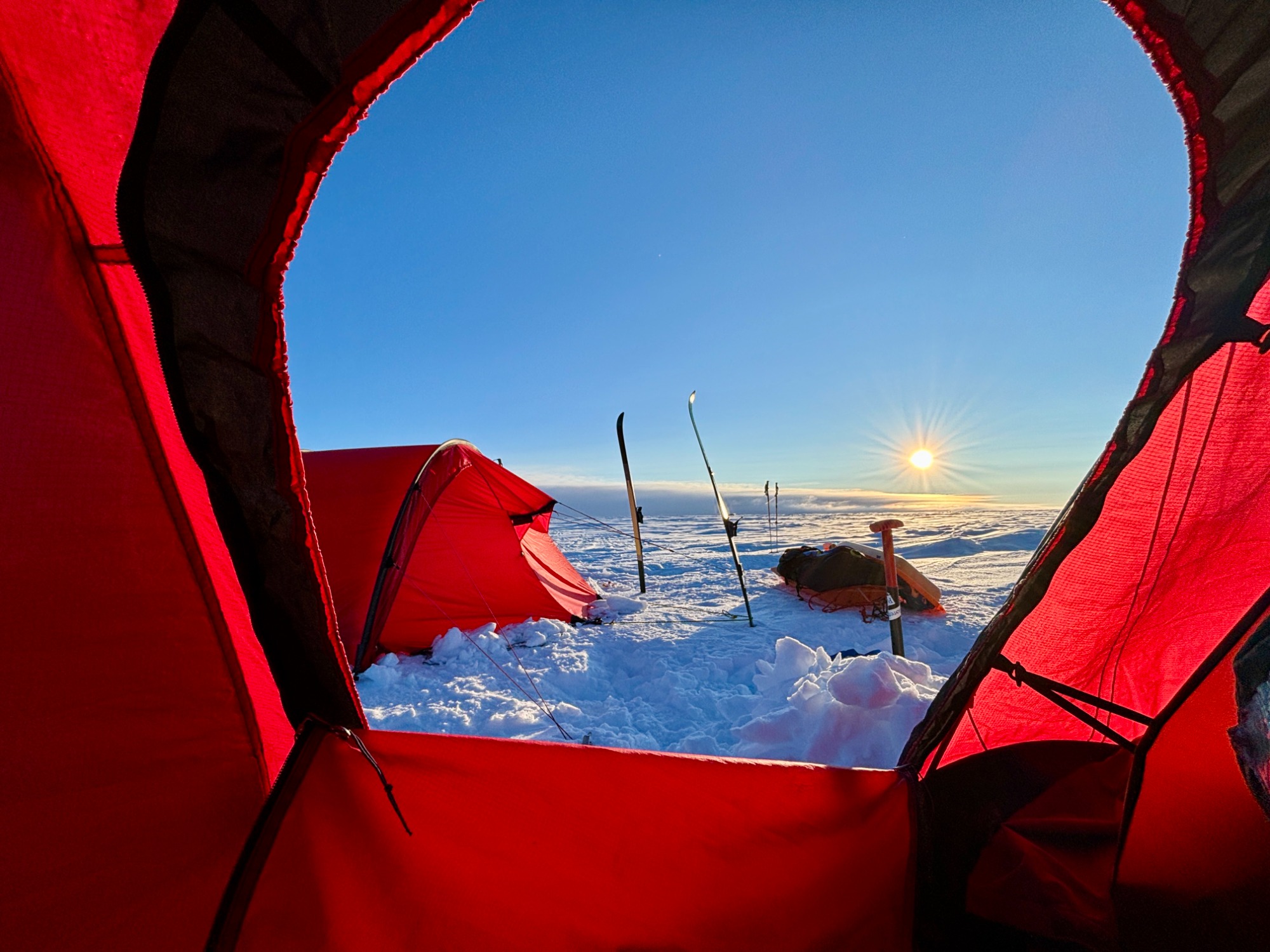
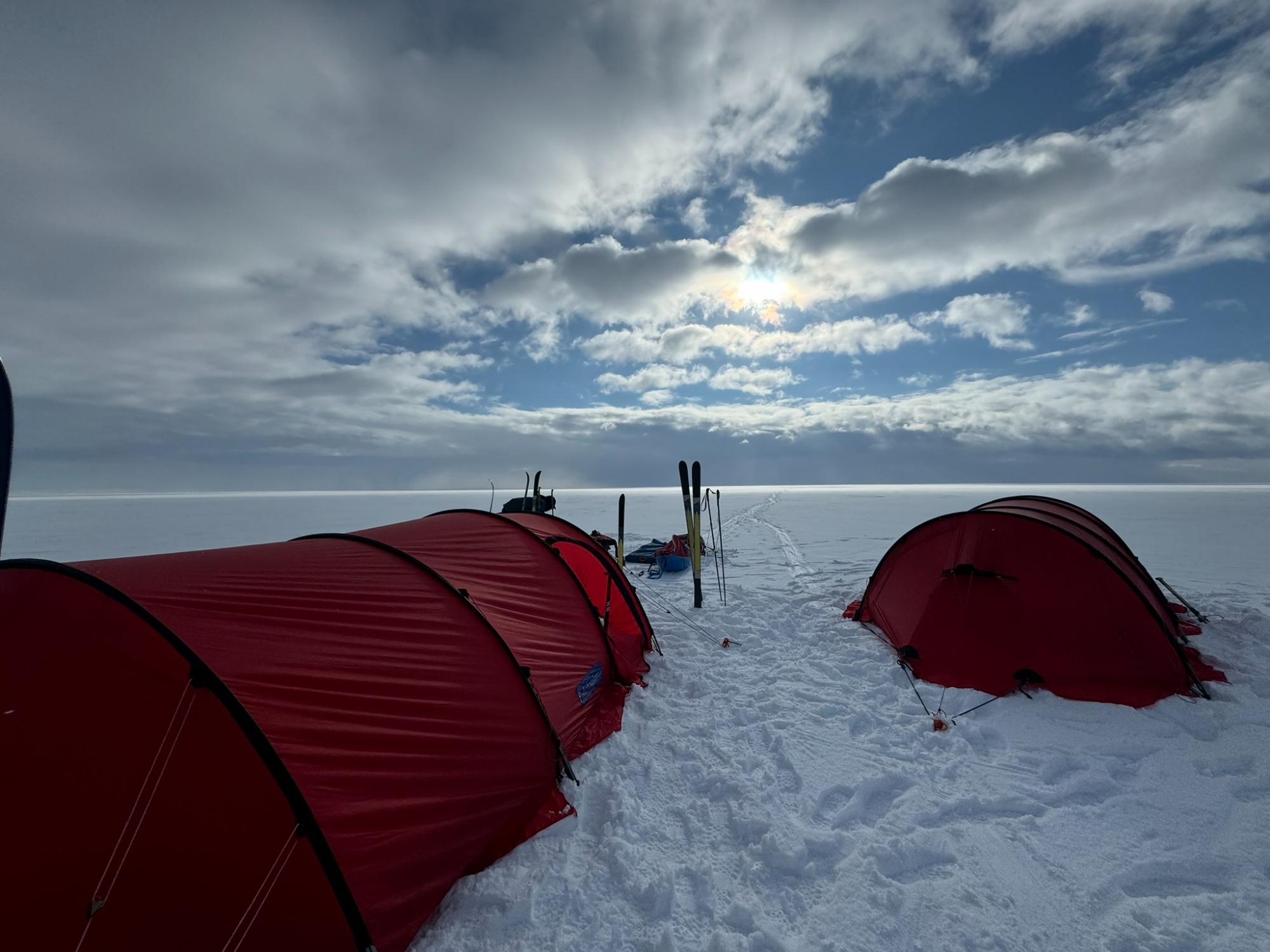
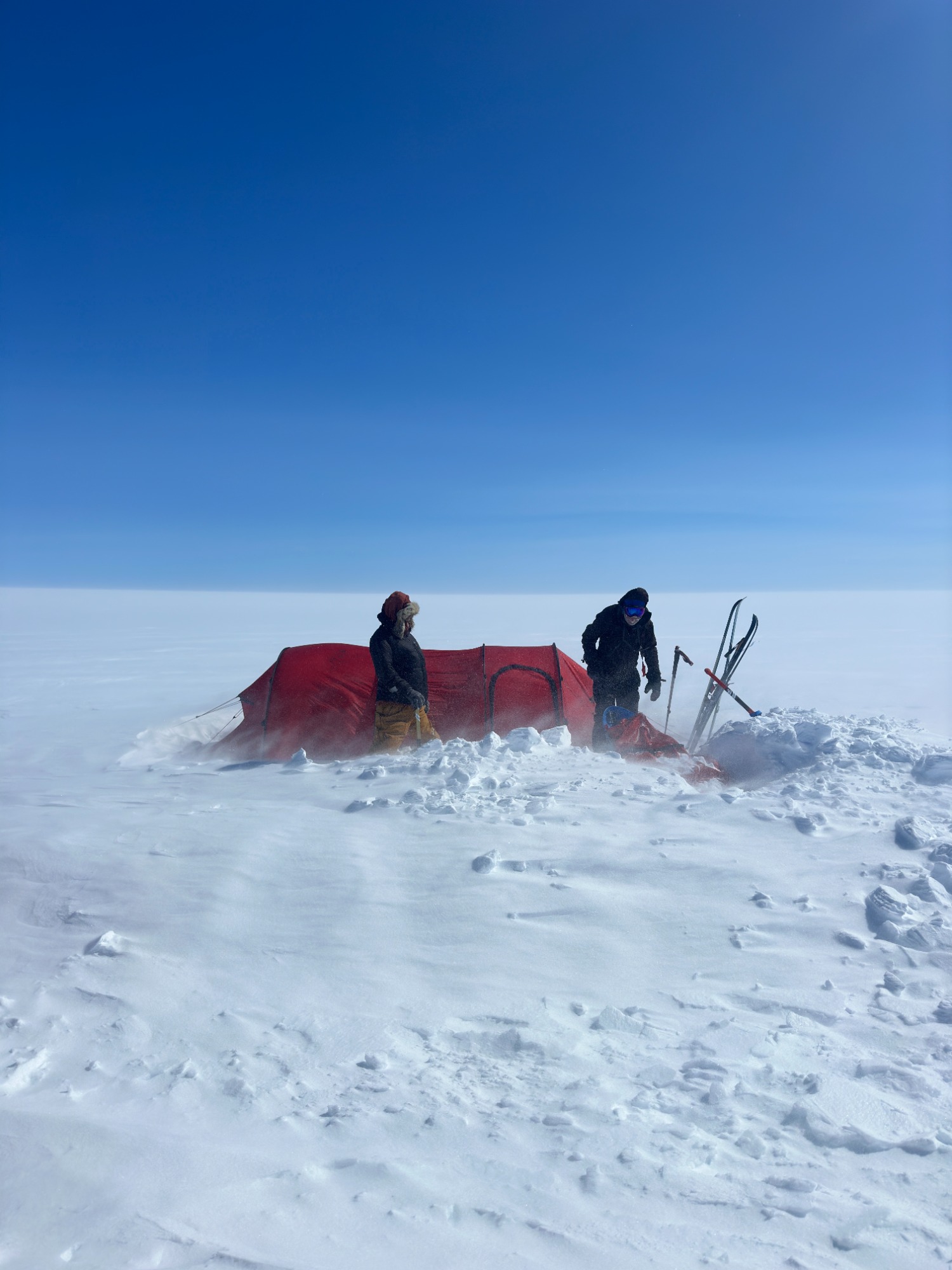
We skied just over three hours that first afternoon, navigating jagged ice features until we reached a place Annie declared good enough for Camp 1. Three tents went up in low hanging sunlight: two two-person shelters and one three-person. Monet and I would tent together for the first rotation.
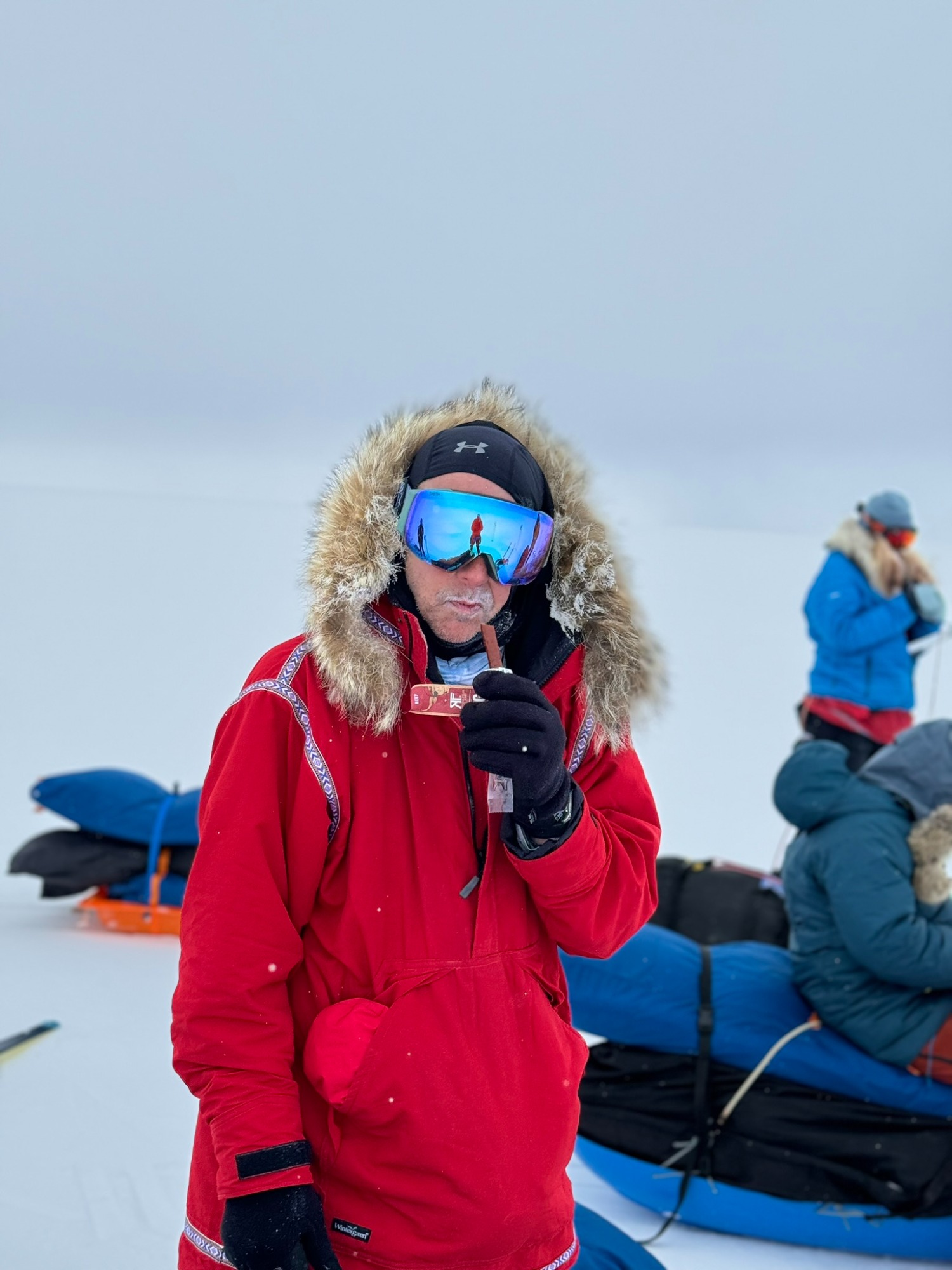
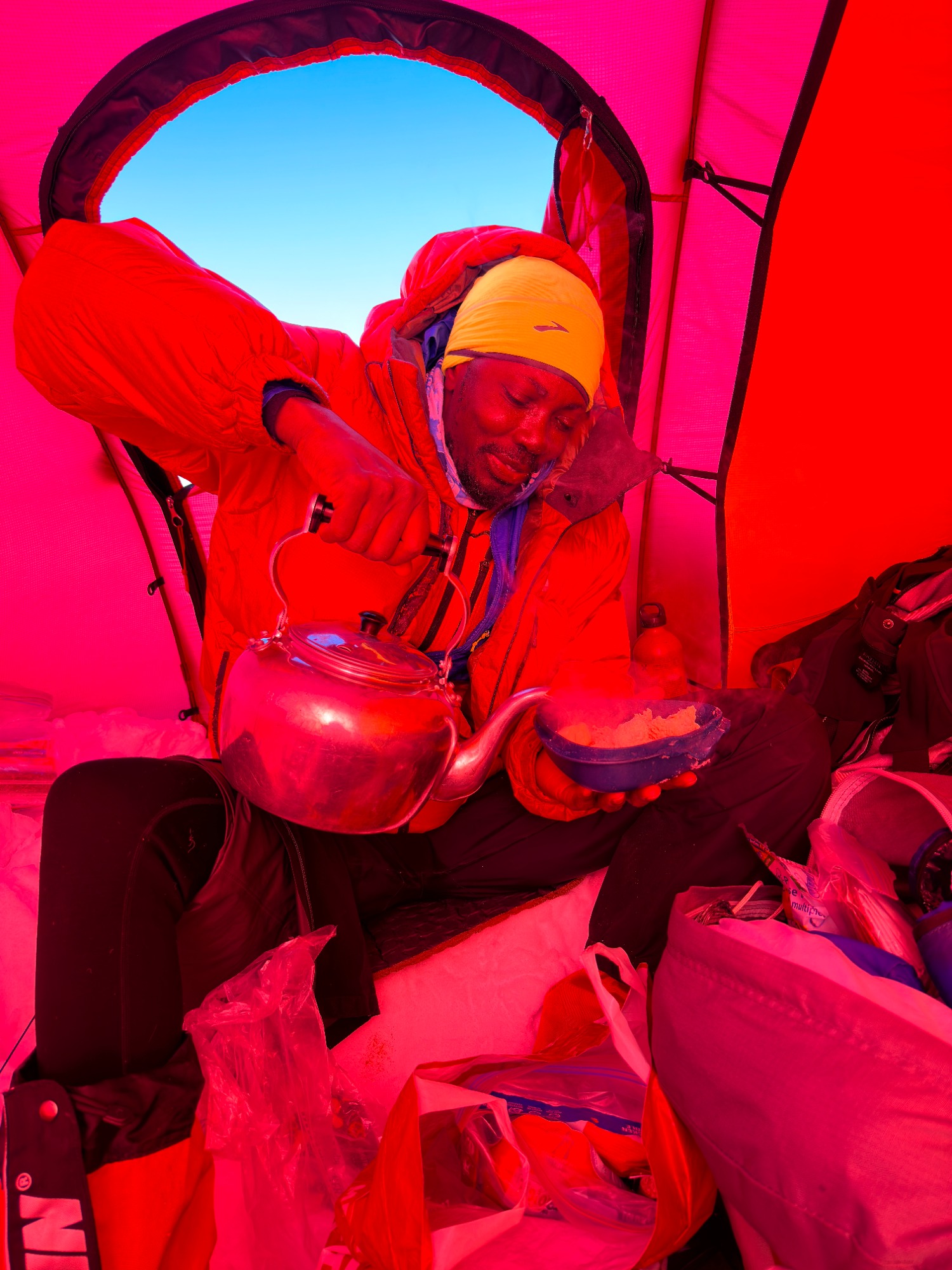
That night I learned the rhythm of living on ice: boiling water from snow, rationing calories you don’t yet crave, stuffing every layer of clothing into your sleeping bag for the morning. I warmed a hot water bottle for my feet and put my pee bottle beside it - one of those unglamorous but essential pieces of polar survival. Outside, a light snow fell; inside, peppermint tea steamed in my cup.
The next days taught us what the ice was really made of.
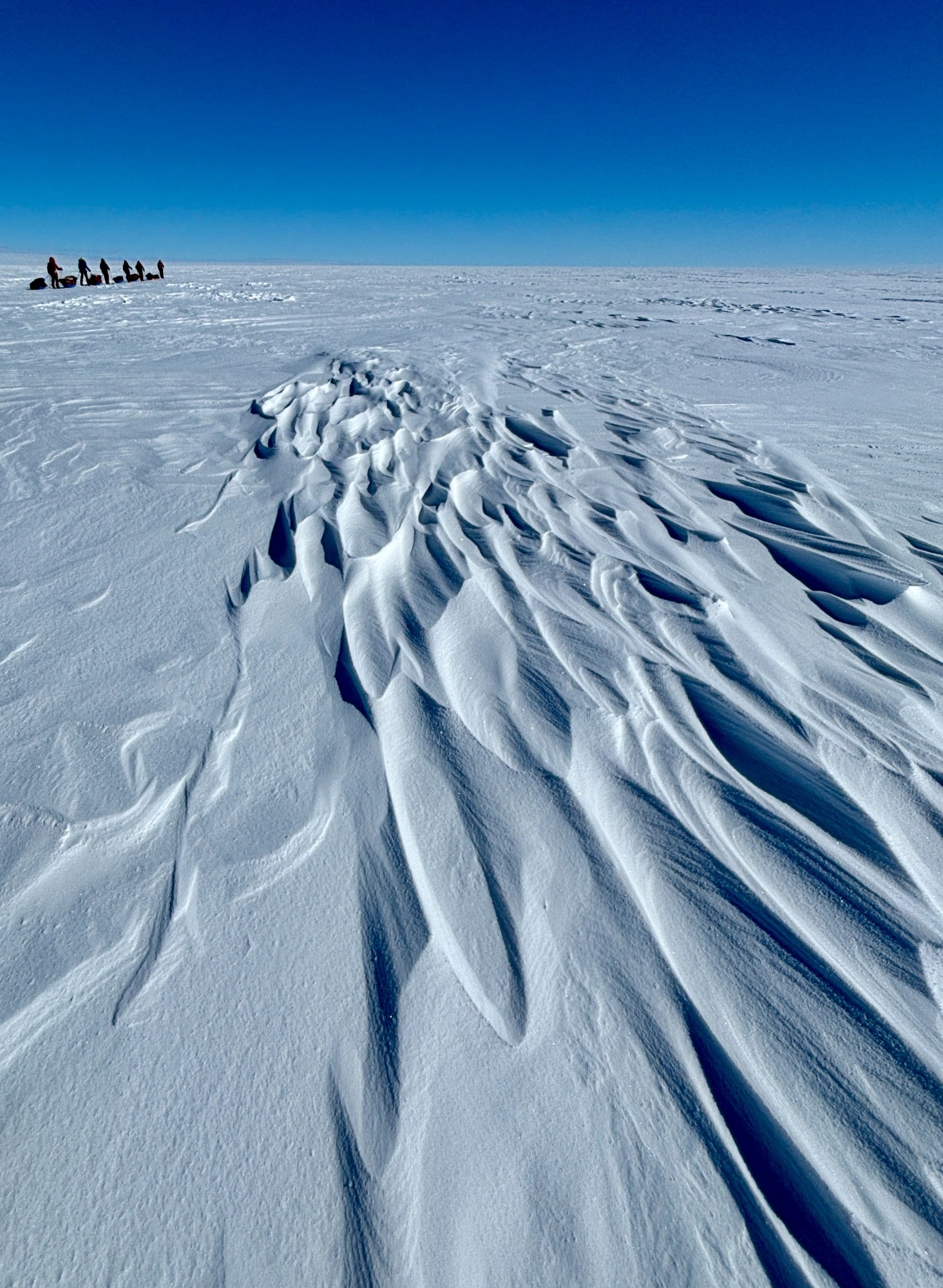
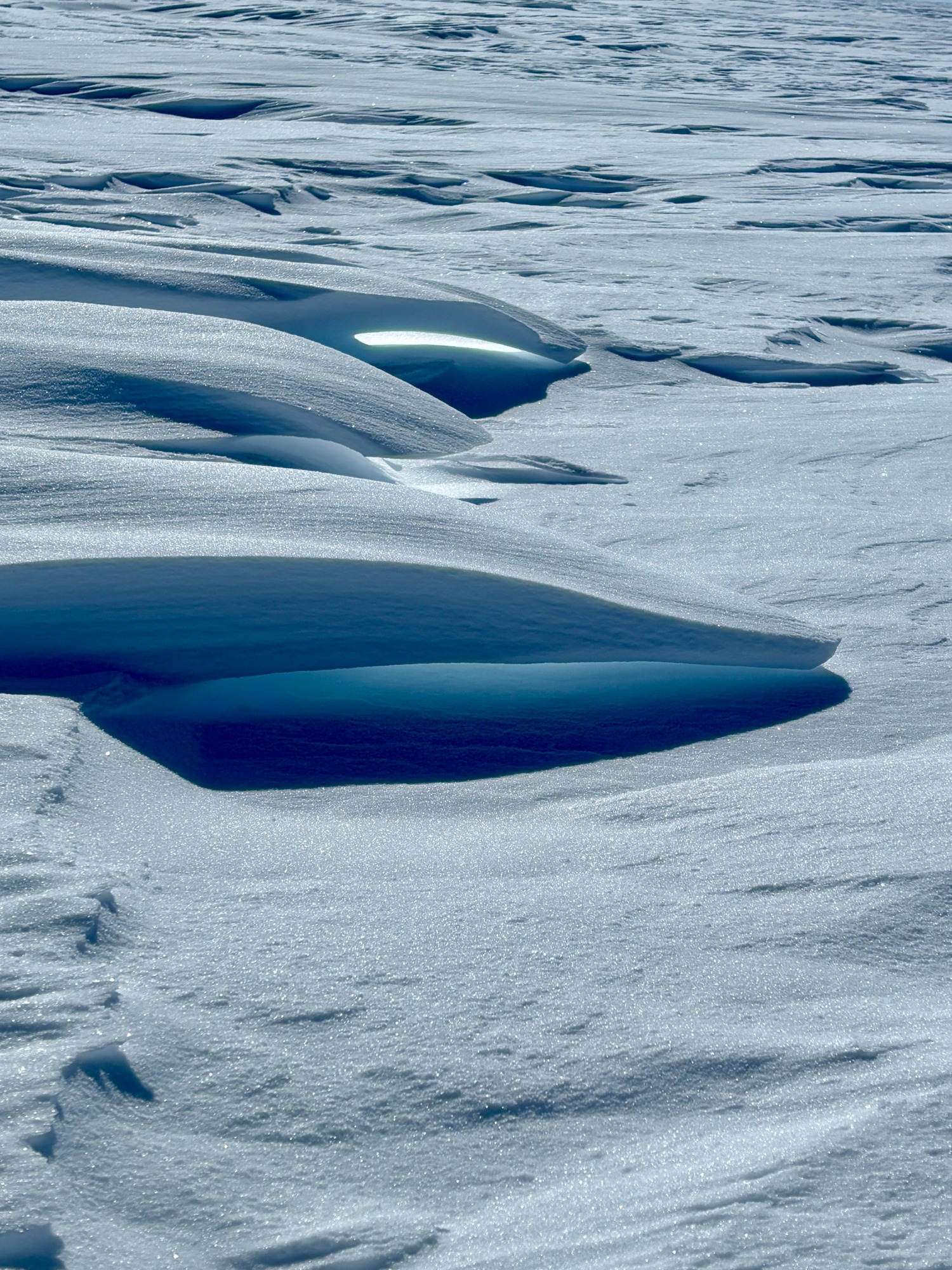
We rose at six, broke camp by nine, and trudged for hours through fields of fractured snow. The terrain forced us into wide zigzags around pressure ridges. We made only a handful of miles each day, each sled dragging like an anchor. By the end of Day 2, my legs felt like they’d done heavy labor rather than skiing.
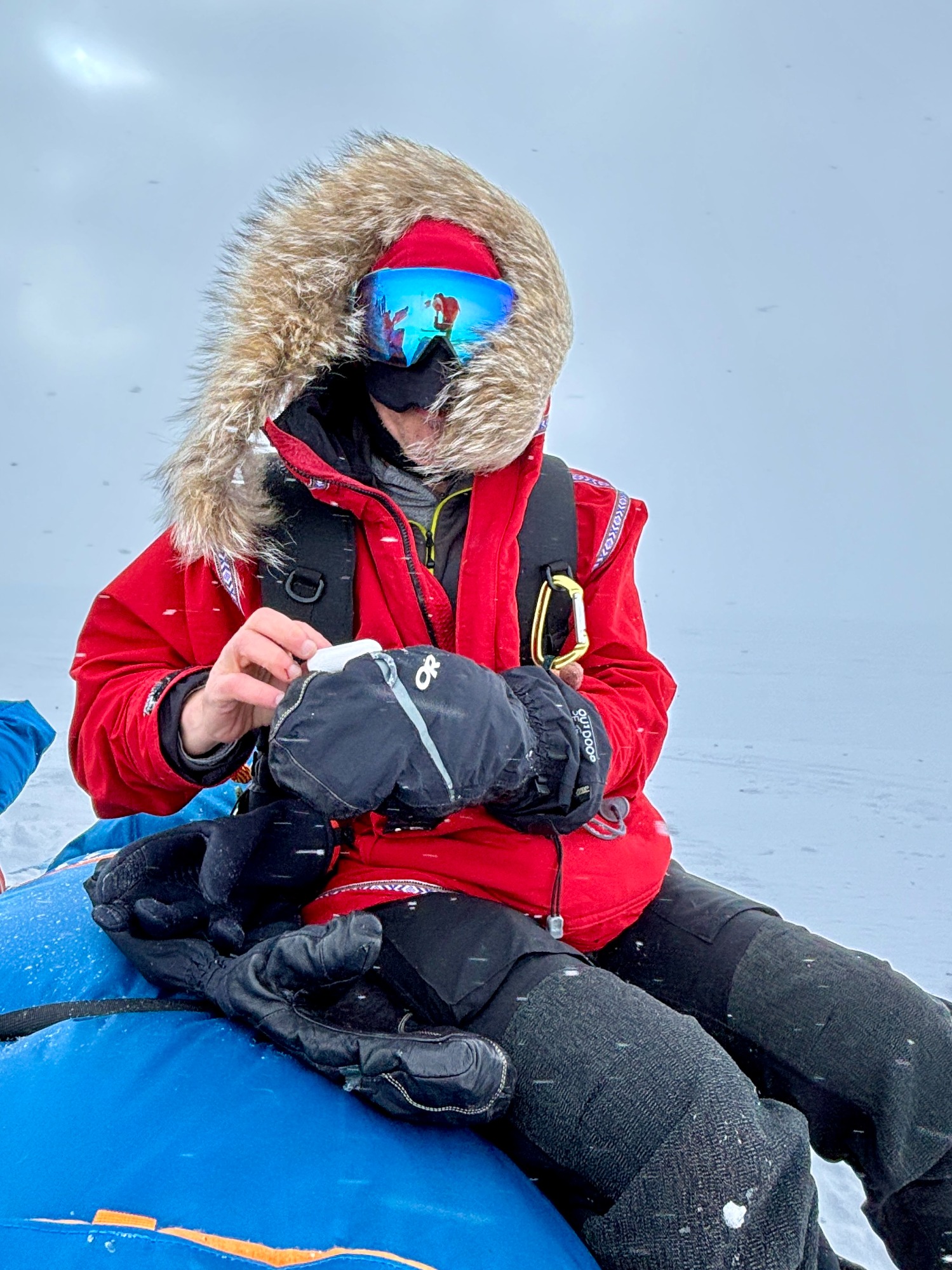
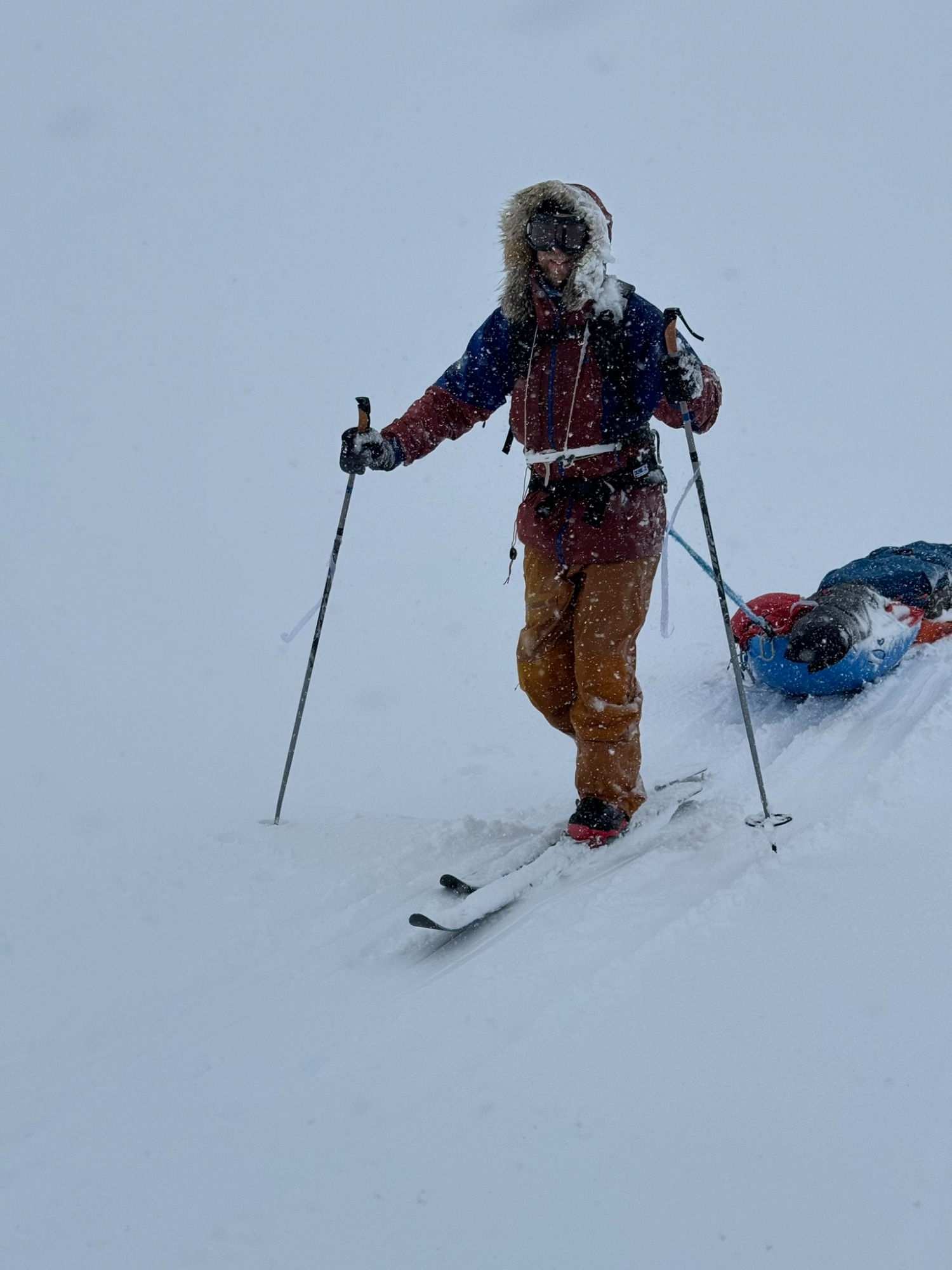
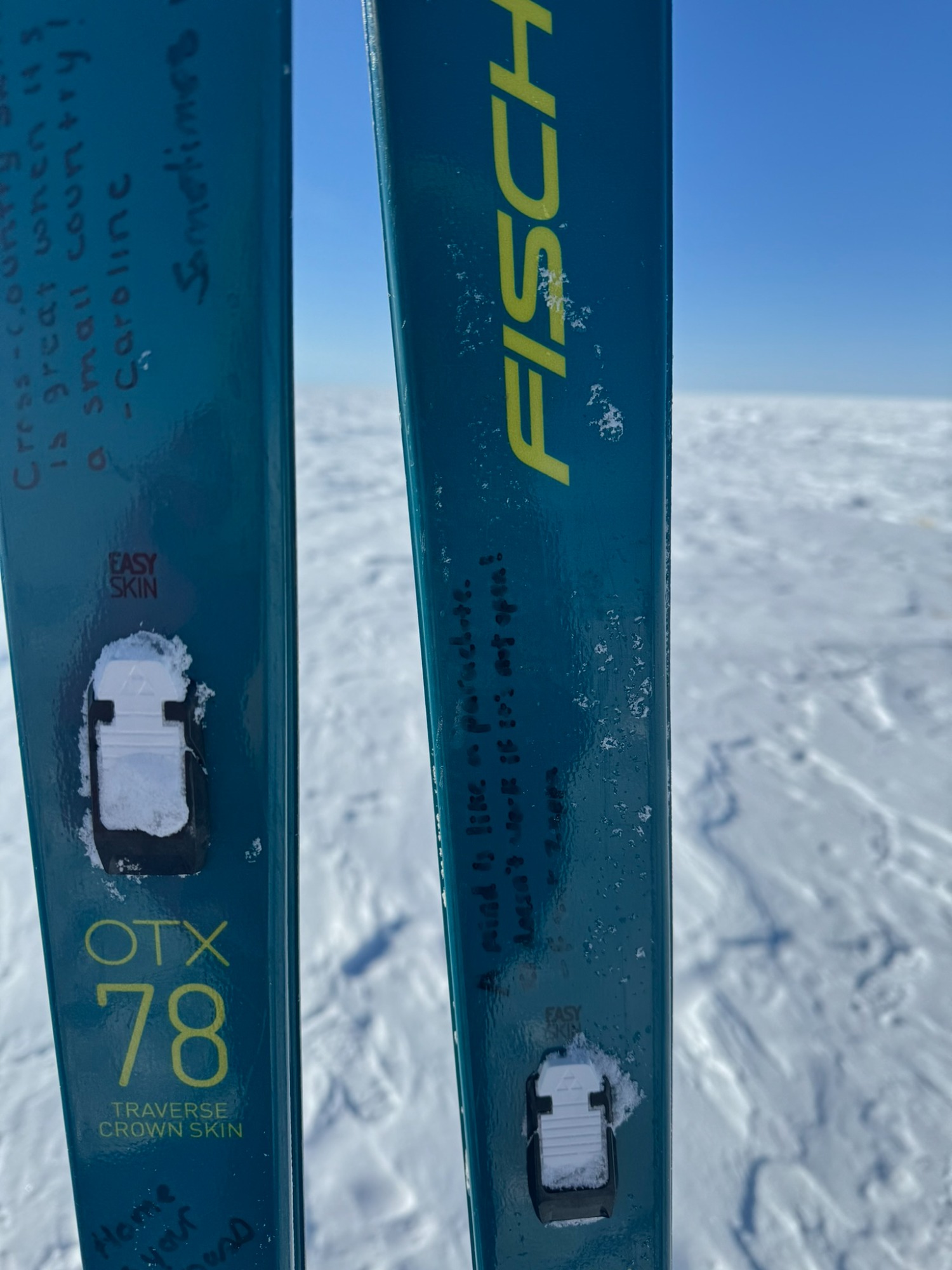
Day 3 greeted us with 25 mph winds and near-zero temperatures. Breakfast was an exercise in keeping fingers functional. Some teammates were struggling with their climbing skins; others fought with goggles icing over. We met a fast-moving Norwegian team of six who slid past us with the kind of efficiency that makes you question your own competence. Still, by late afternoon the terrain softened, and we finally felt something like progress.
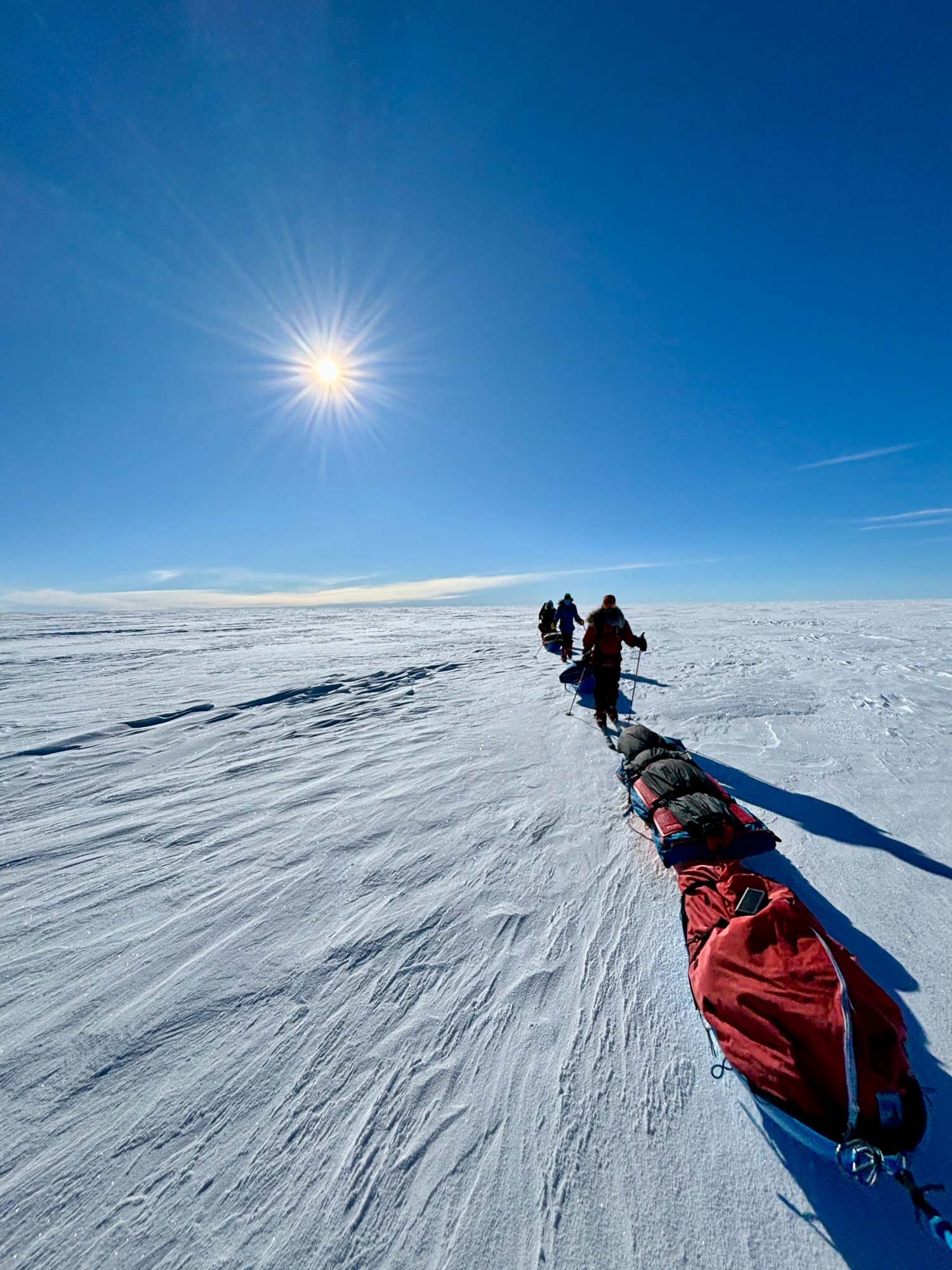
A few days later, the ice turned friendlier - just enough that we could look around, breathe, and appreciate the vastness. Day 6 was one of my best. I put on 70’s rock, let my mind drift, and felt the rhythm of skiing return. The wind was down, the sky open, the snow smooth. The world felt wide and clean. We would take turns leading. Mostly it was either Chris or Annie, but the rest of us also took turns and learned the art of navigating.
But Day 7 reminded me that the ice cap gives and takes as it wishes. After a long 20-kilometer day, I suddenly felt chilled to the bone - shivering uncontrollably as I reached for gear in my sled. Joe noticed instantly. He bundled me into my sleeping bag with hot water bottles and watched over me until the shaking subsided. A good friend in a place where small errors can snowball quickly.
We told riddles and jokes to keep the mood light, and celebrated reaching our first 100 kilometers with Chris’s famous cheesy bread—fried in a pan he carried the entire expedition just for rare moments like this.
The storms found us next.
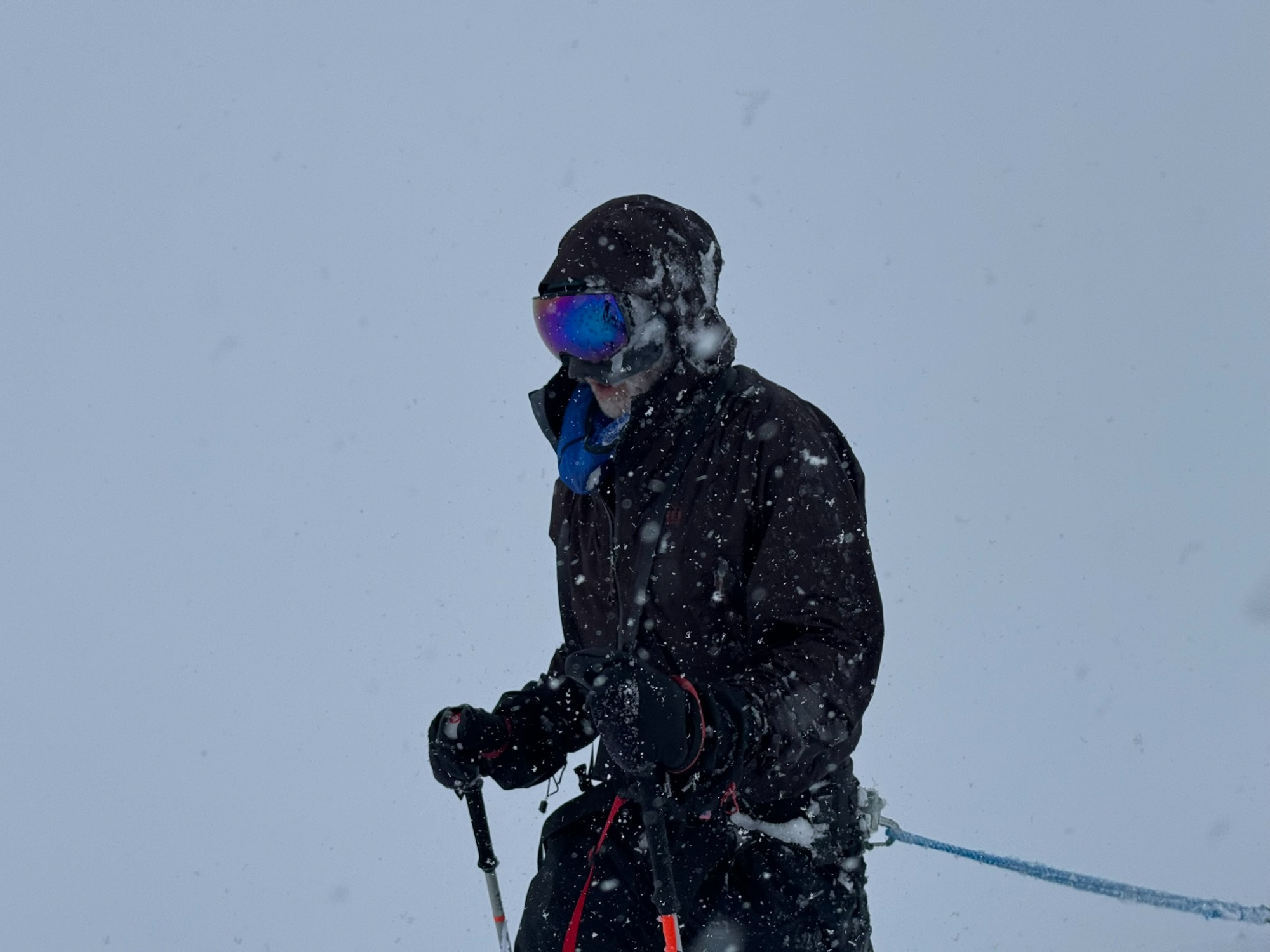
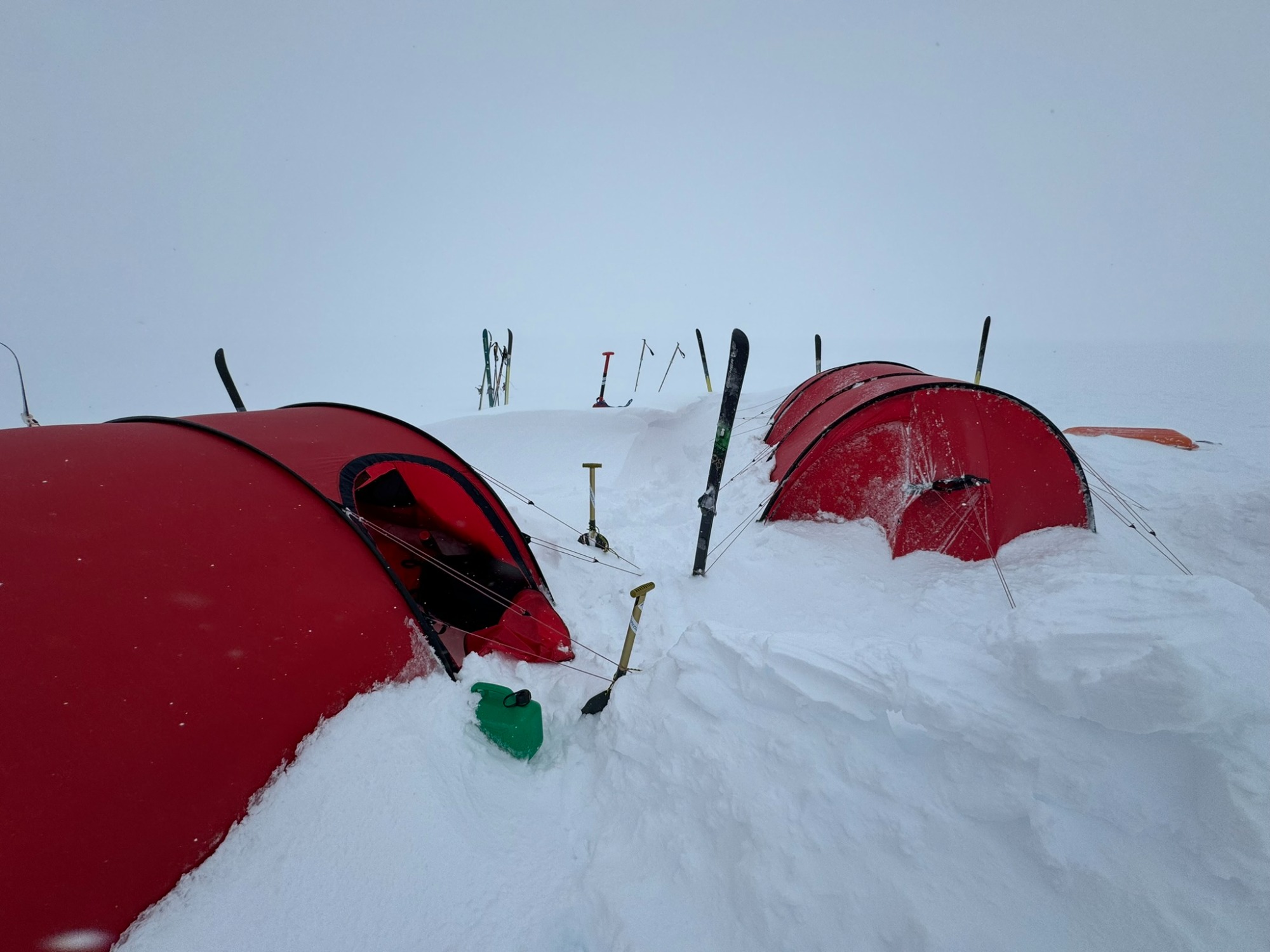
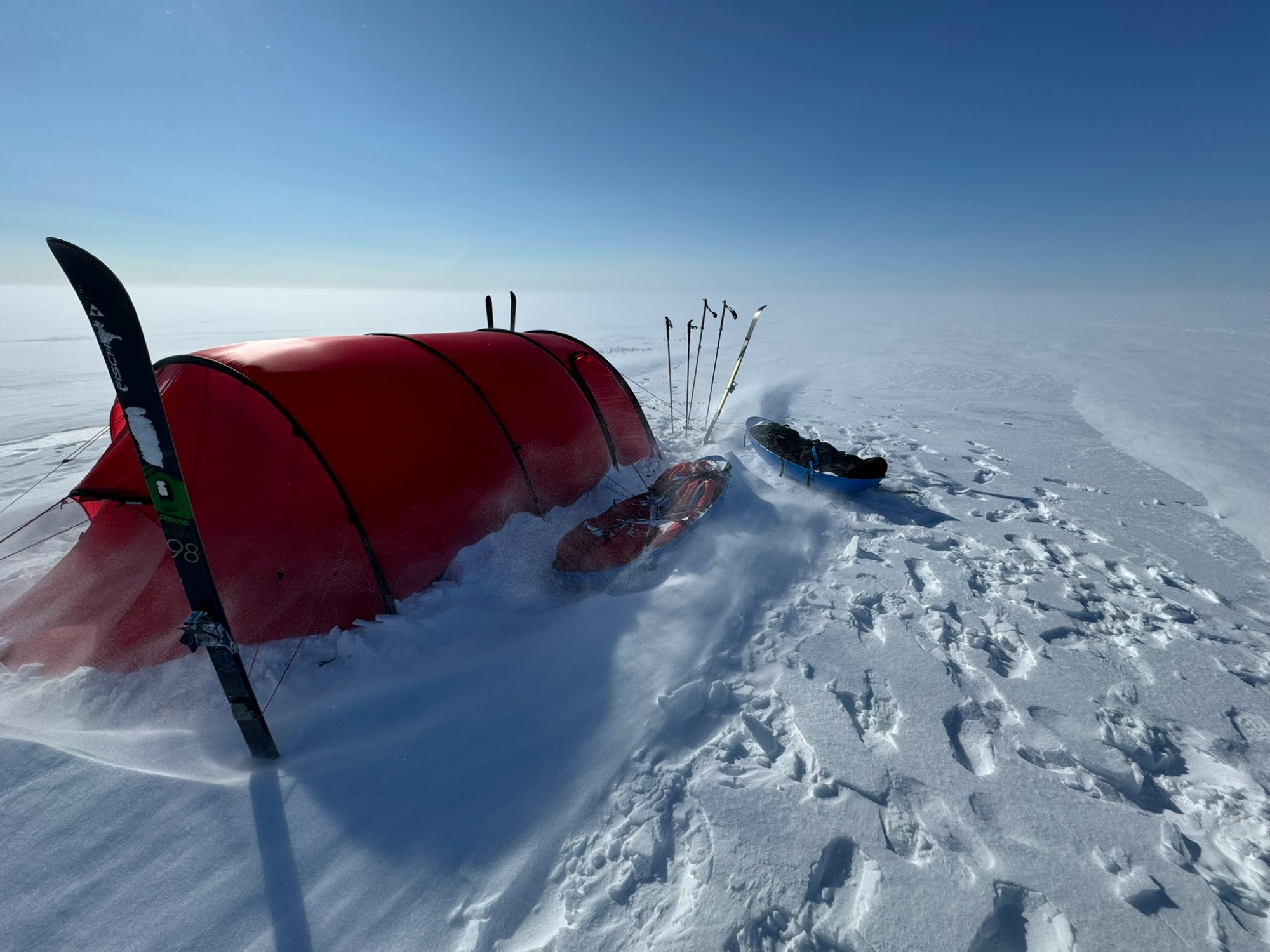
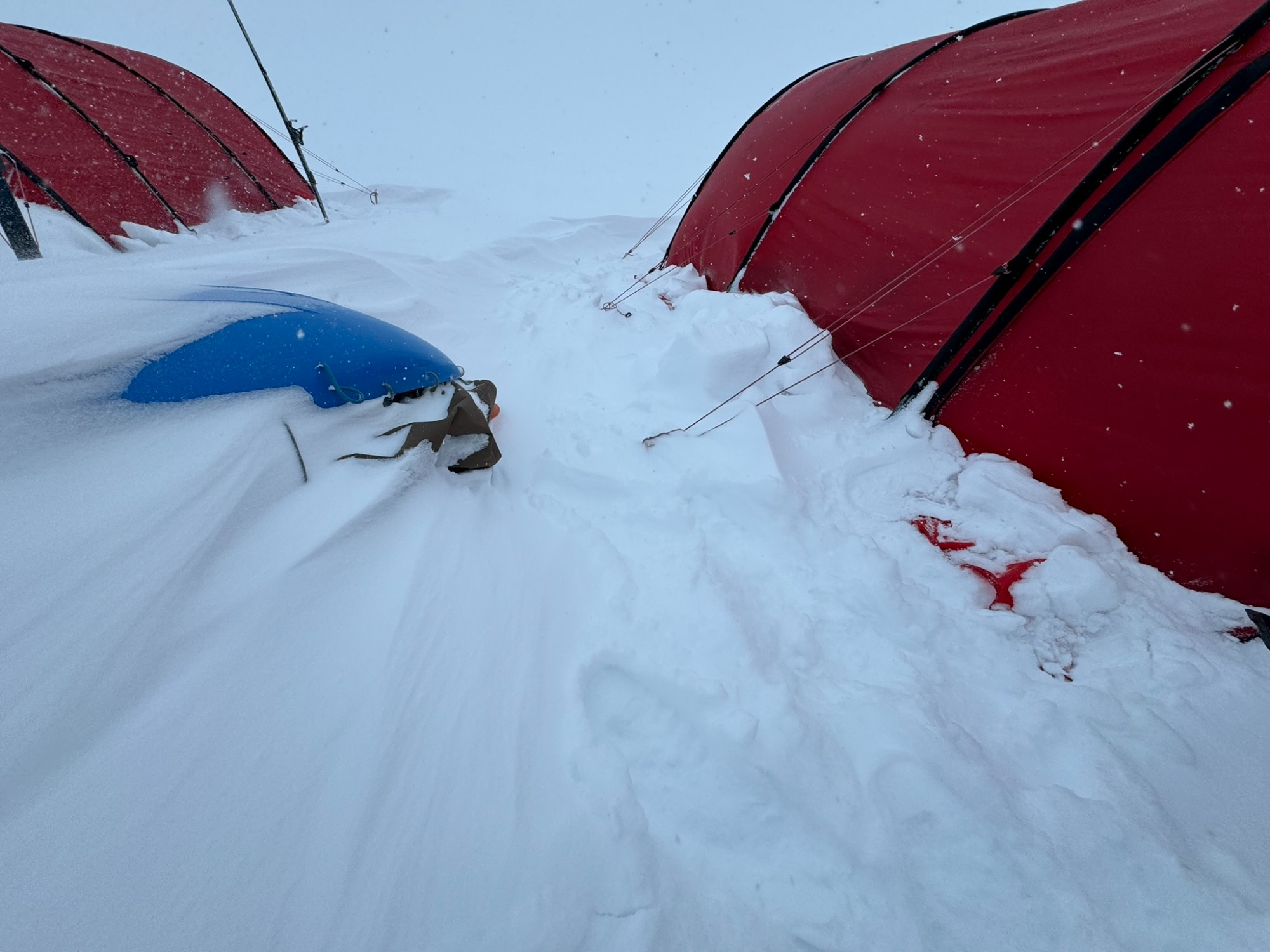
Whiteouts swallowed the horizon. Gusting winds buried our skis and poles overnight. Morning began with digging ourselves out of tent-side snowdrifts. Yet the routine - wake, wipe down, tape feet, boil snow, break camp - became almost comforting. Each of us learned new efficiencies: I trimmed my “tent kit” to just two stuff sacks and my pitaraq bag, which made transitions smoother.
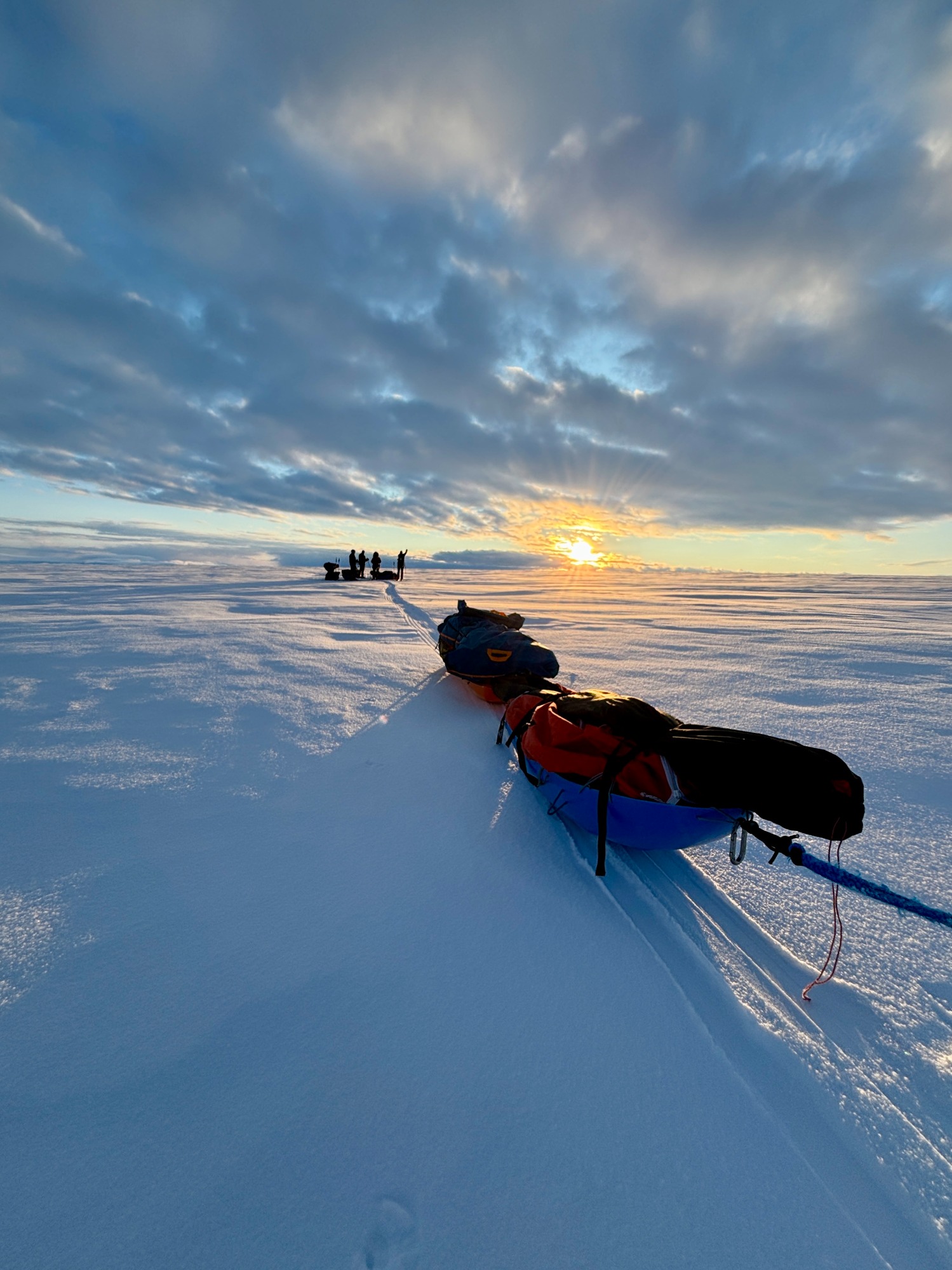
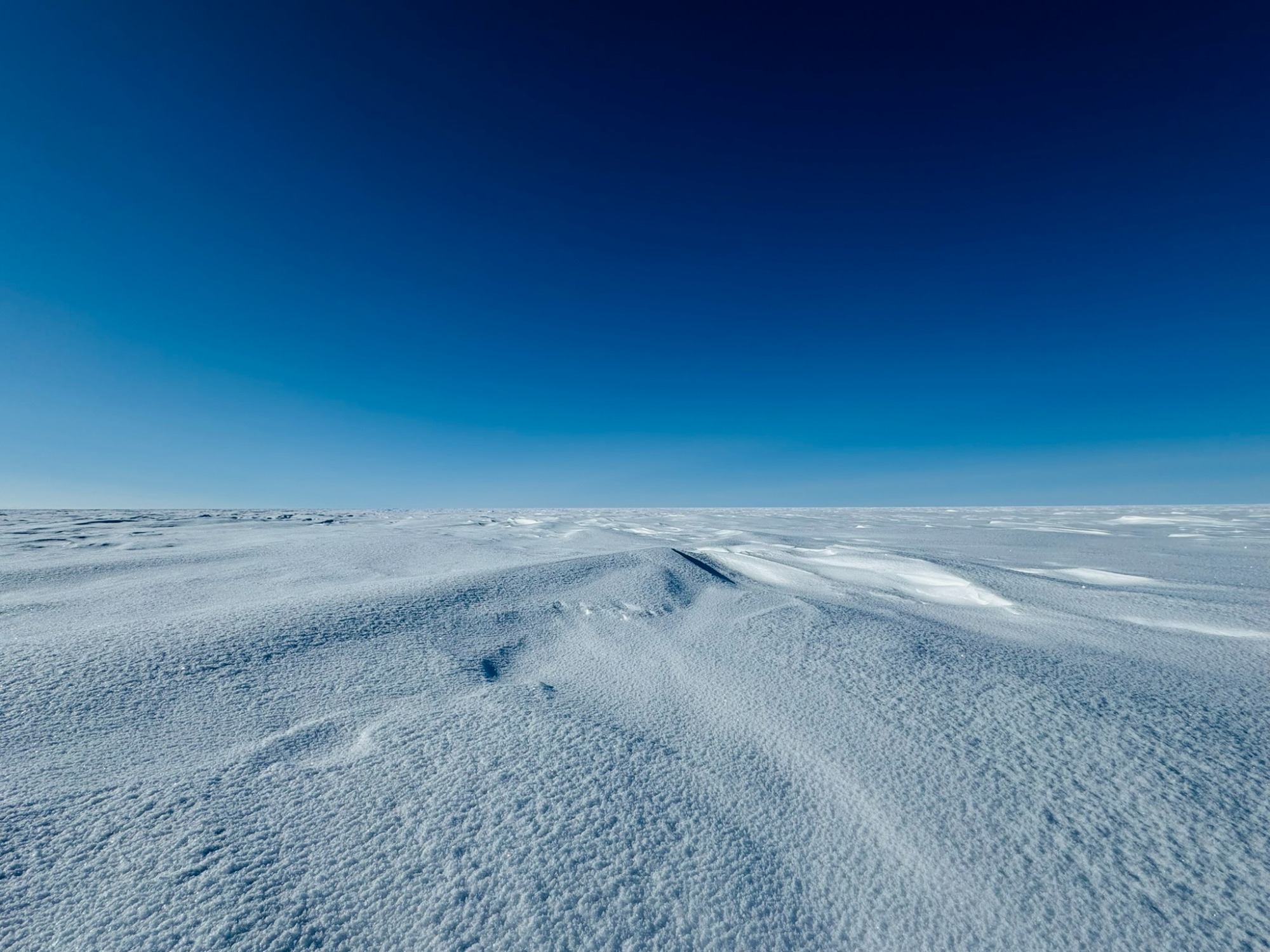
The landscape flattened, turned featureless; distances lost meaning. We skied through blowing snow so thick that the world seemed to shrink to the person in front of you and the rope of their sled.
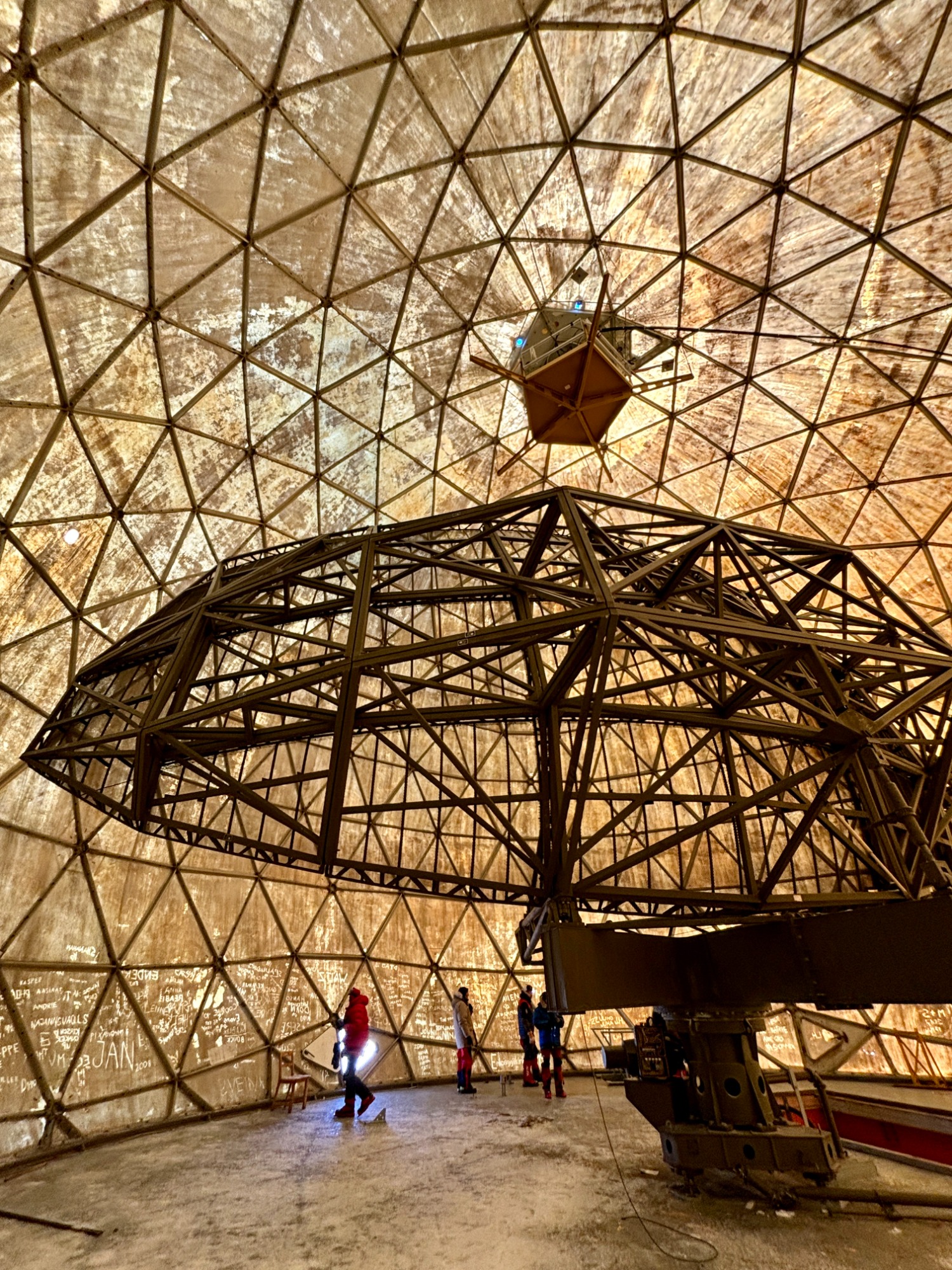
By the time we reached the abandoned Cold War radar station DYE 2, it felt like stepping out of a dream and into a time capsule. The building rose imposingly from the ice - a hulking relic with dorm rooms, a kitchen, a bar, even a pool table frozen in mid-game. Everything looked as if the last crew had stepped out for lunch and never returned. For the first time in eleven days, we were inside walls. It felt surreal.
Around Day 12, after stewing silently over why I felt slower than the rest, I watched Chris’s stride carefully. His kick wasn’t like mine at all. I mimicked him - and suddenly skiing felt easier. Twelve days in, I finally cracked the code. My confidence returned.
We continued east through warm days when soft snow clung to our skis, through cold snaps when hand warmers barely fired and thick overmitts became indispensable. We passed the high point of the ice cap almost without noticing - no grand summit, just a subtle easing of the grade. Joe honored it with his tradition: a handstand. Wilfred pulled out a bottle of Whiskey and we all took a sip.
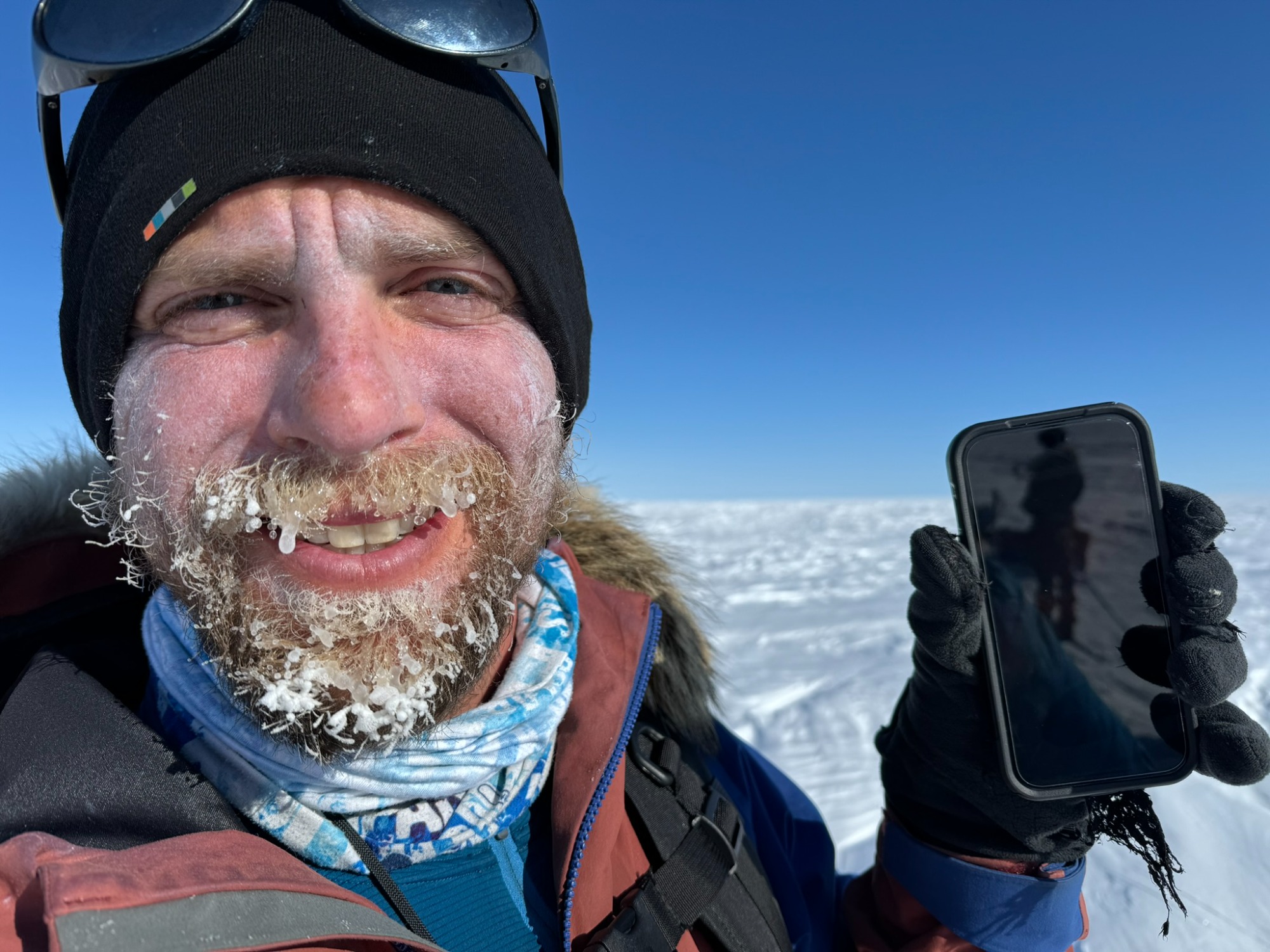
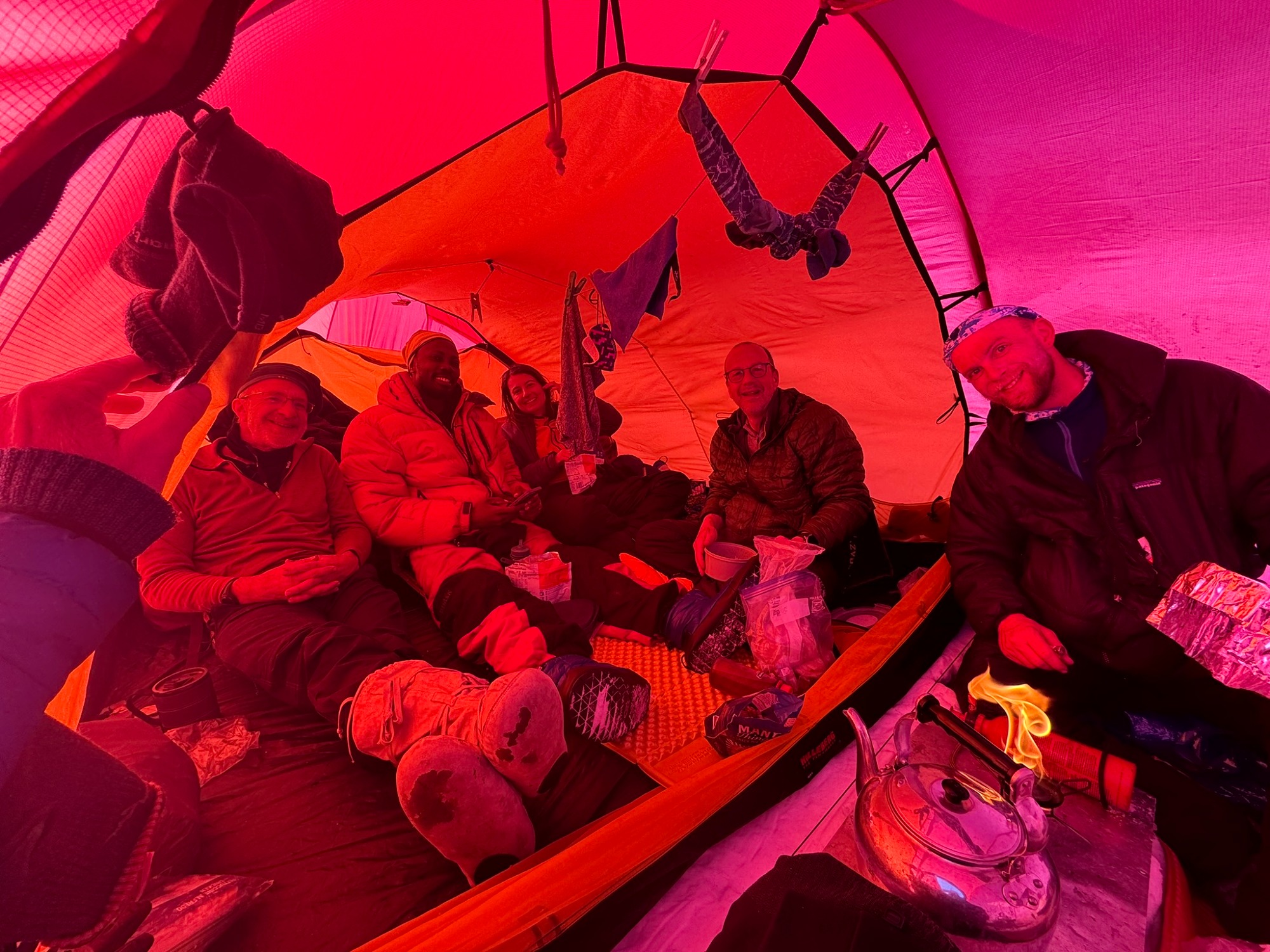
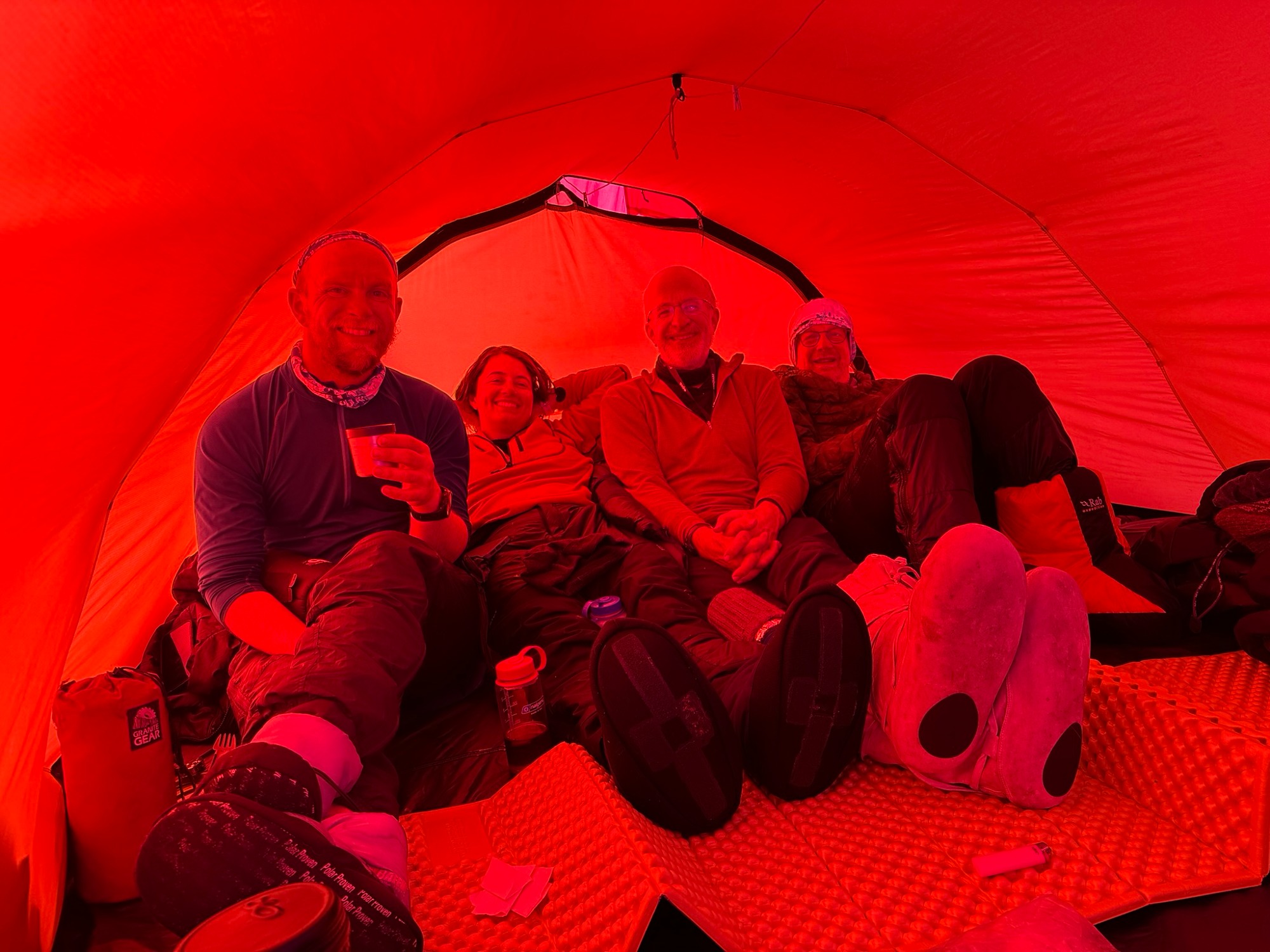
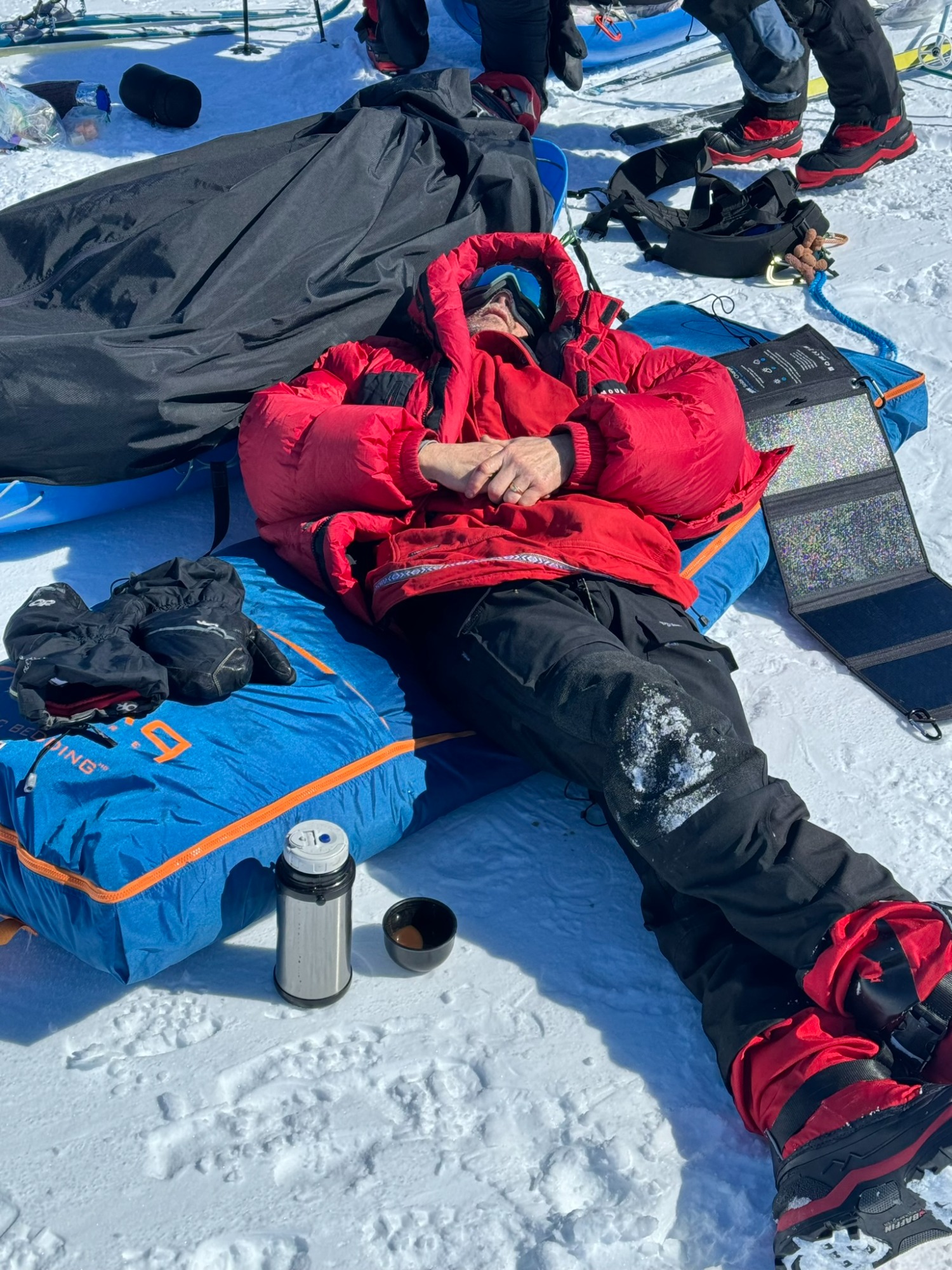
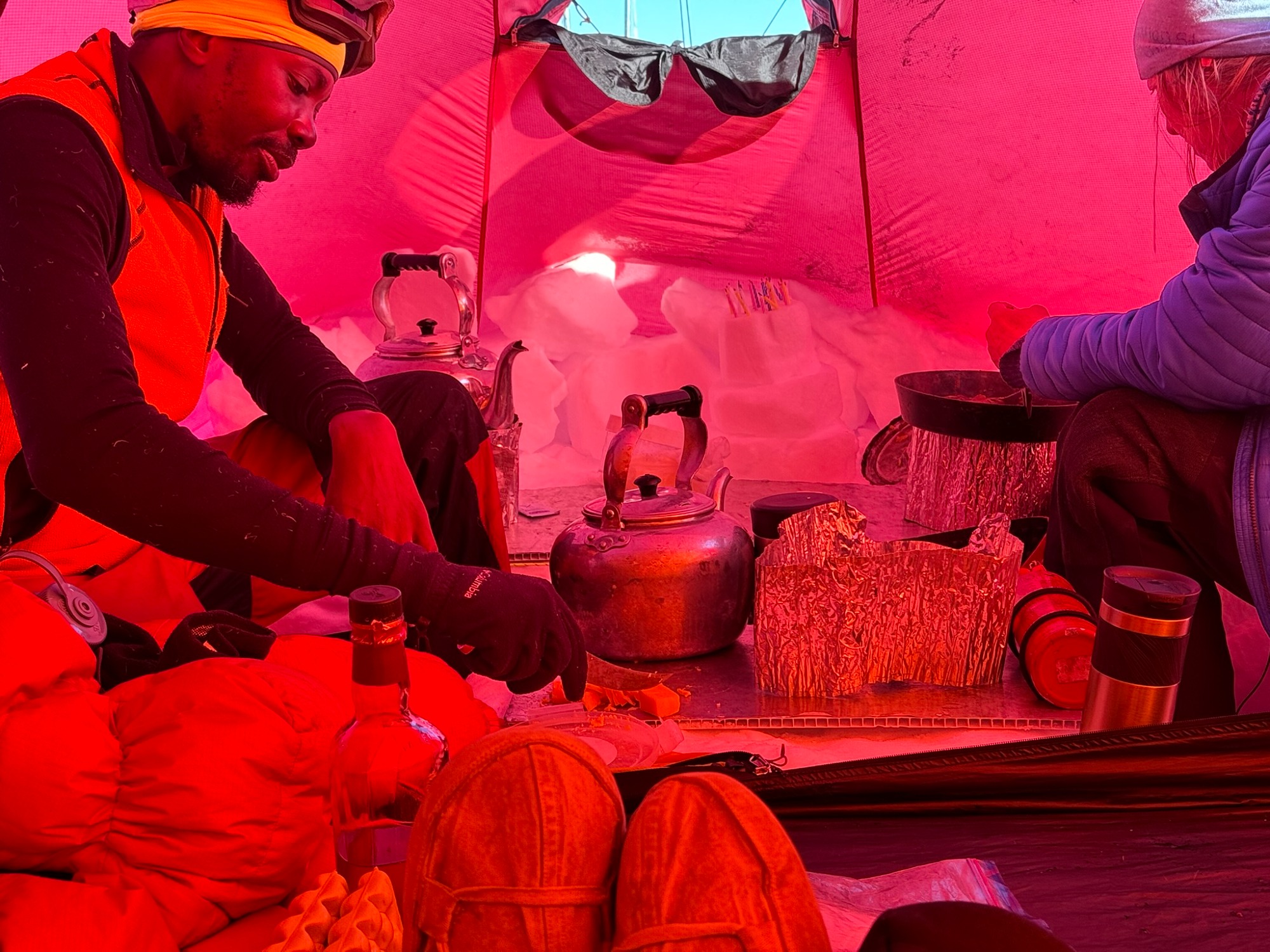
Nights grew colder. Mornings became battles of layers and numb fingers. My phone froze and refused to charge until warmed inside a sleeping bag. Clouds rolled in. Some nights we gathered in a single tent - seven adults squeezed in sharing whiskey, cookies, and stories like "The Cremation of Sam McGee." Laughter came easier on those nights.
We were tired, always tired. But we were also moving faster, stronger, more in sync.
But as we neared the descent toward the east coast, Greenland threw a final gauntlet of storms at us.
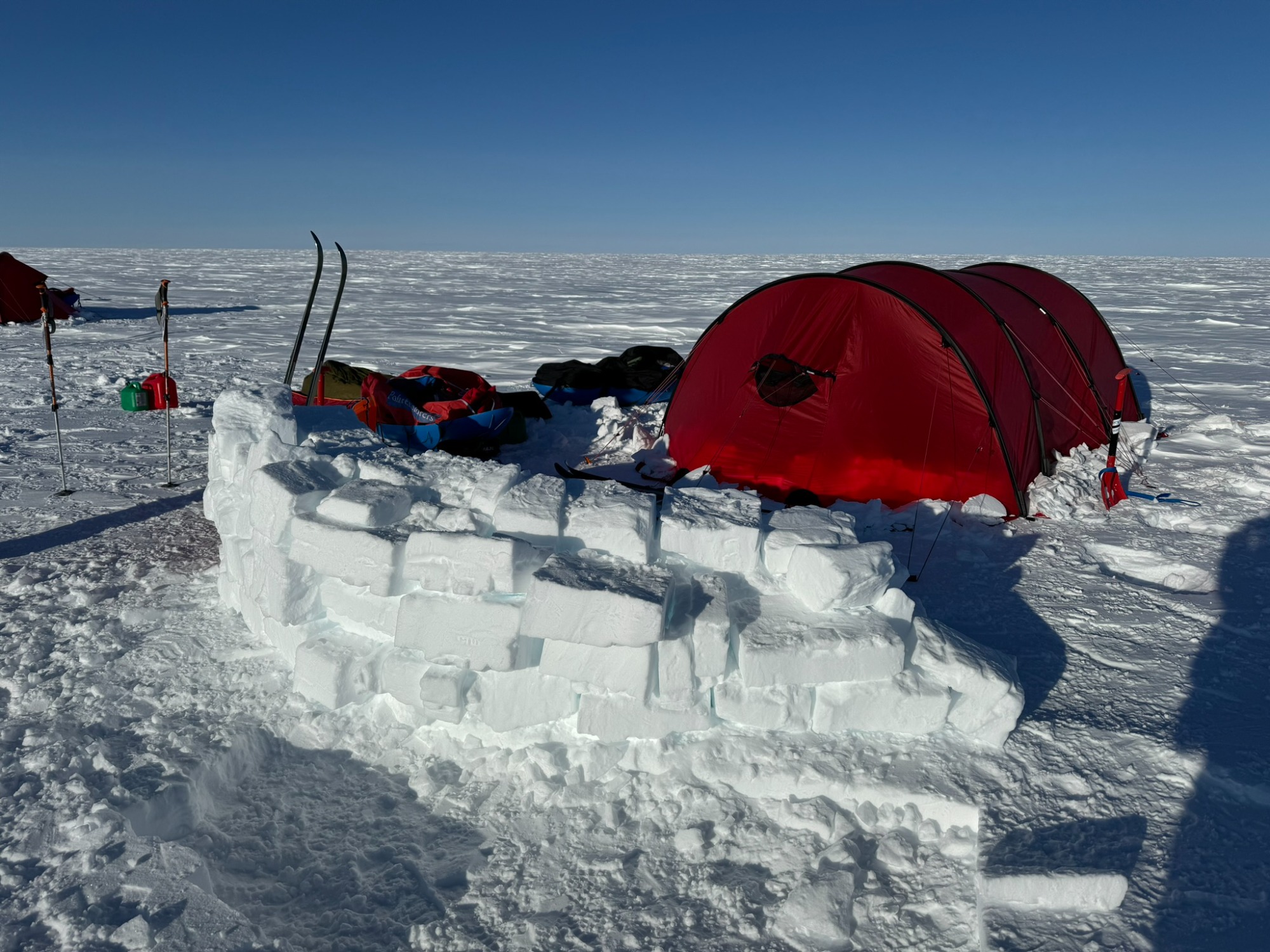
Heavy wet snow one day, soaring winds the next. We moved only when safe, sometimes not leaving tents until late afternoon. We built snow walls around our shelters; we shifted entire tents when the wind changed direction. One night the gusts reached 40 mph, condensation dripping steadily from the tent ceiling.
On Day 26, deep snow turned hauls into misery. By evening I was so drained that I shed gear to lighten my sled. Wilfred and Chris helped shoulder the load. Later, they made hot water for me and ordered me into the tent before I could help with camp chores. I realized, in that moment, that exhaustion had become something more than mental - it was physiological.
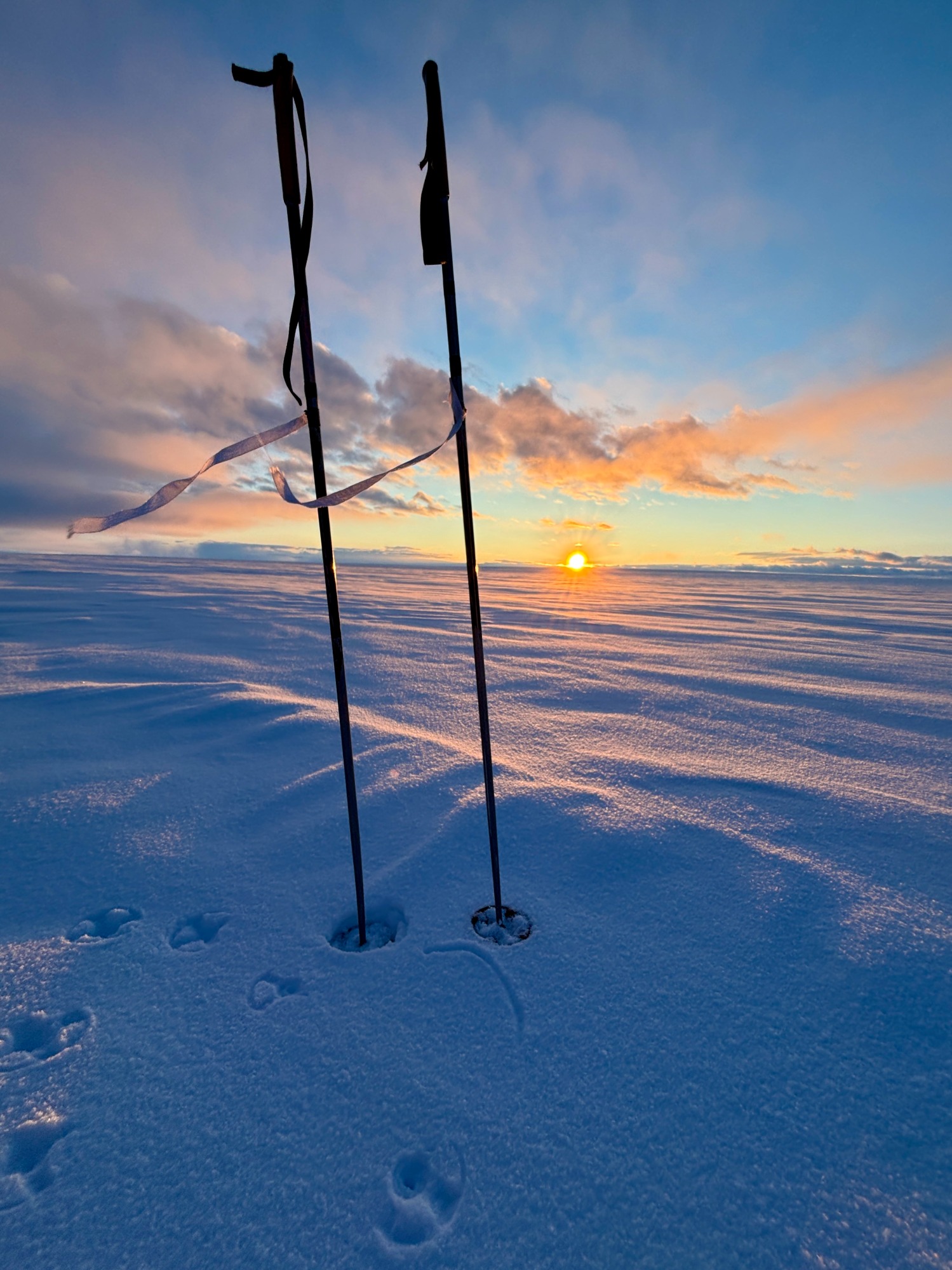
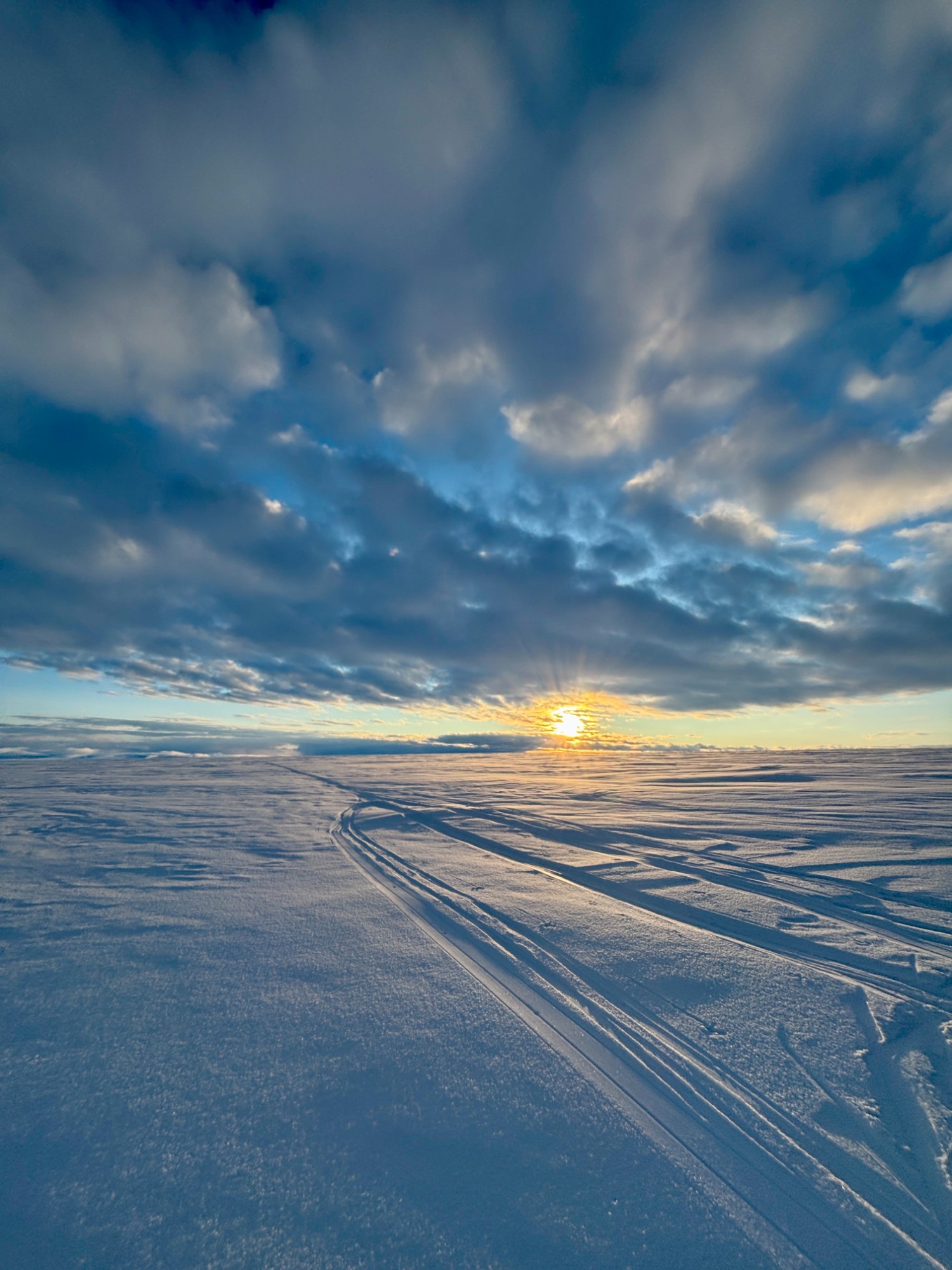
Day 27 offered redemption: 32 kilometers in a wild, extended push that carried us past midnight, under a sun that refused to set. The sky glowed orange on the horizon, and the snow glittered like crushed glass. But the cold bit hard at the end, and my hands went numb again. I arrived at camp trembling, and once more the others ushered me straight into a tent.
Day 28 began with a howling storm and an unexpected question: call for a helicopter exit, or push onward?
Annie and Chris weighed timing, weather, safety. Joe wanted to continue. Wilfred hesitated at the idea. I wavered between wanting to finish the crossing under my own power and craving the relief of being done. A flurry of satellite messages - Susan confirming flight options, weather windows opening and closing - finally tipped the scale. We would continue.
At 3:30 p.m., we set off into deep snow and rising winds. The terrain began to tilt downward. Soon our sleds needed ropes tied beneath them as brakes so they wouldn’t overrun us. The descent steepened dramatically - our steepest of the entire expedition. By midnight we could see mountains again. The ice sheet was ending.
We reached the first rocks around 1:30 a.m. I scrambled onto one, threw my arms into the air, and yelled into the wind. Annie climbed up and kissed the rock - her traditional gesture of gratitude.
I thought we were done. I was very wrong.
The next day turned into an eight-hour obstacle course through rock, meltwater streams, and broken terrain. We lowered sleds down ledges, tiptoed across slippery boulders, and skirted the flooded edges of a lake we were supposed to ski across but now couldn’t. Annie kept returning from scouting missions with her signature line: “Good news! You guys are doing great. The next section is going to be a little tough…” She was always right on both counts.
By evening, we found a place to camp near the lake. Winds were forecast to strengthen overnight, and we weren’t sure whether the helicopter would be able to fly the next day. Each of us took turns on bear watch. I brewed hot water during my shift and scanned the shoreline under a restless sky.
Morning brought worse winds but also a sliver of hope. We packed everything except the tents, ready to move in an instant, waiting for the call.
And then, without warning the helicopter appeared.
It circled and the pilot radioed Annie and said that he was not sure if he could land due to the high wind gusts. It seemed like he was leaving when a large gust came up and blew one tent into the lake. Wilfred and I were in the tent that collapsed with us inside. The others helped to get us out and we immediately laid on top of the tent so that it would not blow away. While the others collected the tent that blew to the lake we re-pitched our tent, fearing that we would have to remain lakeside for another day.
But our luck was about to change.
The thump of rotor blades echoed across the rocks. The helicopter crested the ridge and dropped toward us, a flash of red and white against the grey. In minutes our expedition - twenty-nine days of cold, camaraderie, fear, endurance, laughter, storms, and sunlight - transitioned from survival mode to completion.
We loaded our gear, climbed aboard, and lifted away from the ice.
The Greenland ice cap shrank beneath us - an ocean of white we had crossed on skis, one step at a time.
And I realized, as the helicopter carried us toward Tasiilaq and the first warm building in nearly a month, that something inside me had shifted too.
I had come to Greenland seeking challenge. I left understanding endurance.
Greenland Ice Cap 2024
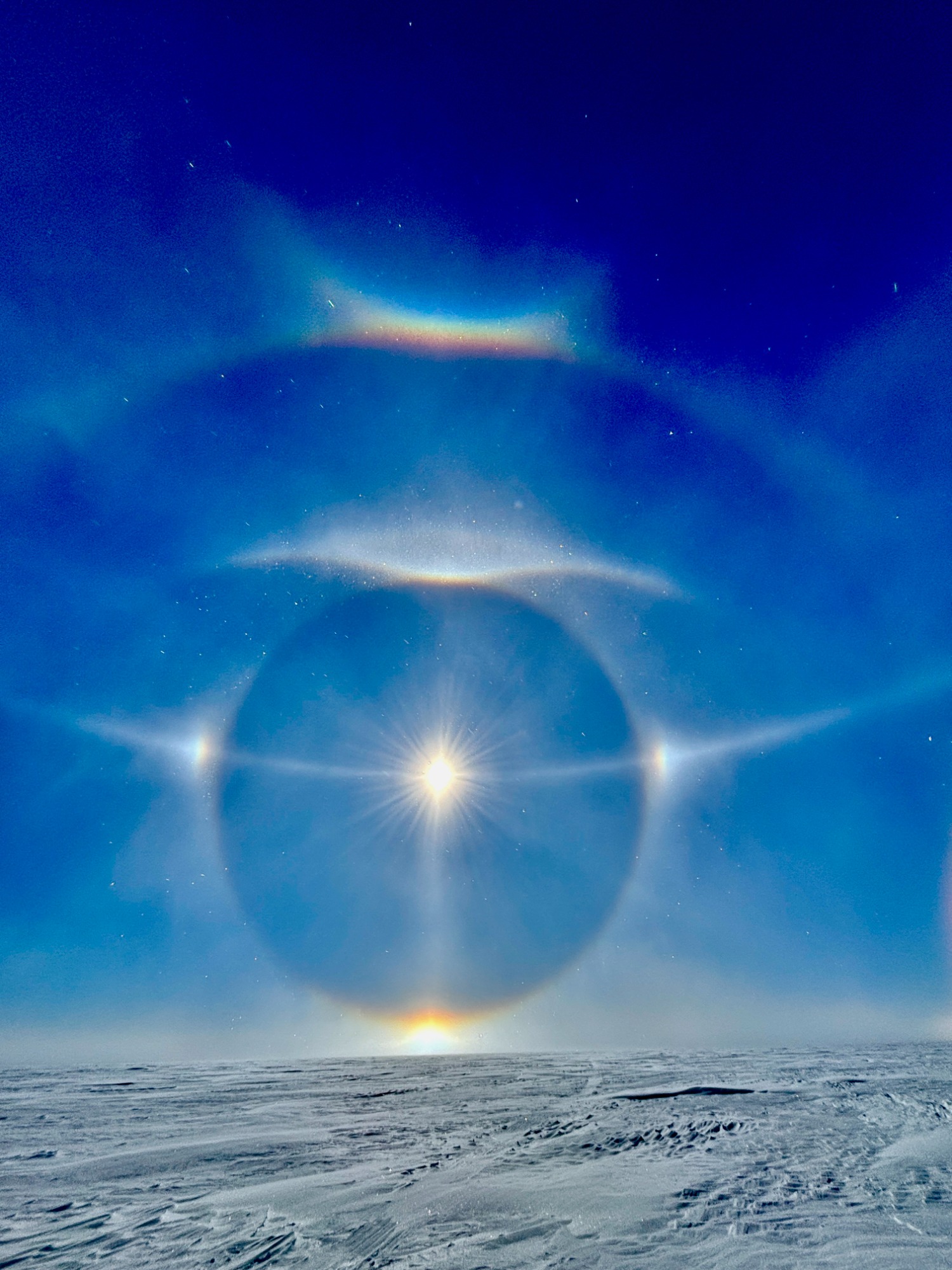
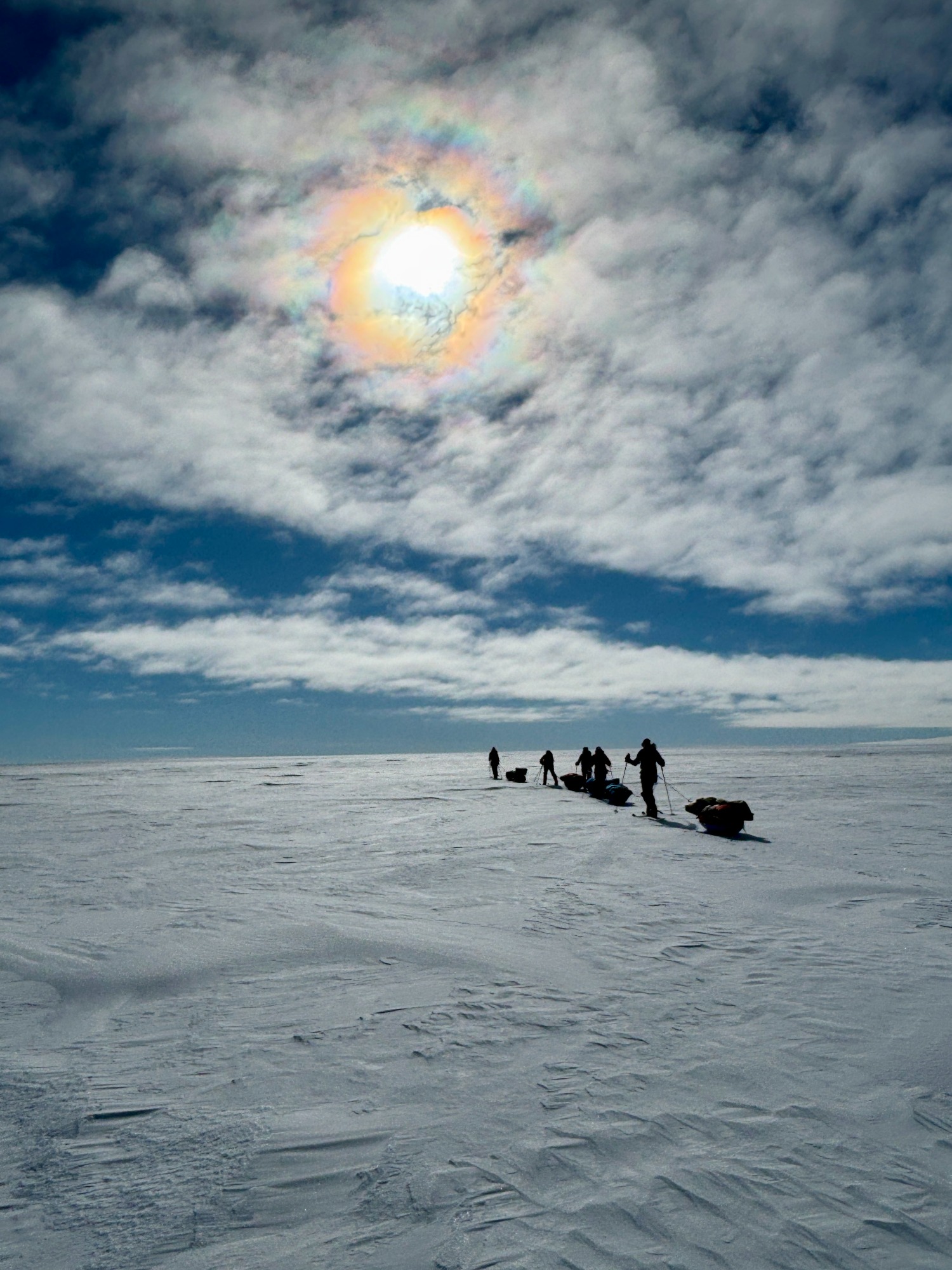
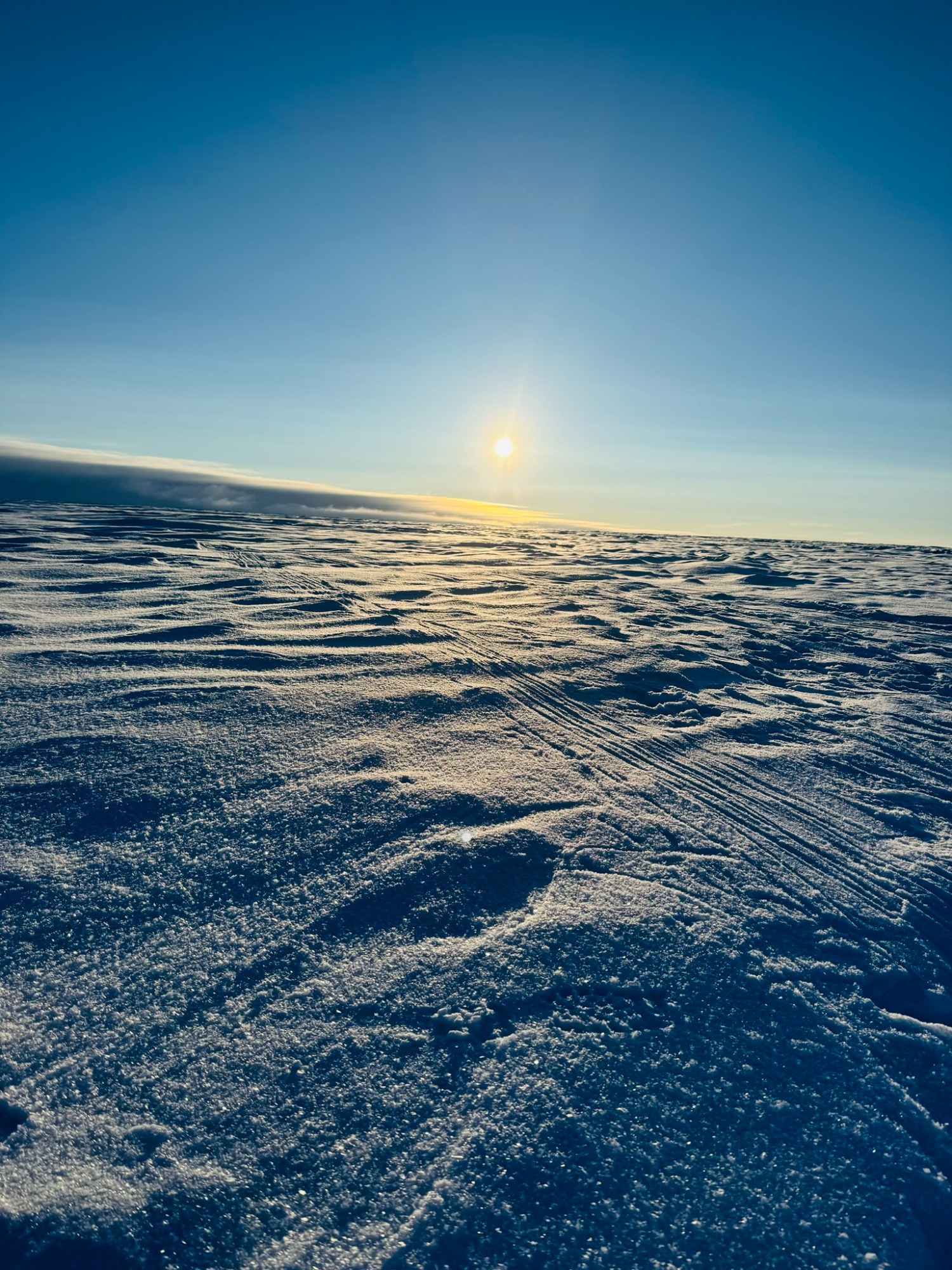
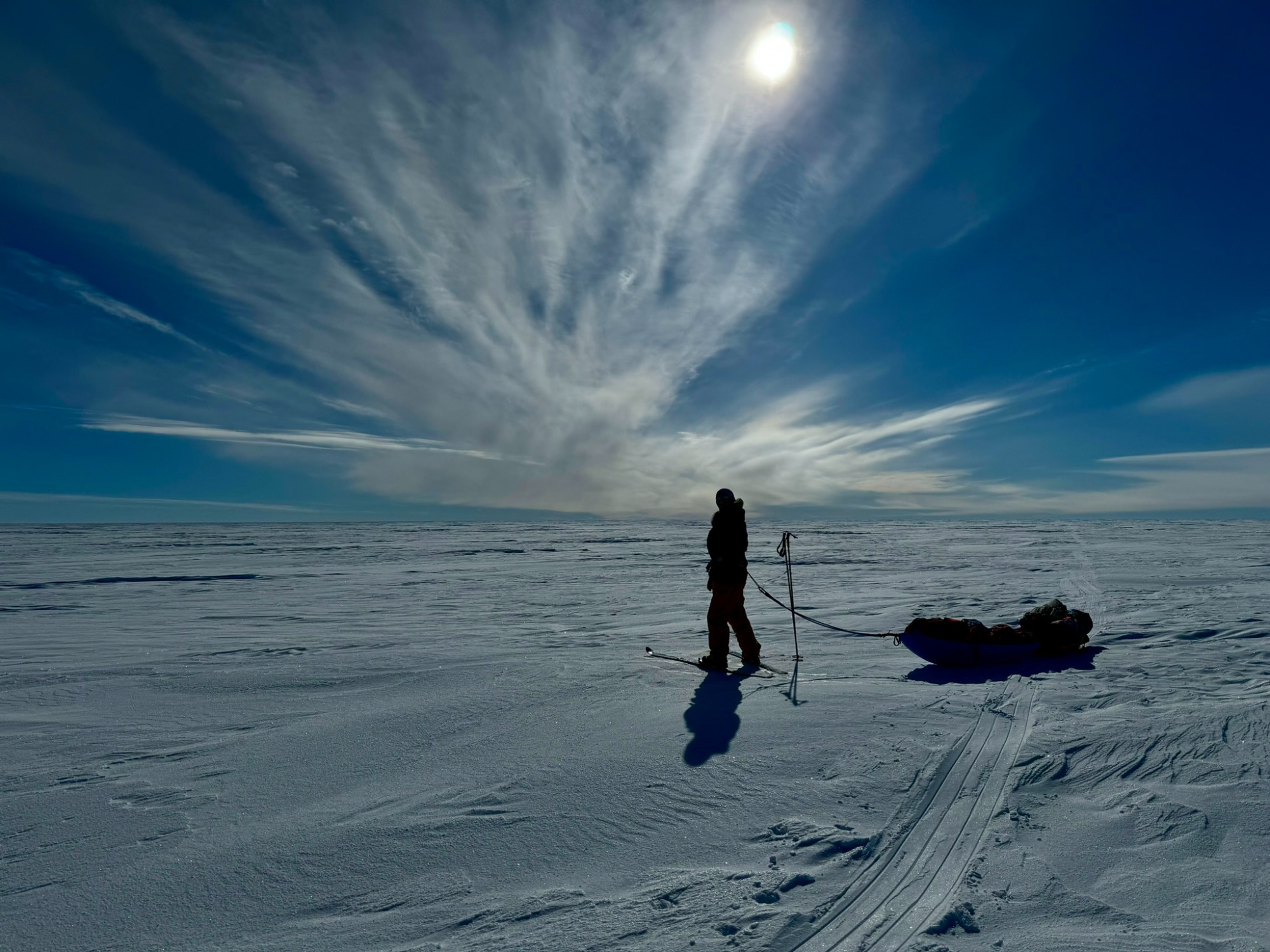
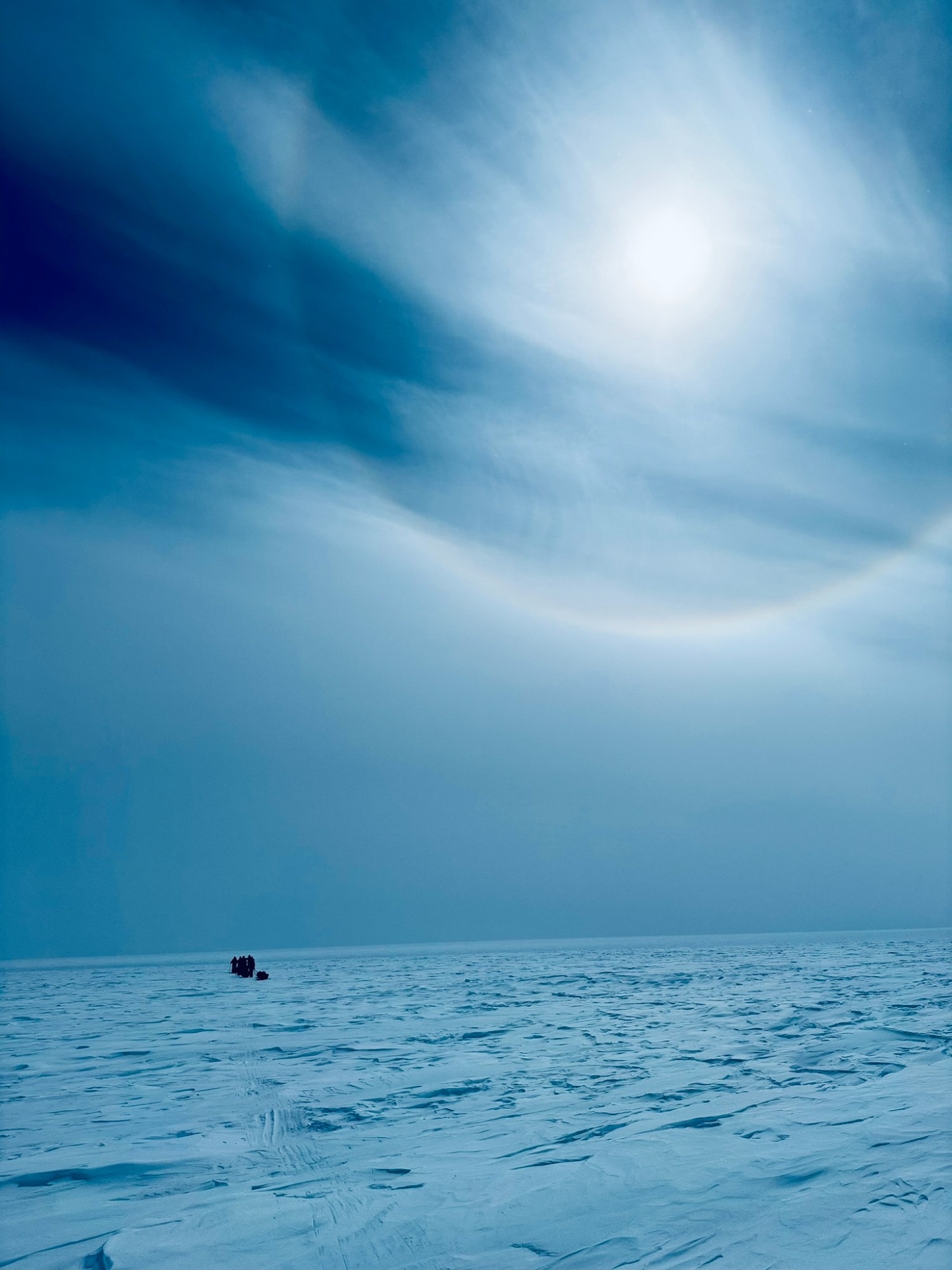
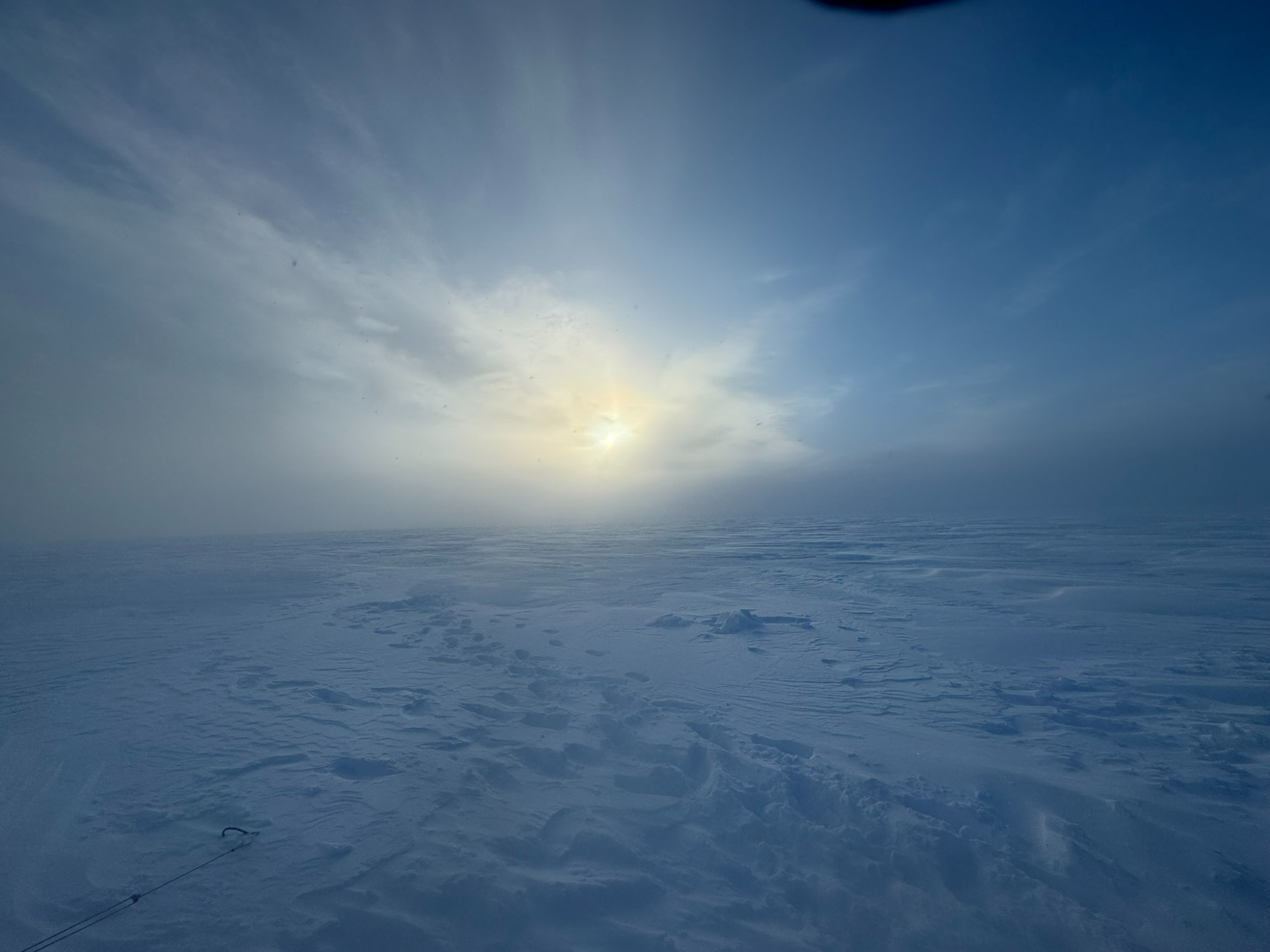
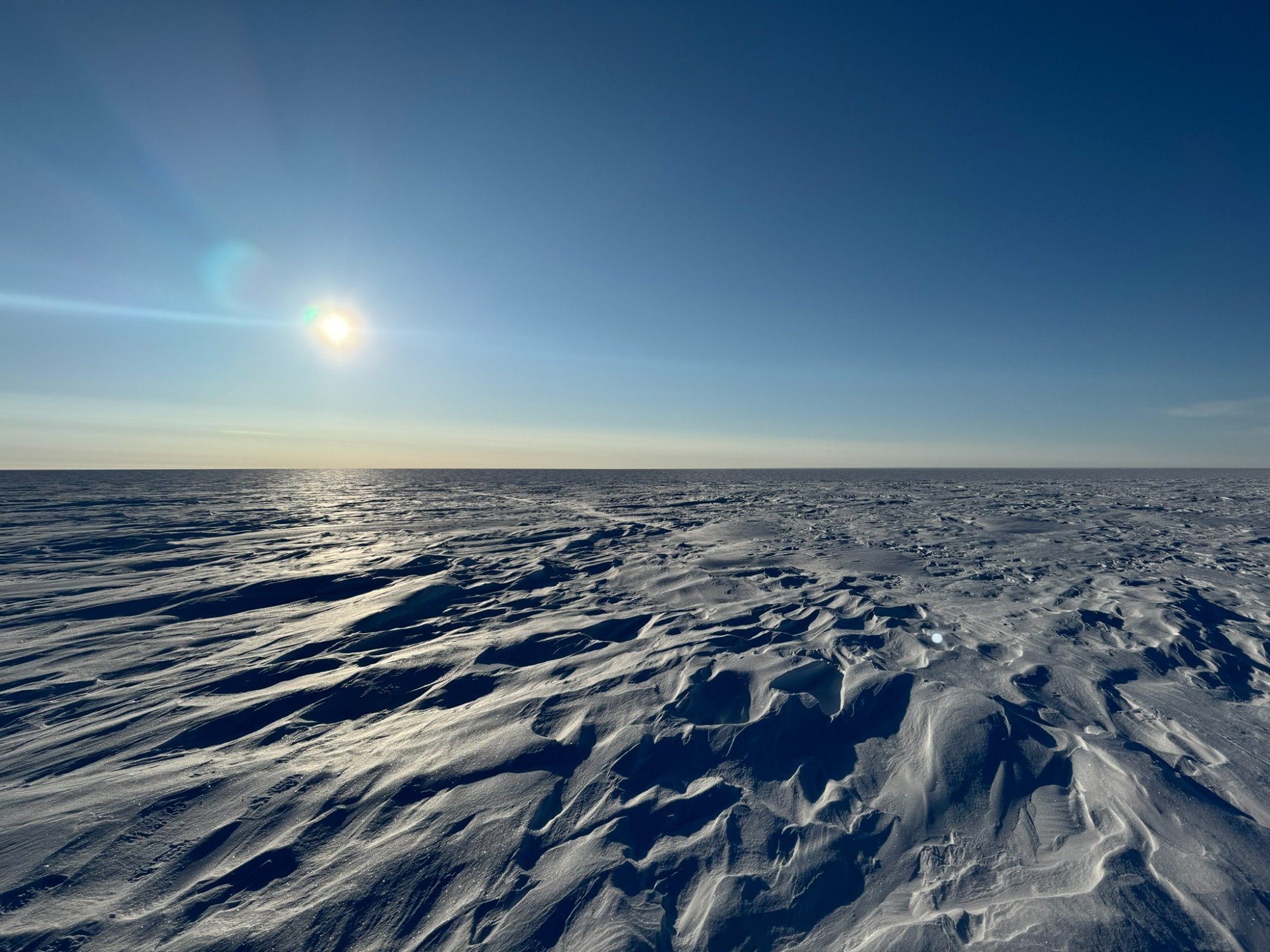
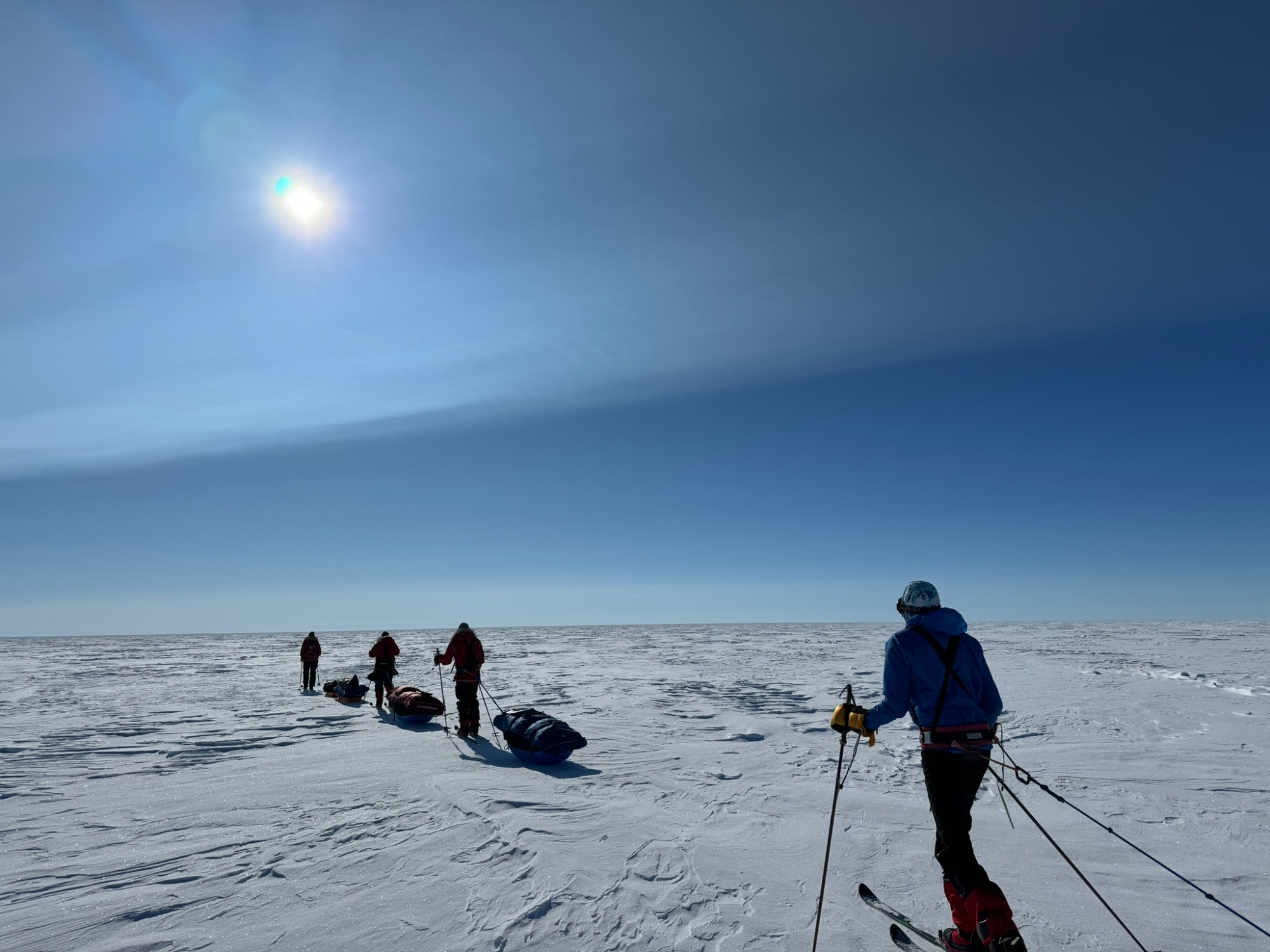
A Sun Dog is a term applied to the halo rainbow effect of the crystallization of water in the air.
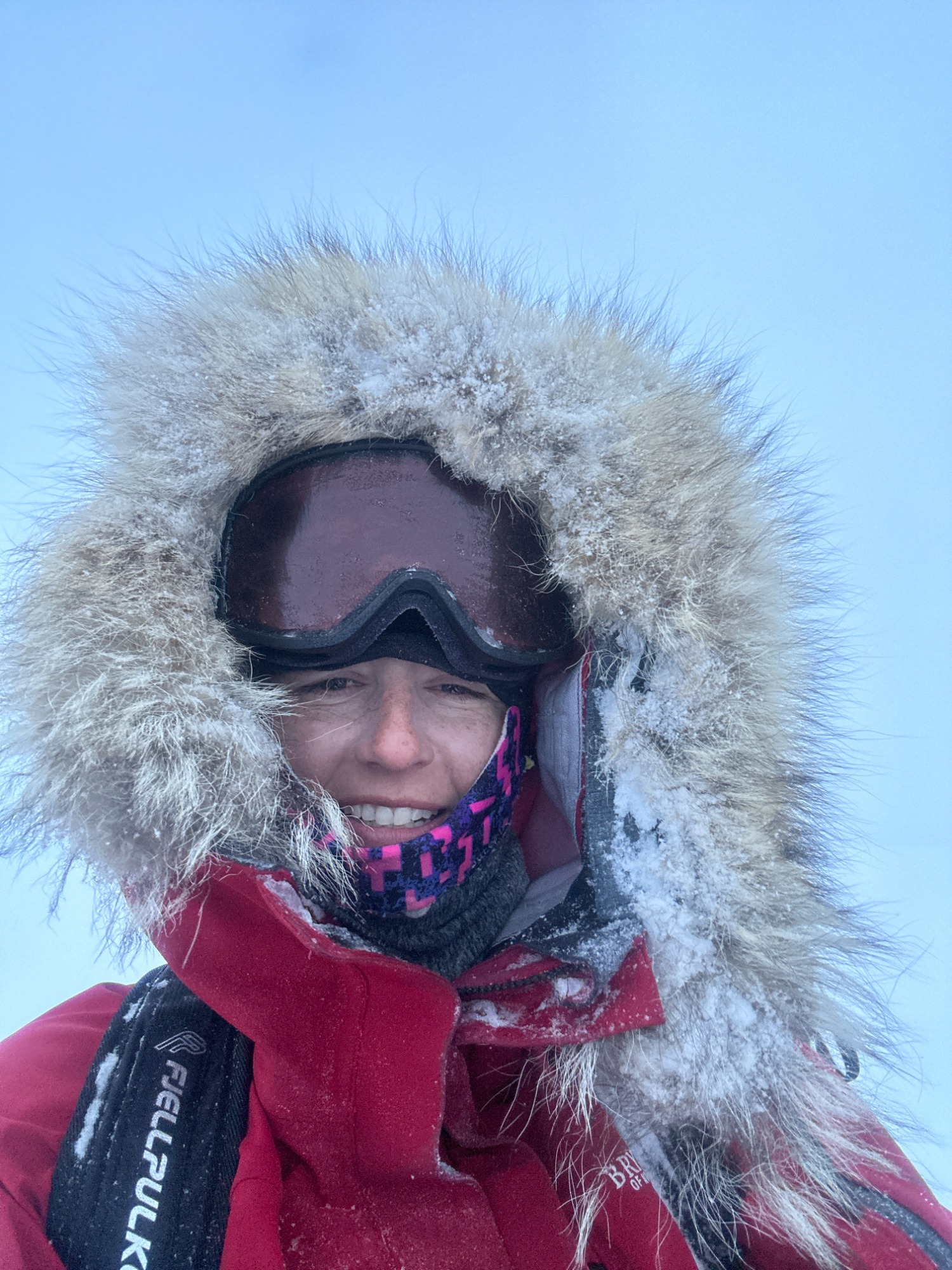
Greenland Ice Cap Videos
We had a lot of fun suffering through this 30 day journey. Here are some snippets of our time on the ice.
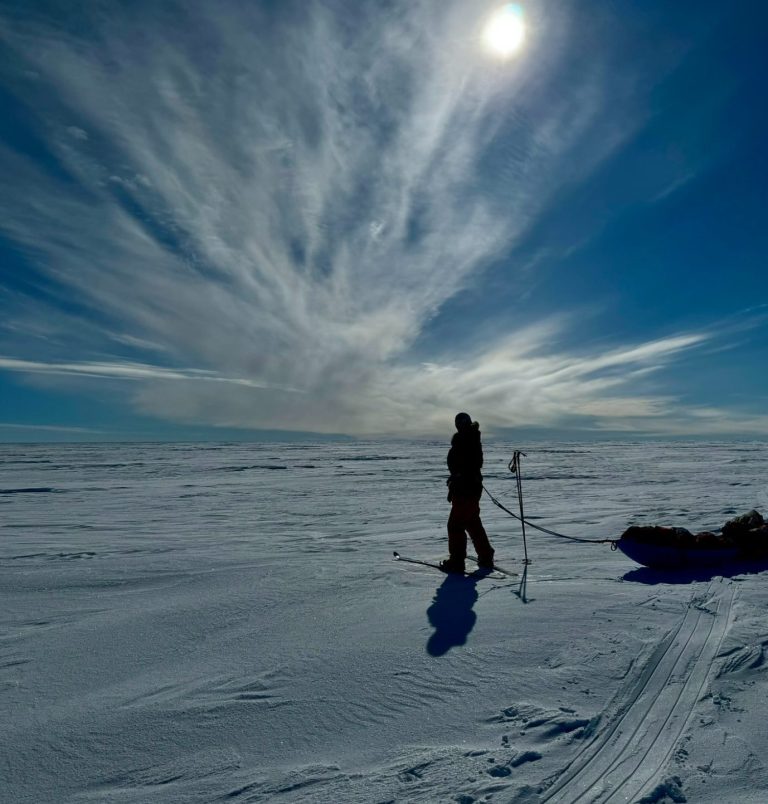
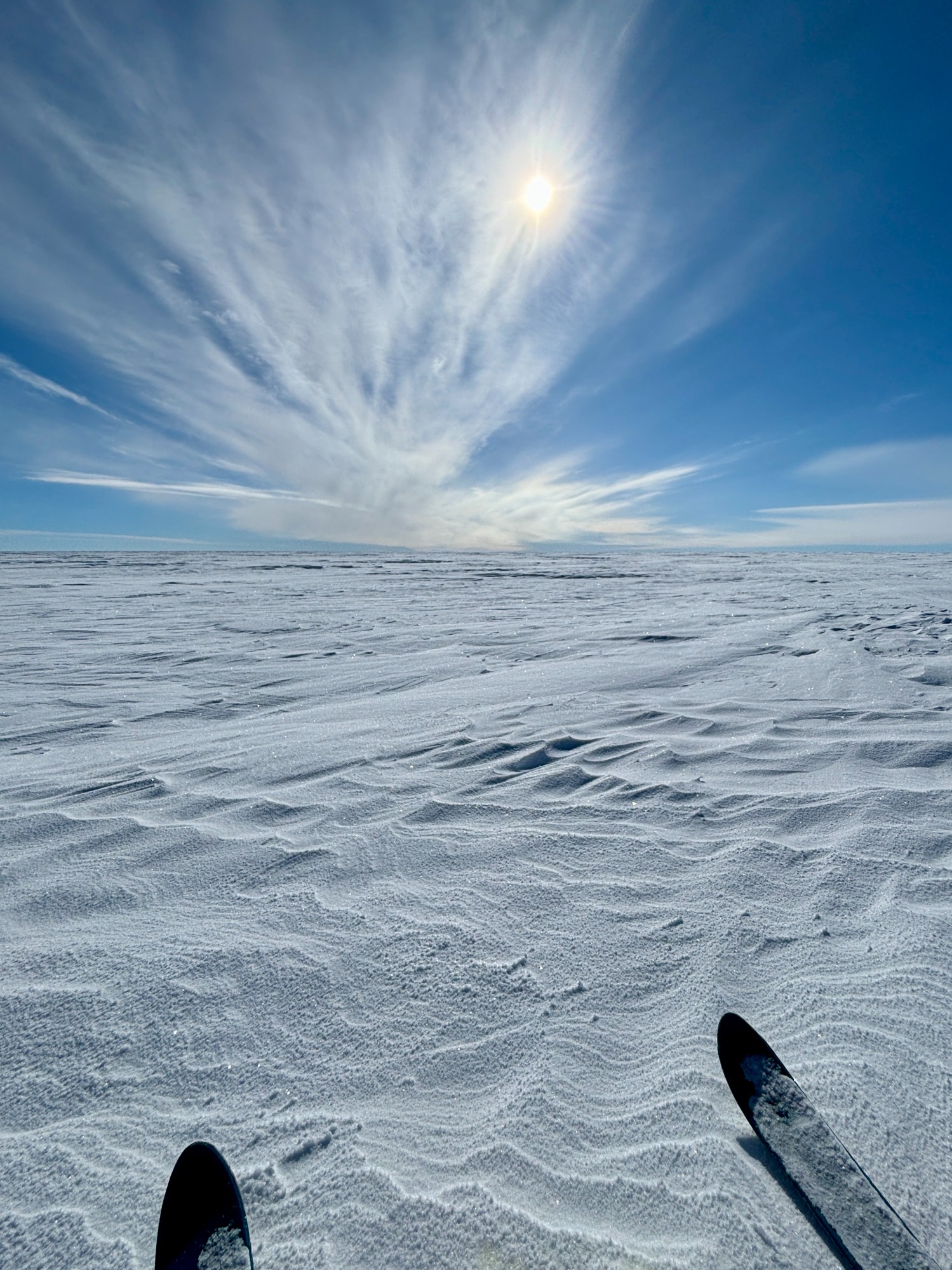
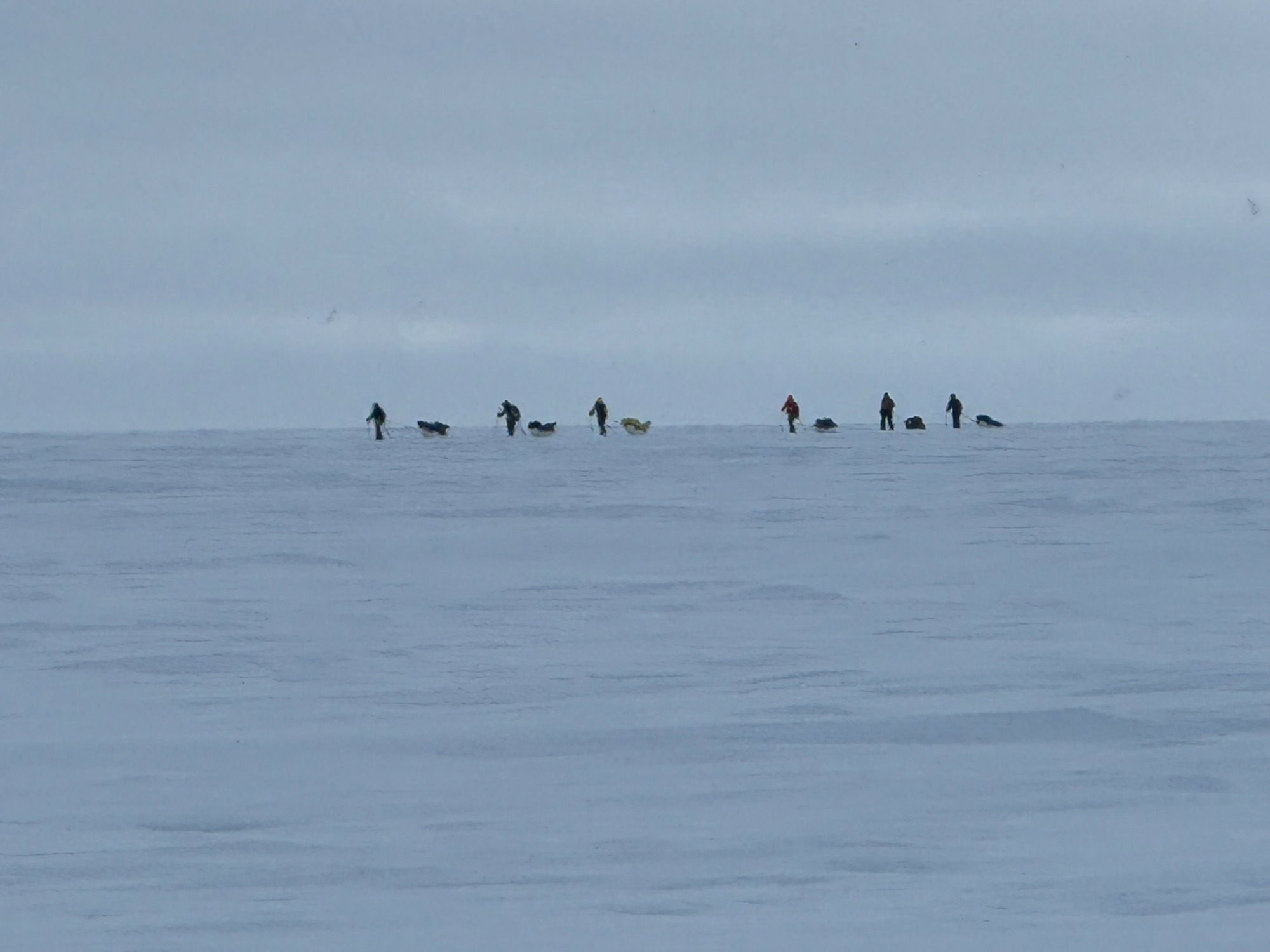
Skiing into the horizon
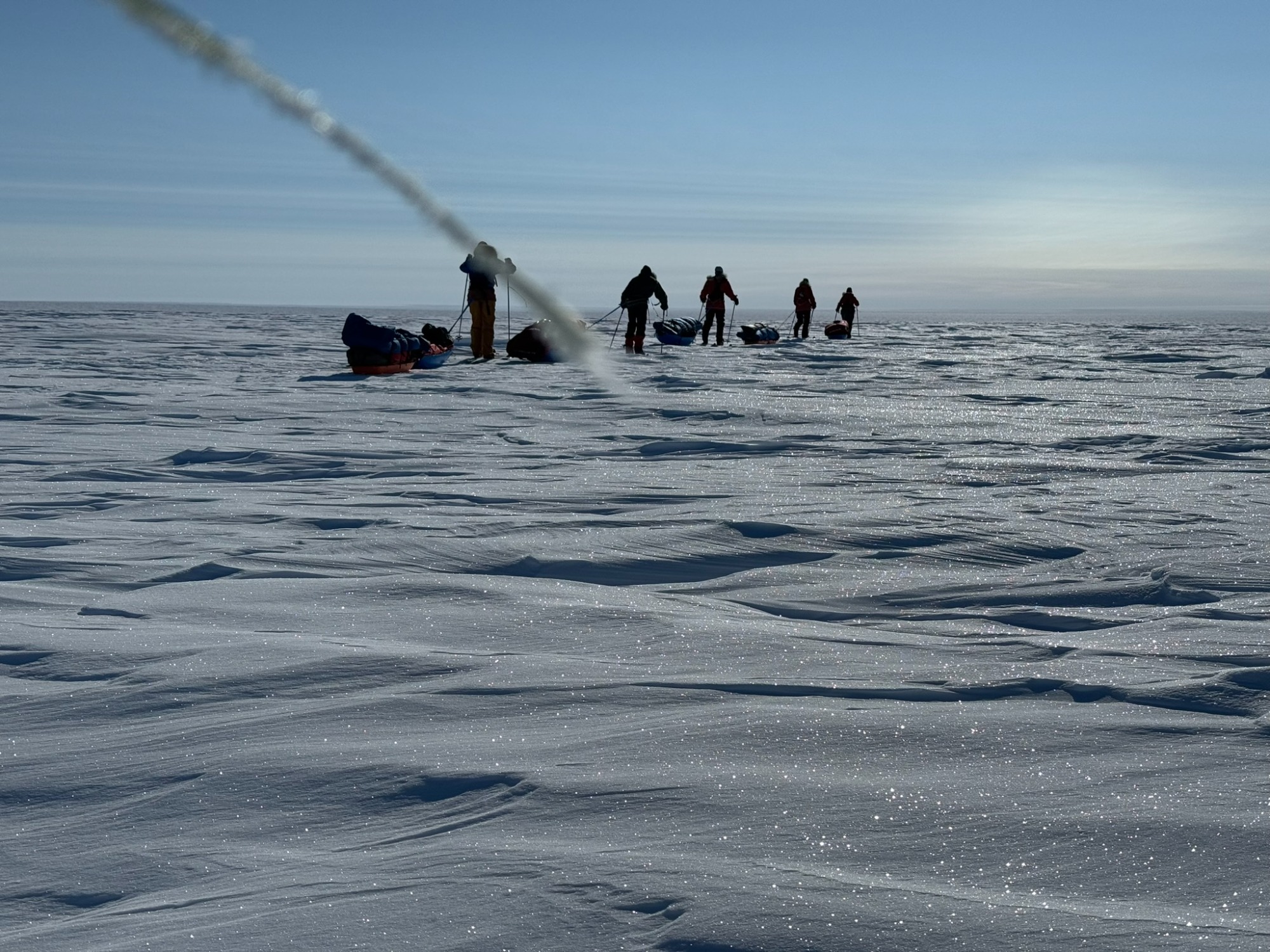
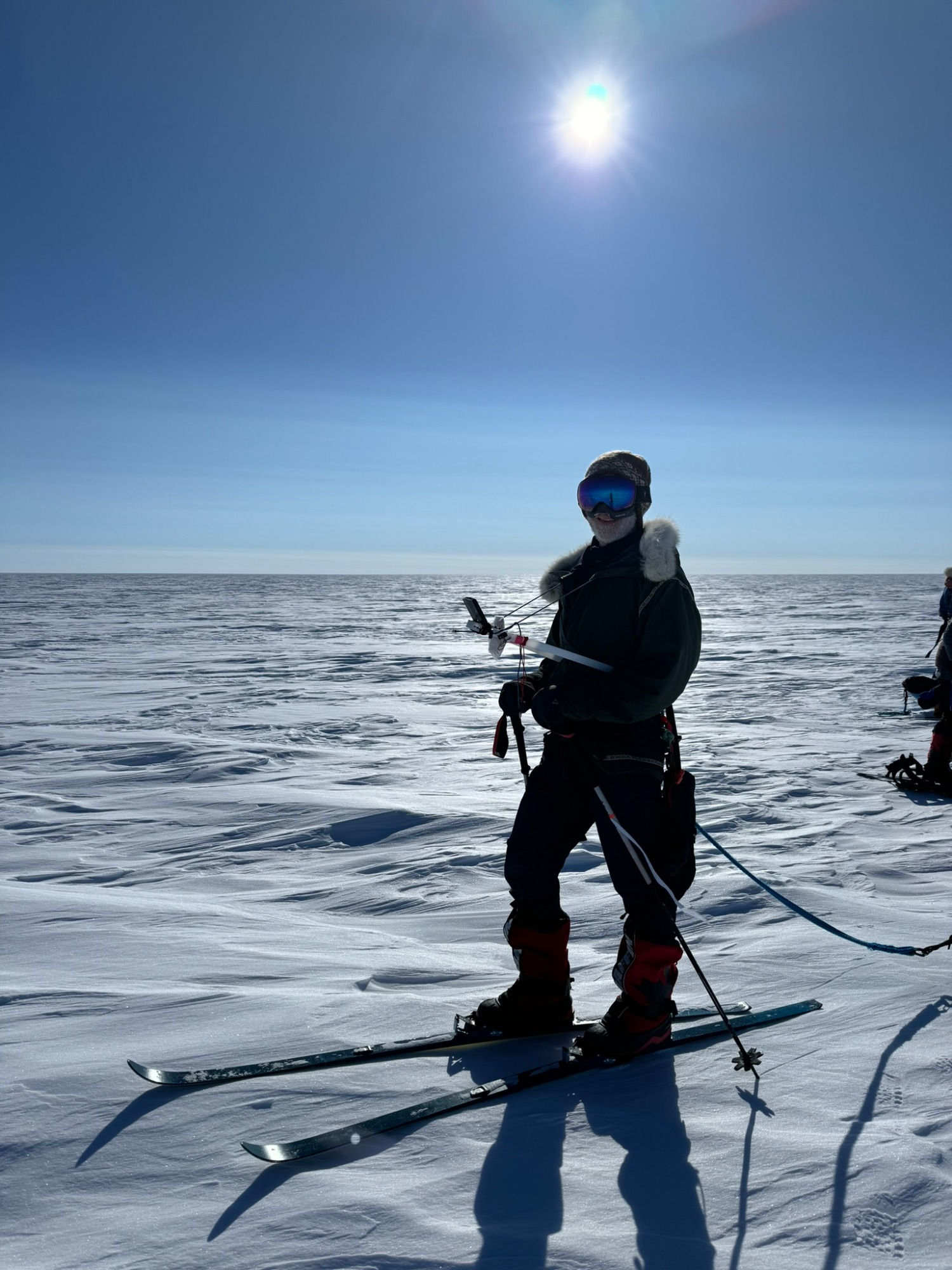
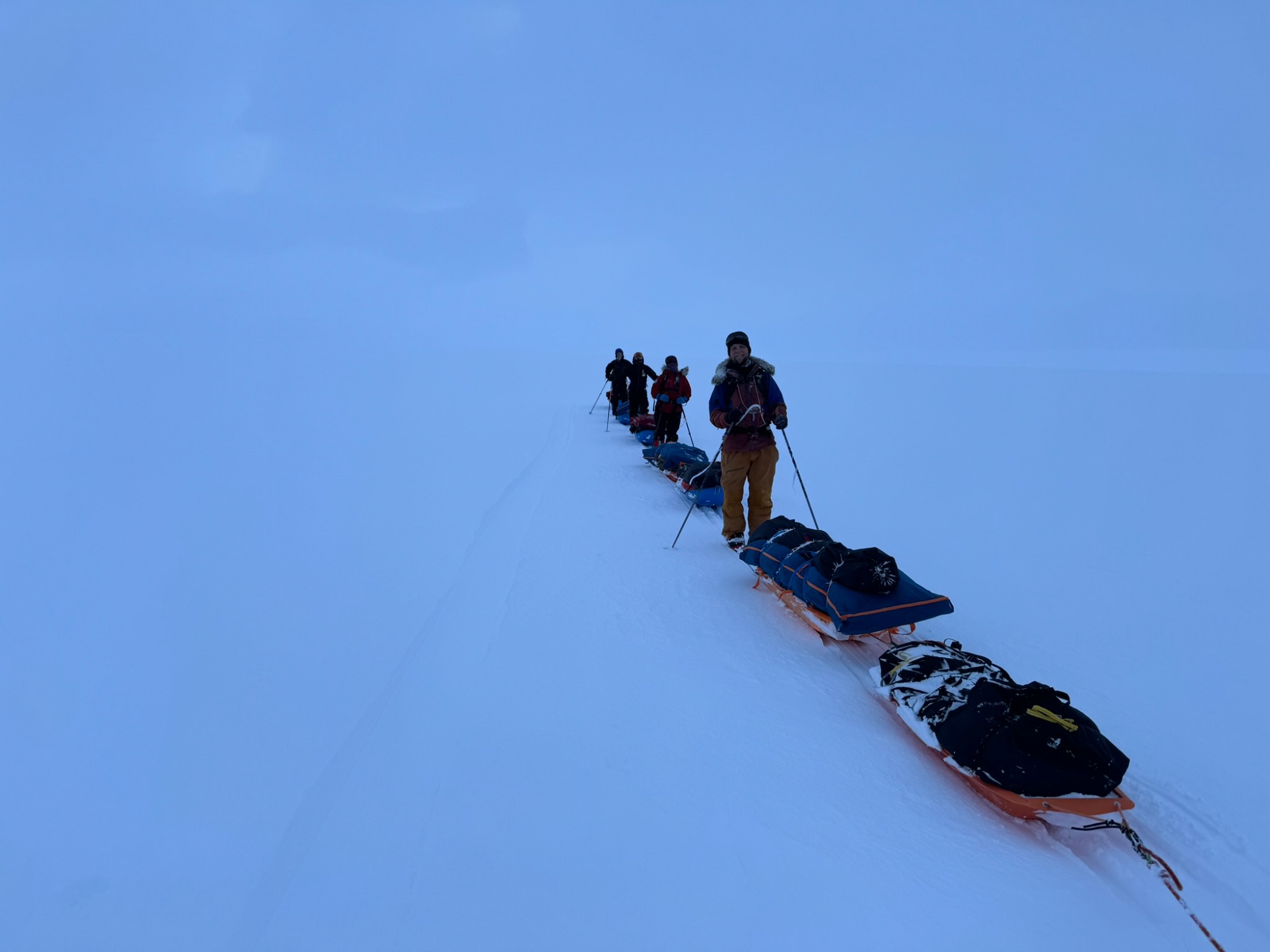
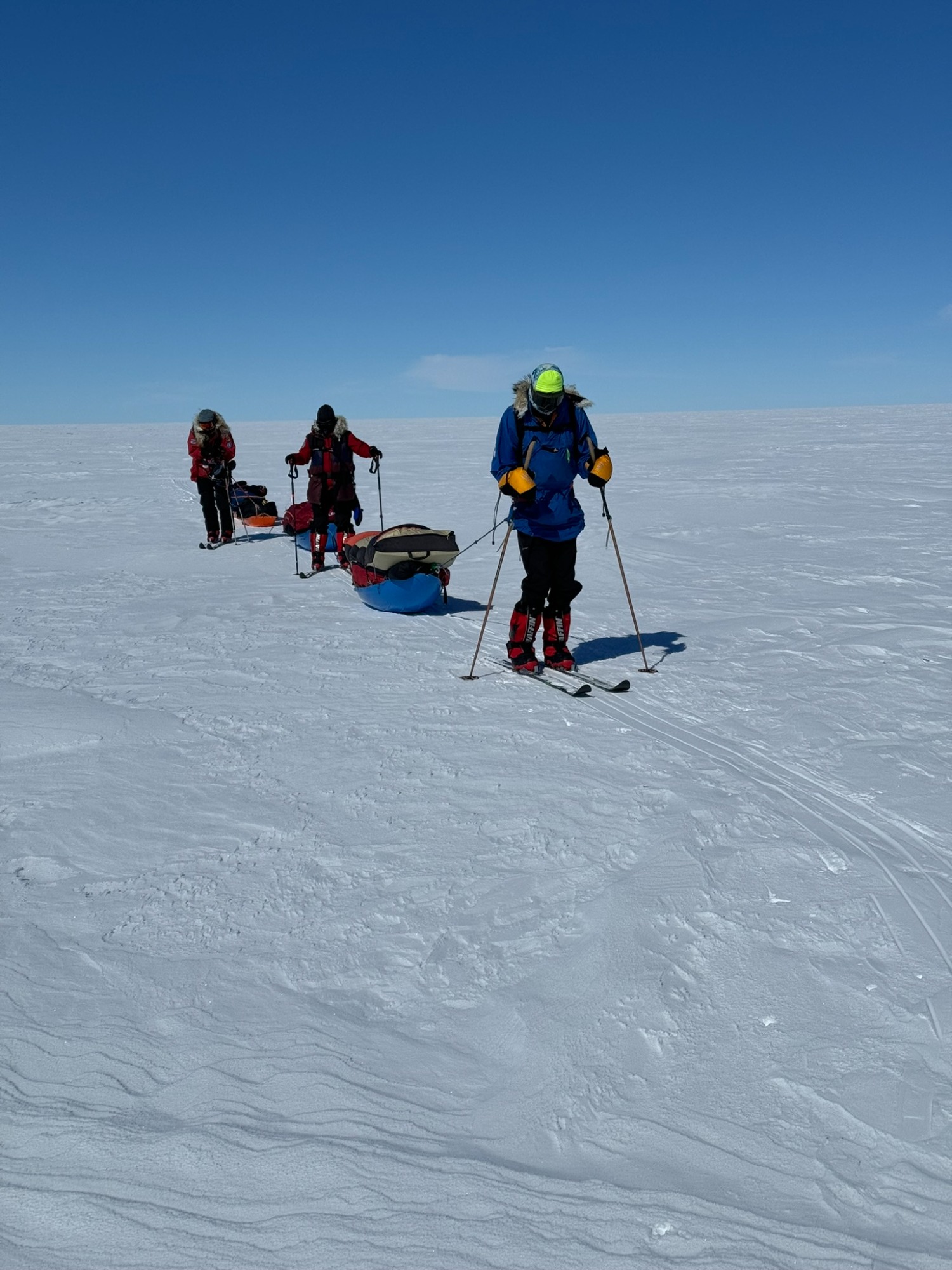
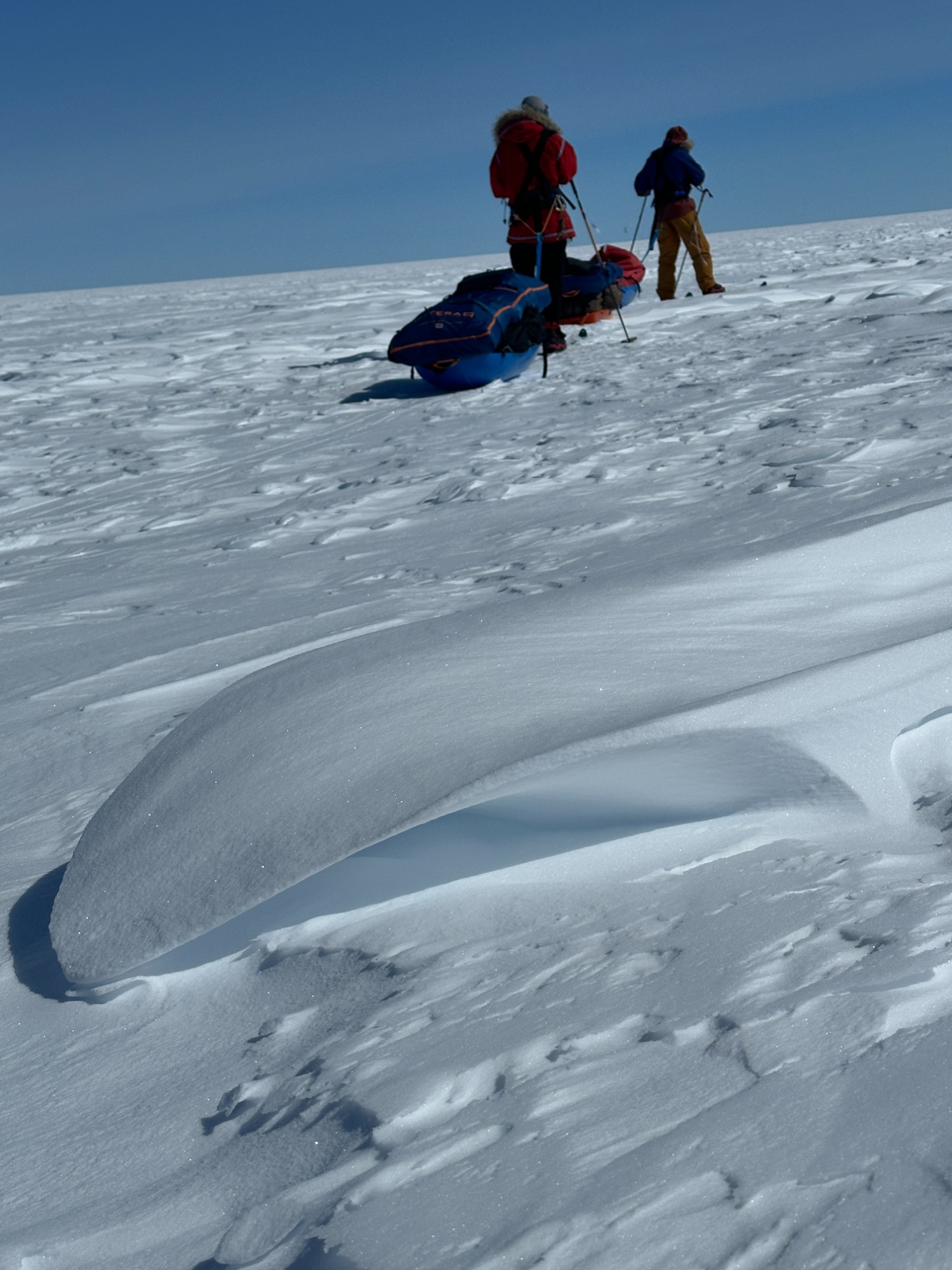
Many days we would ski for hours into the horizon.
Miles to Go
We mostly stayed in a single file
Removing snow clumps
We had a few days of heavy snow that stuck to our skis and brought us to a halt.